Algeria
 Egypt
 Libya
 Morocco
 Sudan
 Tunisia
 Benin
 Burkina Faso
 Cabo Verde
 Côte d'Ivoire
 Ghana
 Guinea
 Guinea-Bissau
 Liberia
 Mali
 Mauritania
 Niger
 Nigeria
 Senegal
 Sierra Leone
 The Gambia
 Togo
 Cameroon
 Central African Republic
 Chad
 DR Congo
 Equatorial Guinea
 Republic of the Congo
 São Tomé and Príncipe
 Burundi
 Comoros
 Djibouti
 Eritrea
 Ethiopia
 Kenya
 Madagascar
 Malawi
 Mauritius
 Mozambique
 Rwanda
 Seychelles
 Somalia
 South Sudan
 Tanzania
 Uganda
 Angola
 Botswana
 Eswatini
 Lesotho
 Namibia
 South Africa
 Zambia
 Zimbabwe
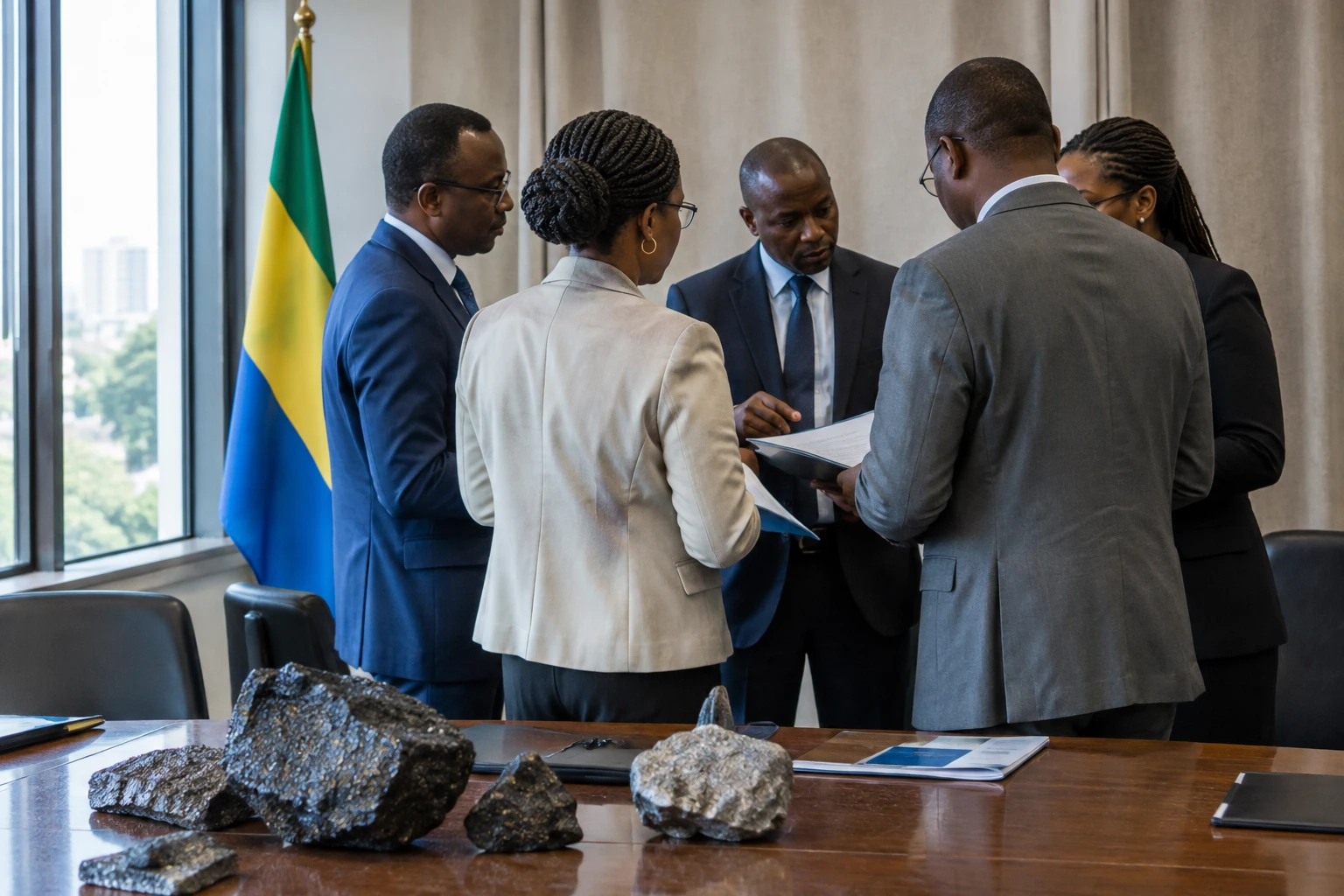
In Gabon, mining is no longer just about the volume extracted. Libreville also wants a greater say in the companies exploiting its subsoil and to retain a larger share of the value created. The draft new Mining Code announced by Minister Sosthène Nguema Nguema puts this ambition at the heart of a broader reform effort covering local processing, permit oversight and benefits for local communities.
Reform announced, but not yet enshrined in law
On 3 November 2026, the Minister of Mines said the future Mining Code would raise the state’s automatic stake in mining projects from 10% to 20%. The measure would cover several commodities, including iron, gold, manganese, rare earths and potash. The legislation was then expected the following week. Until it is published and adopted, the rate remains a government target, not an applicable rule.
The current framework is based on the 2019 Mining Law. Article 7 provides for a 10% state stake in the capital, free of charge and non-dilutable. It also allows the state to acquire an additional stake for a price, within the limits set by the law. The minister described the change as production-sharing. Legally, however, the stake provided for under the current code concerns company equity: the exact terms of the reform will therefore need to be specified in the new legislation.
This distinction matters. An equity stake can provide access to dividends and shareholder rights. It does not automatically mean that the state receives 20% of the ore extracted or turnover every year. The final text, mining agreements and financing mechanisms will need to be examined to establish how the stake will be calculated and applied to existing or future projects.
Libreville wants to capture more value locally
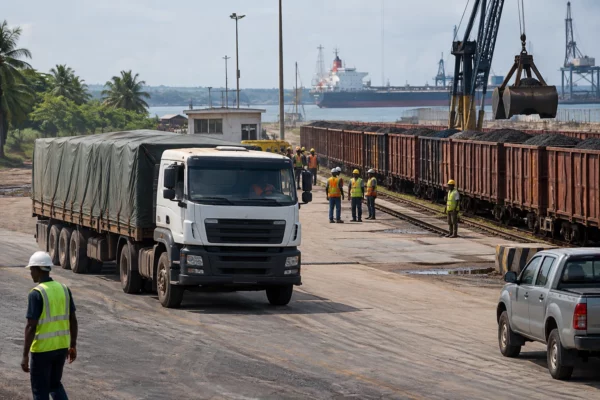
The announced increase is part of a strategy already under way around manganese. The government plans to ban exports of the ore in its raw state from 1 January 2029. The aim is to expand processing in Gabon, particularly into alloys, before shipment to international markets. The Ministry of Mines presents this deadline as a lever for industrialisation.
The project is ambitious, but its success will depend on practical infrastructure: available energy, transport, industrial equipment, financing and technical skills. Local processing can increase added value and create skilled jobs. It also requires substantial investment and facilities to be commissioned on time. The 2029 timetable will therefore test companies as well as the public sector’s planning capacity.
Official announcements give varying quantitative targets. In June 2026, the government said the mining sector’s contribution to GDP would rise from 6% to 20–25% by 2030. The minister also referred to a tax revenue target. These indicators are not equivalent: the share of GDP measures the weight of economic activity in the economy, while tax revenue represents income received by the state. Their evolution will need to be assessed separately.
A new balance between the state, operators and local communities
For the Gabonese state, a larger stake could strengthen its role in decision-making and increase the income it derives from projects. But it also raises governance questions: which public entity will hold the shares, how will it finance any required contributions, and how will it account for dividends or losses? Transparency in these mechanisms will be crucial to ensuring the reform is understood and monitored.
Operators, meanwhile, will have to factor the new rules into their financial plans. Mining projects tie up capital over several years. Clear and predictable rules can support investment decisions; uncertain terms can delay them. The minister acknowledged the role of companies in providing funds and equipment. The debate now concerns the distribution of profits, but also the risks and obligations of each party.
The benefits for local communities will not automatically follow from an increase in the state’s stake. They will depend on how revenues are used, the jobs created, local procurement, infrastructure and community development mechanisms. These benefits may vary considerably between Libreville, mining centres and communities near sites. Environmental monitoring and the conditions for rehabilitating sites also remain essential over the long term.
The government is also planning eight new mines between 2026 and 2030, according to statements by the minister reported by the Gabonese press. Projects cited in the sector include the Belinga iron ore deposit and the Banio potash project. These announcements describe a pipeline of projects, not mines already in production: their timetable still depends on permits, infrastructure and investment decisions.
A Gabonese issue within Central Africa
Gabon is a member of CEMAC, the Economic and Monetary Community of Central Africa, which brings together six countries in a regional market using the Central African CFA franc. Mining reform is primarily a national matter: each state sets its own framework for extraction. But its consequences extend beyond borders, as projects depend on transport corridors, equipment and regional markets, while several countries are seeking to process more of their resources on the continent.
For Central African countries, the Gabonese case raises a practical question: how can the public share and local processing be increased without making rules unpredictable or overlooking affected communities? The answer will not be measured by the announced rate alone. It will depend on the published legislation, its transitional provisions, how it applies to existing contracts and the state’s capacity to oversee operations.
The next steps are therefore crucial: publication of the new Mining Code, clarification of the nature of the 20% stake, and a timetable for the investment needed to process manganese before 2029. These elements will show whether the reform genuinely changes how value is distributed, or remains a political ambition whose terms have yet to be defined.
Gabon’s 2019 mining legislation can be consulted in the Gabonese Mining Code published online. The government set out its manganese processing strategy in its presentation of mining reforms in June 2026. The Gabonese press reported the minister’s statements on the draft Mining Code and the state’s stake.