Algeria
 Egypt
 Libya
 Morocco
 Sudan
 Tunisia
 Benin
 Burkina Faso
 Cabo Verde
 Côte d'Ivoire
 Ghana
 Guinea
 Guinea-Bissau
 Liberia
 Mali
 Mauritania
 Niger
 Nigeria
 Senegal
 Sierra Leone
 The Gambia
 Togo
 Cameroon
 Central African Republic
 Chad
 DR Congo
 Equatorial Guinea
 Republic of the Congo
 São Tomé and Príncipe
 Burundi
 Comoros
 Djibouti
 Eritrea
 Ethiopia
 Kenya
 Madagascar
 Malawi
 Mauritius
 Mozambique
 Rwanda
 Seychelles
 Somalia
 South Sudan
 Tanzania
 Uganda
 Angola
 Botswana
 Eswatini
 Lesotho
 Namibia
 South Africa
 Zambia
 Zimbabwe
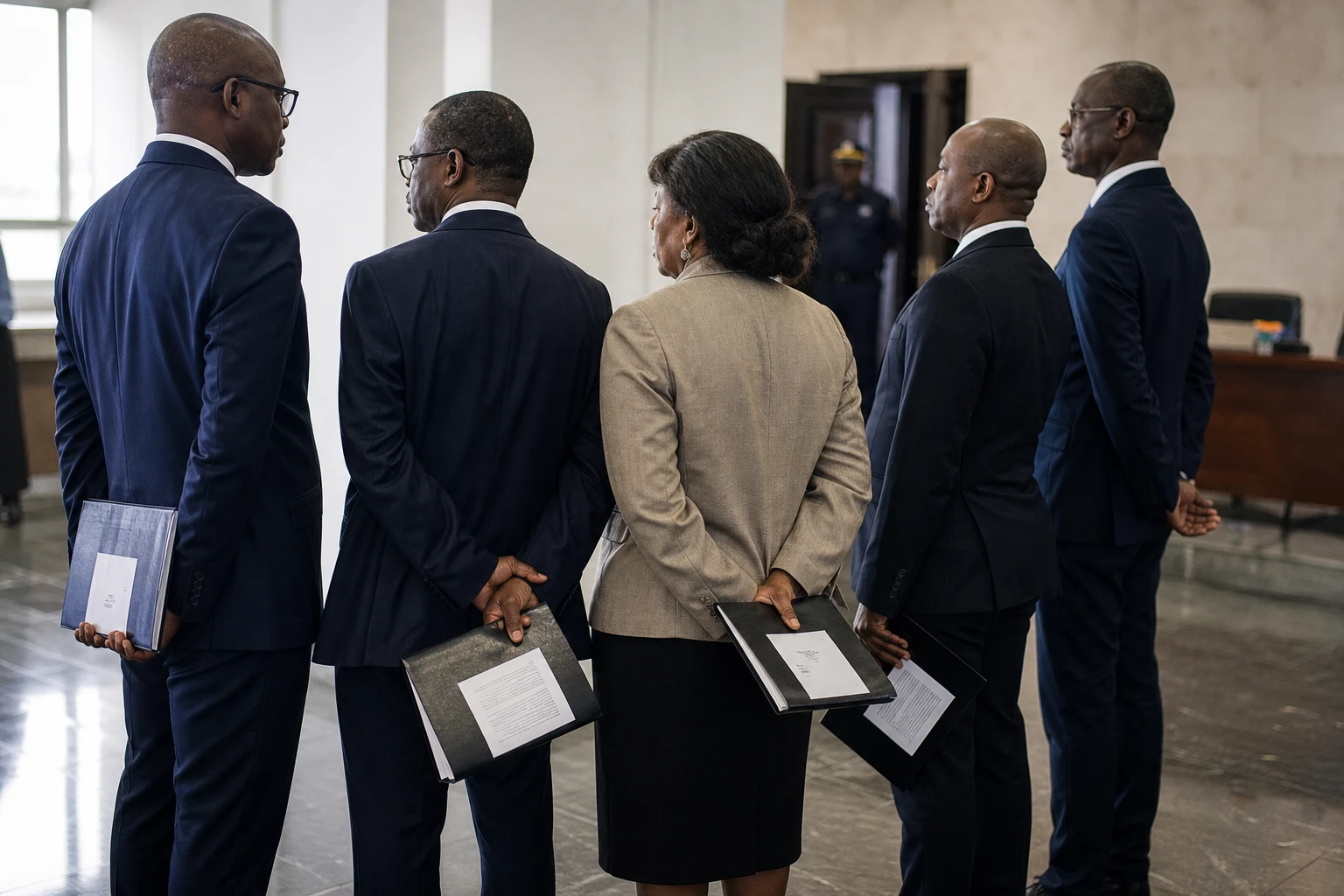
In Libreville, judicial pressure spills across borders
When a Gabonese opposition figure ends up behind bars just as the head of state takes centre stage in Paris, the case quickly moves beyond the confines of the courts. It touches on a broader question: the balance between institutional renewal, international image and the space left for critical voices in Gabon, a Central African country that is part of CEMAC and the African Union’s continental mechanisms.
The case also comes amid an already charged political climate. In Libreville, the authorities imposed tighter controls on social media in the first half of 2026, while several observers and organisations reported a narrowing of public space. This context gives every proceeding against an opposition figure significance beyond the individual concerned.
A legal case at the heart of a diplomatic moment
Alain-Claude Bilie-By-Nze, a former prime minister and Brice Clotaire Oligui Nguema’s main opponent in the 2025 presidential election, was arrested in Libreville on 16 April 2026, according to the Associated Press and several Gabonese media outlets. The information made public refers to a debt of five million CFA francs linked to the 2008 Festival of Cultures, an old case that his defence says is time-barred and politically instrumentalised.
His lawyers argue that the proceedings are irregular and challenge the legal basis of the case. They also say their client is being held in very harsh conditions at Libreville Central Prison, confined for prolonged periods in a small space. The trial itself is part of a broader sequence: in May and June 2026, Gabon’s courts had already rejected requests for his release, while the presidency reaffirmed its commitment to judicial independence.
France is asked to intervene, but the heart of the matter remains Gabonese
It was against this backdrop that the opposition figure’s lawyers asked Paris to exert “friendly pressure” during Brice Clotaire Oligui Nguema’s state visit to France, which Libreville announced would take place from 19 to 22 July 2026. The argument they put forward is political as well as legal: they say France can reiterate principles it claims to defend without this amounting to interference. The Gabonese presidency, for its part, rejects any executive intervention in the judicial case.
This sequence says much about the relationship between Libreville and Paris. Gabon is seeking to strengthen useful economic co-operation, particularly in water, infrastructure and productive investment. But bilateral ties are no longer limited to diplomatic channels. They are also shaped by the expectations of the diaspora, criticism from the opposition and the way the authorities want to project an image of regained sovereignty.
What the case reveals about Gabon and the region
For the Gabonese authorities, the immediate challenge is clear: to prevent the Bilie-By-Nze case from clouding the narrative of a transition to the Fifth Republic and a state portrayed as being rebuilt. For the opposition, by contrast, the case fuels the view that political space is shrinking, at a time when social media has been brought under tighter controls and several critical voices say they are feeling greater pressure. For the public, especially in cities where information travels quickly, the message is clear: speaking out politically now comes at a higher price.
Across Central Africa, the Gabonese case will be closely watched. Gabon holds a particular place in CEMAC, whose Commission is based in Bangui, and in the wider ECCAS region, which monitors issues of stability and integration. If the legal proceedings remain contested, they will fuel an already sensitive debate about the rule of law, the treatment of opposition movements after military transitions and the credibility of political realignments in the sub-region. The next steps are judicial, but also diplomatic: they will play out between Libreville, Paris and the capitals of Central Africa.