Algeria
 Egypt
 Libya
 Morocco
 Sudan
 Tunisia
 Benin
 Burkina Faso
 Cabo Verde
 Côte d'Ivoire
 Ghana
 Guinea
 Guinea-Bissau
 Liberia
 Mali
 Mauritania
 Niger
 Nigeria
 Senegal
 Sierra Leone
 The Gambia
 Togo
 Cameroon
 Central African Republic
 Chad
 DR Congo
 Equatorial Guinea
 Republic of the Congo
 São Tomé and Príncipe
 Burundi
 Comoros
 Djibouti
 Eritrea
 Ethiopia
 Kenya
 Madagascar
 Malawi
 Mauritius
 Mozambique
 Rwanda
 Seychelles
 Somalia
 South Sudan
 Tanzania
 Uganda
 Angola
 Botswana
 Eswatini
 Lesotho
 Namibia
 South Africa
 Zambia
 Zimbabwe
The cable is not enough. The network must reach cities, public services and homes
In Gabon, the digital challenge is no longer limited to international connectivity. The real issue now is how to carry that capacity to neighbourhoods, businesses, universities and public services without relying on a handful of vulnerable routes. This is where the Gabonese National Backbone, the network that distributes internet access within the country, becomes strategically important.
This approach is part of a broader trajectory. In Libreville, the authorities have already approved the principle of extending the backbone through a public-private concession partnership under the Gabon Fiber project. At the same time, the country is preparing to connect to the Medusa Africa submarine cable, expected by 2028, with a landing point announced in Port-Gentil and an extension inland to better link this future international capacity to the national network.
Another 1,651 kilometres of fibre to expand the network’s backbone
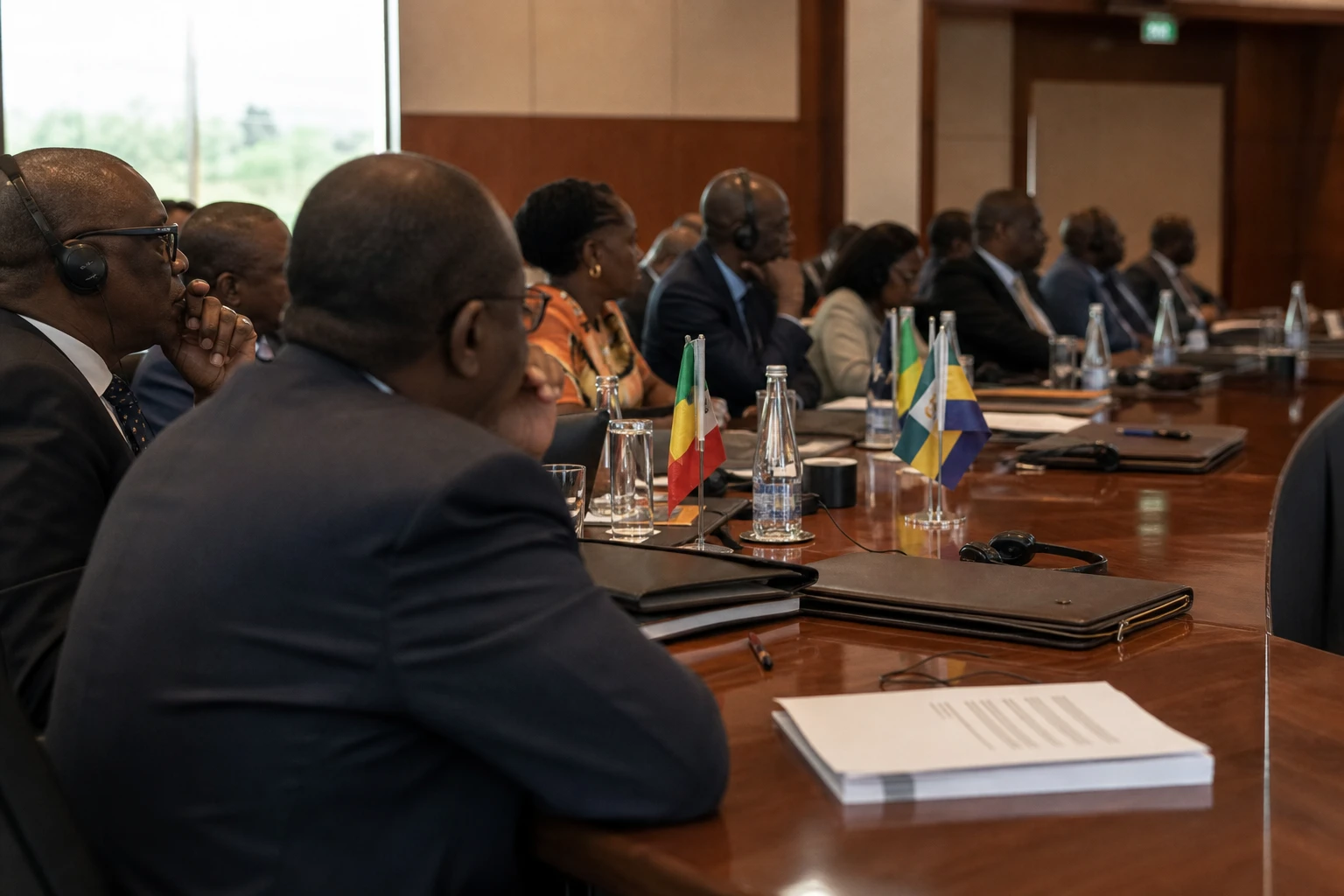
Workshops held on 9 and 10 September in Libreville focused on reviewing and approving the partnership project between the Digital Infrastructure Holding Company, or SPIN, and Gabon Fiber S.A., which is responsible for operating and developing the Gabonese National Backbone. The agreement between the two parties is due to be signed on 14 September. The project provides for the deployment of an additional 1,651 kilometres of optical fibre, almost doubling the national backbone.
SPIN is the public entity responsible for developing and managing the state’s digital infrastructure. Its official mission is to reduce the digital divide and help connect rural areas to digital networks. The backbone itself is not the fibre installed at a subscriber’s premises. It is the main artery that carries data between the country’s major regions and connects operators to national and international infrastructure.
In official documents, the Gabonese government has already described the extension as a response to infrastructure that has become too limited for current needs. The project forms part of an older network architecture built around the national backbone and the Gabonese branch of the ACE submarine cable, later strengthened through other interconnection agreements. As far back as 2019, Gabon had also raised the prospect of a second phase of CAB-Gabon, involving 2,185 kilometres of fibre, two data centres and a computer-attack response centre.
Between international capacity and local security, the project remains vulnerable
The project is under way as Libreville seeks to strengthen its position in international connections. Gabon is already served by several submarine cable systems, including 2Africa, ACE, Maroc Telecom West Africa and SAT-3/WASC, according to the Gabonese authorities. Medusa Africa is expected to add a new, more resilient route to limit the risk of congestion and service disruption. The government says total capacity is expected to rise from about 20 terabytes to 400 terabytes with the new connection.
But network resilience remains a practical concern. In late August 2026, a fibre-optic outage disrupted voice and internet services in several localities in Haut-Ogooué, Woleu-Ntem, Ogooué-Lolo and Ogooué-Ivindo. In response, the authorities condemned a rise in cable theft and acts of sabotage, calling for investigations and tighter controls on metal trafficking. A Gabonese media outlet reported that the government was particularly targeting the copper trade, which feeds a black market at the expense of public services and businesses.
This vulnerability is not unique to Gabon. Across the continent, telecommunications networks are regularly hit by outages linked to vandalism, roadworks and poorly coordinated construction. In a country such as Gabon, where distances between centres of demand and some inland areas are considerable, each fibre break affects more than service quality. It also slows public administrations, schools, banks, transport businesses and the everyday activities of connected households.
What the project means for Gabon’s economy, from Libreville to the interior
The issue is not merely technical. It is economic and territorial. In Libreville and Greater Libreville, greater transmission capacity could reduce congestion, improve the reliability of digital services and support business use. Inland, a denser network could make an even greater difference, as it determines actual access to online services, digital education, administrative procedures and commercial activity.
The project also affects the structure of the market. A more robust backbone would allow operators to share traffic routes more effectively, connect localities more quickly and ease some operational constraints. Over time, this could encourage the development of more reliable digital services, including for small businesses, local platforms, digital payments and institutional users. But that promise depends on three conditions: quality delivery, ongoing maintenance and physical protection of the infrastructure.
Gabon is therefore moving forward in a coherent sequence. Following agreements on Medusa Africa, the government is seeking to link international networks to the national network, and then the national network to local areas. This approach matters for Central Africa, where CEMAC has for several years promoted network interconnection as a driver of economic integration. With its coastal location and still uneven inland coverage, Gabon could play a role as a regional hub if its infrastructure remains reliable over time.
A process to follow through to 2028, with an immediate test of project governance
In the short term, the most visible milestone is the planned signing of the agreement between SPIN and Gabon Fiber S.A. The project will then have to demonstrate that it can deliver the promised kilometres, secure vulnerable sections and connect priority areas. In the medium term, the launch of Medusa Africa, expected by 2028, will show whether Gabon has succeeded in building a more resilient digital chain, from the sea to inland areas.
In a country where digital transformation has become an argument for economic sovereignty as well as a tool of government, the question is no longer simply how much fibre will be laid. It is who protects it, who manages it and who actually benefits from it, from Libreville to the provinces. Only then will the national backbone cease to be a promise and become a fully fledged public-service infrastructure.