Algeria
 Egypt
 Libya
 Morocco
 Sudan
 Tunisia
 Benin
 Burkina Faso
 Cabo Verde
 Côte d'Ivoire
 Ghana
 Guinea
 Guinea-Bissau
 Liberia
 Mali
 Mauritania
 Niger
 Nigeria
 Senegal
 Sierra Leone
 The Gambia
 Togo
 Cameroon
 Central African Republic
 Chad
 DR Congo
 Equatorial Guinea
 Gabon
 Republic of the Congo
 São Tomé and Príncipe
 Burundi
 Comoros
 Djibouti
 Eritrea
 Ethiopia
 Kenya
 Madagascar
 Malawi
 Mauritius
 Mozambique
 Rwanda
 Seychelles
 Somalia
 South Sudan
 Uganda
 Angola
 Botswana
 Eswatini
 Lesotho
 Namibia
 South Africa
 Zambia
 Zimbabwe
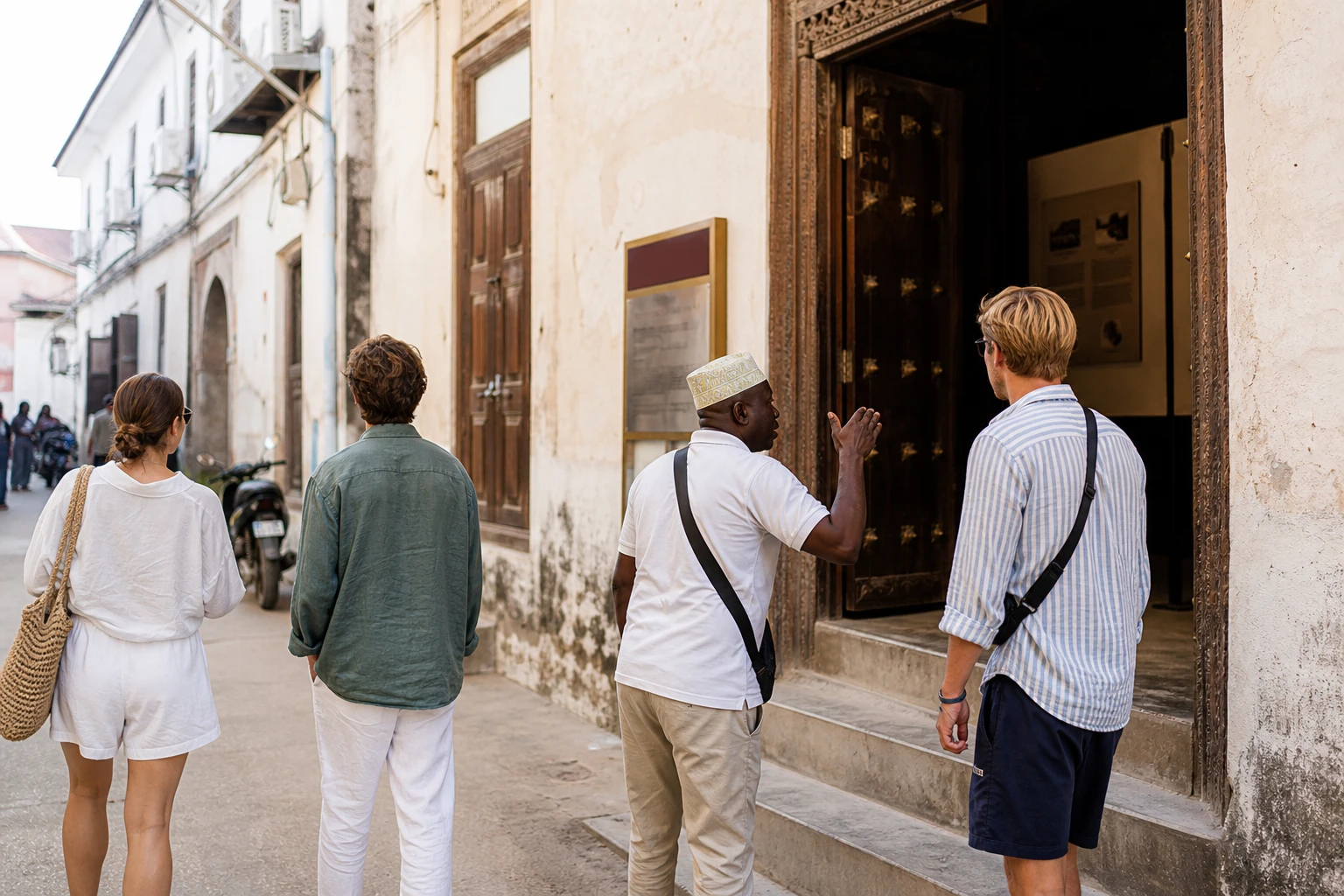
In Stone Town, a popular legacy beyond music
In Zanzibar’s old town, a museum can be much more than a stop for fans. It also tells the story of how an island weaves its heritage into its economy, image and place in the Indian Ocean. In Stone Town, Freddie Mercury’s childhood home attracts visitors seeking a global star, but also a fragment of Tanzanian history.
The site is in the heart of Stone Town, an area listed as a UNESCO World Heritage Site since 2000. The organisation describes this urban fabric as an outstanding example of a Swahili trading town, shaped by African, Arab, Indian and European influences. This setting, both local and connected to the world, gives its new role as a museum particular significance. UNESCO’s page on Stone Town of Zanzibar also highlights the site’s rich heritage and its role in the history of the East African coast.
From family home to museum: a recent transformation
The museum dedicated to Freddie Mercury was officially inaugurated on 24 November 2019, on the 28th anniversary of his death. Its managers describe the building as the first cultural institution devoted to the singer at the very place where he spent his childhood. It is on Shangani Street, in the historic centre of Stone Town, and welcomes visitors as a space for remembrance and biographical storytelling.
Freddie Mercury, whose real name was Farrokh Bulsara, was born in Zanzibar on 5 September 1946. Official sources on the site dedicated to his memory confirm that he was born in Zanzibar, before his family left for India and then the United Kingdom. He died on 24 November 1991, aged 45, after publicly announcing the day before his death that he had AIDS. In 2026, he would have been 80. These dates are now at the heart of a still-living global memory. Freddie Mercury’s official biography recounts his journey from Zanzibar to worldwide success with Queen.
In the museum’s rooms, visitors can see photographs, handwritten lyrics, stage costumes and one of his first pianos. The collection comes in part from the family and people close to the band. The museum says it has received photographs from the artist’s sister, Kashmira, as well as handwritten texts provided by Queen’s production team. This family-led approach to preservation gives the site particular value: it is not merely a tribute, but a space where private objects are made accessible to the public.
A cultural attraction in an urban economy under pressure
For Zanzibar, the museum forms part of a broader strategy to promote heritage and cultural tourism. The archipelago has long relied on Stone Town as a historic showcase, alongside its beaches and seaside tourism. In this economy, heritage stories matter as much as the scenery. They encourage longer stays, diversify itineraries and support the work of guides, small operators, hotels and businesses in the old town.
The contrast is stark between the destination’s grand promises and the vulnerability of a historic urban fabric under pressure from contemporary uses. Stone Town must protect its old buildings, manage visitor flows and preserve its authenticity. The Stone Town Conservation and Development Authority, the public body responsible for preserving the site, notes that the old town contains a large number of listed historic buildings. In this context, Freddie Mercury’s home is not merely a backdrop. It joins a wider network of places that bring Zanzibar’s urban identity to life. Stone Town’s conservation authority oversees this preservation work.
The benefit is also symbolic. Tanzania is not defined solely by its beaches, nor Zanzibar by a fixed tourist image. The museum recalls that a child born in the archipelago helped shape one of the 20th century’s greatest popular music catalogues. This perspective celebrates a Tanzanian story connected to the currents of the Indian Ocean, rather than an isolated history. It speaks to the diaspora, regional visitors and music fans who see Zanzibar as a point of departure, not just a destination.
What this address says about East Africa
Stone Town’s story resonates beyond Zanzibar. Tanzania is a member of the East African Community, whose headquarters are in Arusha. This regional integration gives weight to cultural industries and cross-border tourism, particularly between historic cities, ports, islands and inland capitals. Cultural itineraries are becoming a means of regional exchange as well as a tourism product.
At continental level, this kind of museum raises a simple question: who tells the stories of great African figures, or people born in Africa, and from where? Here, Zanzibar reclaims part of Freddie Mercury’s global story. The gesture matters. It places the city on a map of remembrance linking East Africa to London, Montreux and the international rock scene, without erasing its local roots. Stone Town is presented neither as a periphery nor as a postcard image. It becomes a meaningful point of origin, with a sense of continuity.
Its most lasting impact may lie in this: in a region where heritage is often threatened by decay, speculation or neglect, a museum devoted to a global figure can help fund the upkeep of an old town, strengthen the guiding profession and raise Zanzibar’s profile on East Africa’s cultural circuits. The museum’s success will now depend on its ability to remain true to this dual purpose: preserving an artist’s memory while bringing the city where he was born into view.