Algeria
 Egypt
 Libya
 Morocco
 Sudan
 Tunisia
 Benin
 Burkina Faso
 Cabo Verde
 Côte d'Ivoire
 Ghana
 Guinea
 Guinea-Bissau
 Liberia
 Mali
 Mauritania
 Niger
 Nigeria
 Senegal
 Sierra Leone
 The Gambia
 Togo
 Cameroon
 Central African Republic
 Chad
 DR Congo
 Equatorial Guinea
 Republic of the Congo
 São Tomé and Príncipe
 Burundi
 Comoros
 Djibouti
 Eritrea
 Ethiopia
 Kenya
 Madagascar
 Malawi
 Mauritius
 Mozambique
 Rwanda
 Seychelles
 Somalia
 South Sudan
 Tanzania
 Uganda
 Angola
 Botswana
 Eswatini
 Lesotho
 Namibia
 South Africa
 Zambia
 Zimbabwe
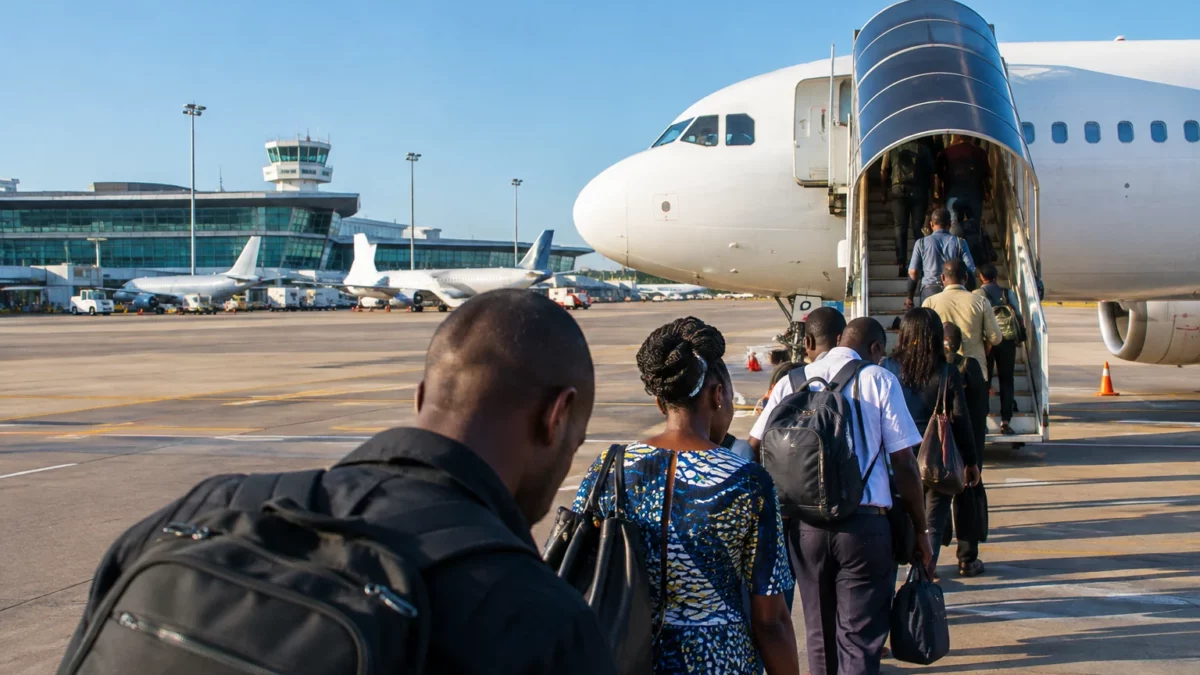
One additional aircraft is not enough to turn a capital into an air hub. For FlyGabon, the challenge now is to connect Libreville to more destinations without bearing the cost of every new route alone.
Gabonese ambition at the heart of African debates
On 23 November 2026, in Libreville, the airline presented its plans on the sidelines of the annual meeting of the African Airlines Association (AFRAA). The gathering put connections, operating costs and barriers to travel across the continent at the centre of discussions. The Gabonese Press Agency confirmed that the meeting took place in the Gabonese capital.
The strategy is part of a national revival plan. FlyGabon was launched in 2024, in a country where air links are important for connecting Libreville to inland cities and neighbouring markets. It also concerns CEMAC, the Central African Economic and Monetary Community, which brings together six countries, including Gabon. But a regional organisation does not, on its own, guarantee frequent direct flights or easy connections between its members.
Across the continent, major international networks rely on established hubs. A medium-sized airline can widen its access to passengers without opening every route itself. That is the bet behind the commercial agreements announced by FlyGabon, alongside the expansion of its fleet.
Three Boeing aircraft expected in stages
The plan first calls for a second-hand Boeing 737-700, expected in the first half of 2027. With a capacity of 100 seats, including 12 in business class, the aircraft is undergoing an overhaul and cabin refurbishment in Abu Dhabi. Two new Boeing 737 MAX 8s are due to follow in the second quarter of 2028, under 12-year lease agreements with Phoenix Aviation Capital.
Reports published by GabonActu and specialist media outlet ch-aviation corroborate the expected arrival of the first aircraft in 2027 and the lease of the two MAX 8s. The dates remain the airline’s forecasts, however: they do not mean the aircraft are already in service.
The airline is considering using this capacity to launch routes to Dakar, Nairobi, Cape Town and Paris by 2027-2028. These destinations would cover several axes: West Africa, East Africa, southern Africa and Europe. The precise timetable, frequencies and commercial viability of the routes have yet to be determined.
The aircraft are to be operated by Gabonese crews and could reduce reliance on ACMI, a contract that combines the lease of an aircraft with its crew, maintenance and insurance. This model can help an airline maintain flights, but its cost and availability can limit operational control. The transition to aircraft integrated into its own fleet will not eliminate expenses: it will shift some of the risks towards maintenance, financing and seat occupancy.
Connections without operating every route
FlyGabon also announced four interline agreements with Airlink, CemAir, Kenya Airways and Royal Air Maroc. An interline agreement allows, under certain conditions, flights operated by different airlines to be combined on a single ticket. Passengers can thus continue their journey on a partner’s network without FlyGabon having to serve every city concerned itself.
From Libreville, Airlink and CemAir are to provide connections to cities in southern Africa. Kenya Airways offers access to its network via Nairobi, notably to East Africa, the Indian Ocean, Asia and Europe. Royal Air Maroc can extend the journey via Casablanca to Morocco, Europe and North America. The agreements are due to be implemented gradually in 2027. Their practical scope will depend on the routes offered, the coordination of schedules and booking conditions.
This model could widen the choice for Gabonese passengers and attract connecting travellers to Libreville. It does not, however, guarantee lower fares or a faster journey. Connections must be sufficiently well synchronised, and passengers must be able to count on clear assistance in the event of a delay or missed flight.
The challenge: filling aircraft and building a lasting network
The announced expansion carries a classic commercial risk: opening long-haul routes requires significant investment, while revenue depends on the number of seats sold throughout the year. A route to Paris, Nairobi or Cape Town will only be sustainable if demand, schedules, fares and operating costs are in balance. Business travellers and connecting passengers are not the only ones affected: the availability of regular flights can also influence trade, tourism and family travel.
The impact will not be the same everywhere in Gabon. International routes from Libreville can strengthen the country’s access to external networks, but they do not automatically meet the need for connections between the capital and inland cities. For people outside Libreville, improvements will also depend on regional frequencies, flight reliability and cost. Growth in the international network therefore does not, by itself, amount to an improvement in domestic services.
For the region, the issue goes beyond the choice of aircraft. Agreements between African airlines can help connect markets without direct flights, but integration still depends on operational rules, affordable fares and reliable connections. The next steps to watch are the effective implementation of the agreements in 2027, the arrival of the first 737 and confirmation of the new routes. Libreville’s capacity to become a regional connecting point will be measured by these results, rather than by the number of aircraft announced.