Algeria
 Egypt
 Libya
 Morocco
 Sudan
 Tunisia
 Benin
 Burkina Faso
 Cabo Verde
 Côte d'Ivoire
 Ghana
 Guinea
 Guinea-Bissau
 Liberia
 Mali
 Mauritania
 Niger
 Nigeria
 Senegal
 Sierra Leone
 The Gambia
 Togo
 Cameroon
 Central African Republic
 Chad
 DR Congo
 Equatorial Guinea
 Gabon
 Republic of the Congo
 São Tomé and Príncipe
 Burundi
 Comoros
 Djibouti
 Eritrea
 Kenya
 Madagascar
 Malawi
 Mauritius
 Mozambique
 Rwanda
 Seychelles
 Somalia
 South Sudan
 Tanzania
 Uganda
 Angola
 Botswana
 Eswatini
 Lesotho
 Namibia
 South Africa
 Zambia
 Zimbabwe
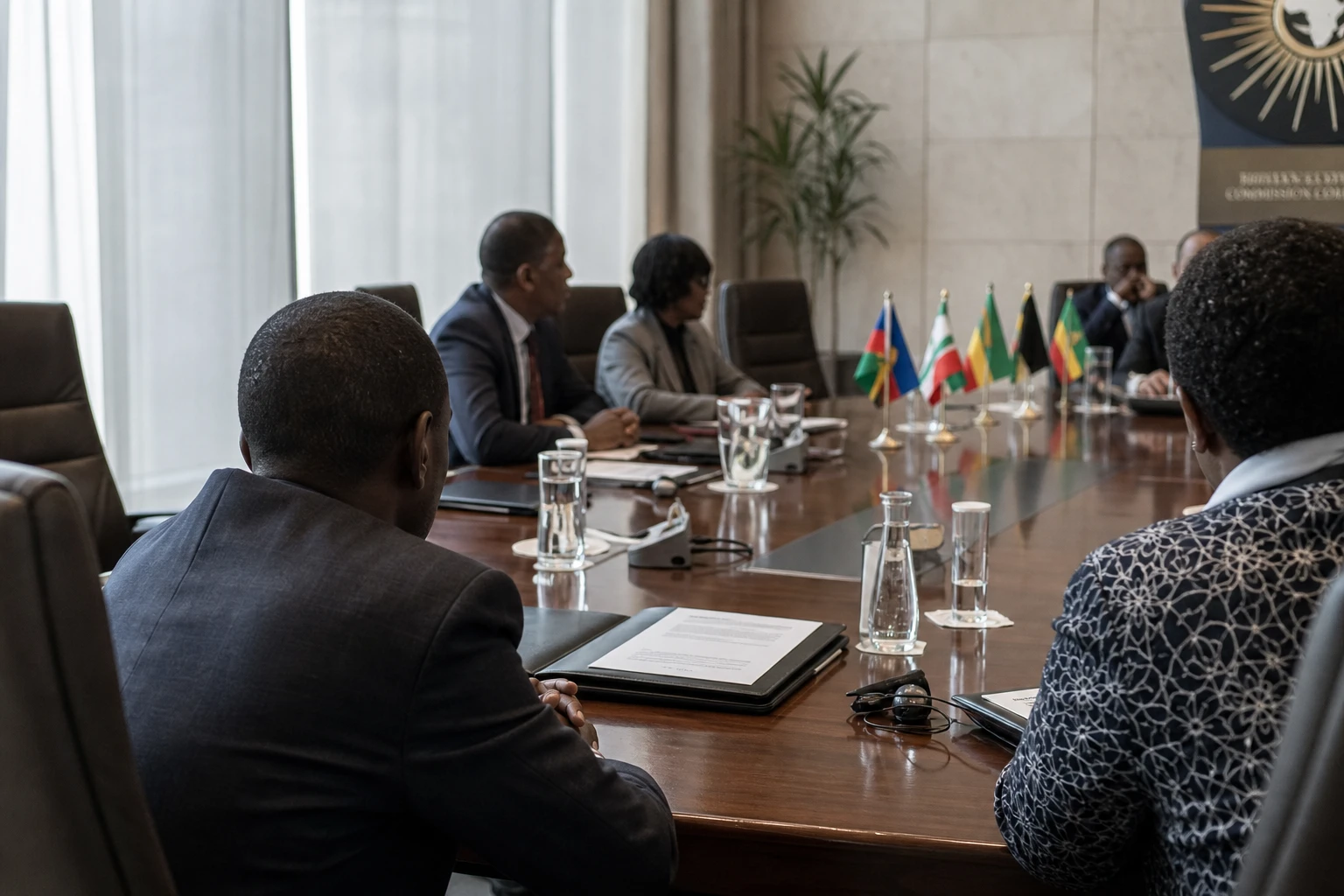
In Addis Ababa, explosions heard overnight from 30 September to 1 October 2026 brought home a reality the authorities had sought to contain: the intensifying conflict in northern Ethiopia is beginning to reach the country’s political centre. Residents in neighbourhoods near military installations heard several blasts, but no official casualty figures were released.
A crisis that began in the north but is now visible in the capital
For several days, Ethiopian federal forces have been fighting armed groups in Tigray and neighbouring regions. The Tigray People’s Liberation Front, or TPLF, is among the main actors involved in this new phase of confrontation.
The conflict also affects Amhara and Afar. Both regions border Tigray and occupy a strategic position between northern Ethiopia, the Red Sea and routes linking the country to Djibouti. Any military advance in this area could therefore disrupt roads, transport and the delivery of aid.
On 23 September 2026, the African Union reported the capture and occupation of the airports in Mekele, Axum and Shire by Tigrayan forces. The organisation called for an immediate resumption of dialogue and recalled that the cessation of hostilities agreement signed in Pretoria on 2 November 2022 remains the framework for peace in Ethiopia.
The United Nations, for its part, reported an expansion of the fighting and increasing disruption to humanitarian operations. It also cited new population displacements, as many Ethiopians have yet to rebuild stable lives after the Tigray war of 2020 to 2022.
Explosions reported, but their source remains unclear
Several explosions were heard in Addis Ababa overnight from Wednesday 30 September to Thursday 1 October. Witnesses reported blasts in the Tor Hayloch area, where the headquarters of the Ethiopian National Defence Forces is located. Other sounds were reported in the south of the capital, including around Gotera.
The African Press Agency (APA) reported the accounts, while the Associated Press cited an intelligence official confirming three explosions in different parts of the city. Both sources said, however, that no casualties or material damage had been officially reported at the time of publication.
The possibility of a drone attack was raised, particularly because the authorities had banned drone flights over Addis Ababa and its surroundings on 30 September. That measure is not enough, however, to establish the nature of the explosions. Officials also mentioned the possibility of exercises or incidents involving military installations.
Caution is therefore still necessary. No public claim has attributed the blasts to a particular group. TPLF leader Debretsion Gebremichael nevertheless said his forces would continue fighting their adversaries “in the places and at the times of [their] choosing”, according to a statement reported by several media outlets.
The return of the Eritrean factor
The crisis is not limited to a confrontation between Addis Ababa and Tigrayan forces. Relations between Ethiopia and Eritrea have deteriorated sharply in recent weeks. Addis Ababa accuses Asmara of supporting groups hostile to the federal government. Eritrea rejects the accusations.
On 1 October, the Ethiopian government ordered ten Eritrean diplomats to leave the country and announced the closure of its embassy in Asmara. Eritrea responded by severing diplomatic relations with Ethiopia. The decision turns a local military tension into a broader regional crisis.
Eritrea’s role is particularly sensitive. The country supported federal forces during the Tigray war. The Pretoria agreement provided for an end to hostilities, but the issues of disputed territories, disarmament and the presence of foreign forces have never been fully resolved.
The border between the two countries remains closed along several stretches. It runs through an area whose populations are connected by history, language and family ties. A further escalation could therefore affect civilians far beyond the front lines, especially in rural areas where roads and telecommunications are already fragile.
Growing pressure on people and the economy
For people in Tigray, Amhara and Afar, the resumption of fighting means above all the closure of roads, disruption of services and difficulty accessing markets. Families displaced during the previous war face the prospect of being uprooted again, sometimes without any guarantee of protection or supplies.
Humanitarian organisations have also reported obstacles to their work. The United Nations said aid vehicles had been seized in affected areas between 2025 and 2026. Of at least ten vehicles involved, only two had been recovered by 30 September, according to the UN humanitarian coordinator in Ethiopia.
The capital is not experiencing the same effects as the northern regions. In Addis Ababa, the immediate concern is the security of military infrastructure, institutions and transport. In rural areas, the consequences are more direct: displacement, crop losses, limited access to healthcare and disrupted trade.
The formal economy could also be affected by tighter security. Restrictions on drones, road checks and disruptions to air travel complicate business travel and commercial activity. In northern cities, the informal economy, which depends on markets and daily transport, is particularly vulnerable.
A test for African mediation
Ethiopia occupies a central position in the Horn of Africa. Addis Ababa hosts the African Union headquarters and plays a major diplomatic role on the continent. A new open war would test African conflict-prevention mechanisms, following the Pretoria agreement brokered under the auspices of the African Union.
The African Union has called on the parties to keep communication channels open and tasked its high representative for the Horn of Africa, former Nigerian president Olusegun Obasanjo, with supporting de-escalation efforts. The Intergovernmental Authority on Development, or IGAD, is also involved. The regional organisation brings together several countries in the Horn and seeks to coordinate responses to cross-border crises.
The next stage will depend on several factors: how the fighting around Tigray develops, whether federal forces can retake strategic routes, Eritrea’s position and the possibility of restarting direct talks. The opening of the Ethiopian parliament in October comes amid particularly high tensions, following elections marked by insecurity in several regions.
For now, the explosions in Addis Ababa do not make it possible to conclude that a new front has opened in the capital. They nevertheless show that the war in the north is now putting pressure on Ethiopia’s political, economic and diplomatic heart.