Algeria
 Egypt
 Libya
 Morocco
 Sudan
 Tunisia
 Benin
 Burkina Faso
 Cabo Verde
 Côte d'Ivoire
 Ghana
 Guinea
 Guinea-Bissau
 Liberia
 Mali
 Mauritania
 Niger
 Nigeria
 Senegal
 Sierra Leone
 The Gambia
 Togo
 Central African Republic
 Chad
 DR Congo
 Equatorial Guinea
 Gabon
 Republic of the Congo
 São Tomé and Príncipe
 Burundi
 Comoros
 Djibouti
 Eritrea
 Ethiopia
 Kenya
 Madagascar
 Malawi
 Mauritius
 Mozambique
 Rwanda
 Seychelles
 Somalia
 South Sudan
 Tanzania
 Uganda
 Angola
 Botswana
 Eswatini
 Lesotho
 Namibia
 South Africa
 Zambia
 Zimbabwe
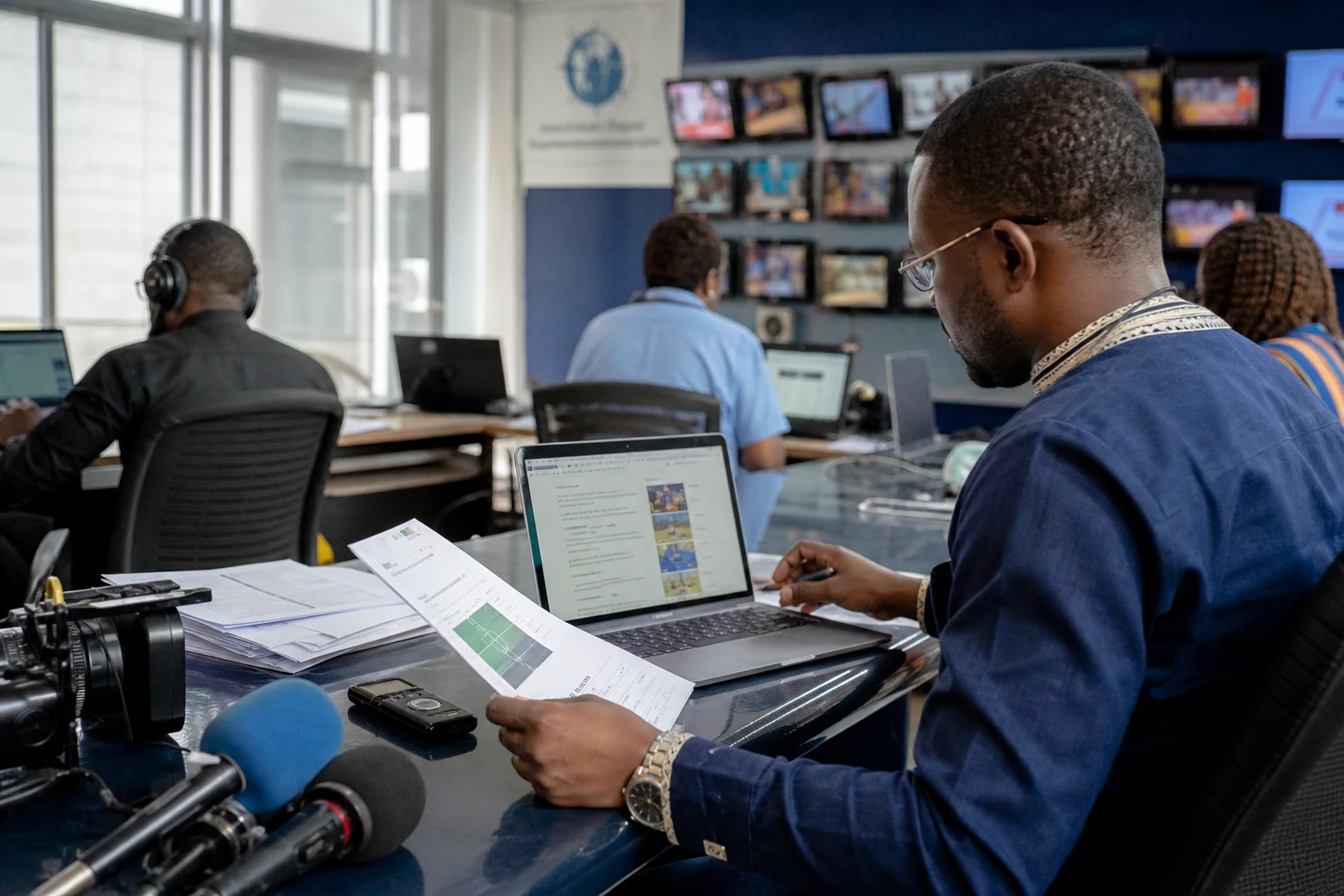
A show of support that extends beyond the pitch
In African football, public positions never remain confined to the stands. They also say something about the balance of power between federations, confederations and influence at the top of the global game. When Samuel Eto’o chooses to make his support for Gianni Infantino public, it is more than a personal opinion. It is a political signal in an ecosystem where Cameroon, with its sporting and symbolic weight, is still seeking greater influence.
The president of the Cameroon Football Federation heads an institution affiliated to CAF since 1963 and FIFA since 1962. The federation is based in Yaoundé, Cameroon’s capital. This position gives his words a reach beyond the national arena. In a Central African region where football often serves as an institutional showcase, every alignment matters.
A context already favourable to FIFA’s chief
The timing is significant. The FIFA president announced at the organisation’s 76th Congress in Vancouver that he would seek a new term in 2027. He thanked the 211 member associations for their support and said he was standing for re-election. The announcement makes the setting clear: the battle for influence has begun before the formal deadline.
On the African side, the ground had already been prepared. On 29 April 2026, the Confederation of African Football said its member associations unanimously supported Gianni Infantino’s re-election for the 2027–2031 period. In other words, Samuel Eto’o’s expressed support follows a continental line already set by CAF. It is not a break, but a confirmation.
There is a simple explanation for this consistency. For several years, FIFA and CAF have highlighted investment in development, youth competitions and the international visibility of African football. CAF has already publicly defended the idea that football can serve as a tool for economic and social development in Africa.
What Samuel Eto’o chose to say
In his interview, Samuel Eto’o defended Gianni Infantino, explaining that he would support him in the next election, particularly because of what the Swiss leader had brought to African football. The political message is clear. The FECAFOOT chief is speaking at once as a former leading player on the continent, a federation president and an actor familiar with the decision-making circles of global football. His support therefore has both symbolic and strategic value.
In football, the backing of a figure such as Eto’o carries more weight than an isolated comment on social media. It comes in an environment where alliances between African federations, CAF and FIFA shape access to funding, competitions and representation. The issue is not just the election of one man. It is also the place Africa intends to claim in the global governance of sport.
Between symbolic weight and institutional calculation
In Cameroon, this kind of public position resonates in a particular way. Football has a central place in public life. It serves as a shared language, a source of collective emotion and sometimes a barometer of institutions. When the FECAFOOT president speaks, he is addressing supporters as well as club leaders, sponsors, sports officials and international partners.
But this support must also be viewed in light of Samuel Eto’o’s recent record. In 2024, CAF fined him $200,000 after finding that he had seriously breached principles of ethics, integrity and sportsmanship by signing an ambassador contract with a sports betting company. In January 2026, CAF also said it had opened disciplinary proceedings against him following a Cameroon match in Rabat. These developments are a reminder that, in Africa as elsewhere, sporting alliances are forged in an environment of scrutiny and power struggles.
For Cameroonians, however, the practical stakes are broader than Eto’o alone. They concern the country’s ability to defend its interests in football’s governing bodies, secure competitions and funding, and maintain a credible image. In the CEMAC region, where budgetary room for manoeuvre is limited, sport remains one of the few areas capable of generating international visibility at relatively low cost. Football thus becomes an instrument of influence, but also of negotiation.
What this episode says about African football
The episode also tells another story: Africa is not merely a passive bloc of supporters. It knows how to count its votes, build coalitions and influence global decisions. CAF’s support announced in Vancouver, then echoed by national federations, shows a continent organised around shared interests, even when national circumstances differ.
For Central Africa, the issue extends beyond Cameroon. Federations in the region are closely watching how seats, programmes and competitions are allocated. A FIFA election can influence how regions are served, heard and funded. That is why declarations of support are never purely procedural. They help map power in global football.
The continental stakes are clear. As the 2027 FIFA presidential election approaches, Africa will seek to turn its apparent unity into concrete leverage: more influence on committees, greater visibility for its competitions and more benefits for its domestic leagues. The Cameroon case is a clear reminder: in international football, a public show of support is never just a formula. It is a piece on a chessboard where governance, image and the continent’s interests move together.