Algeria
 Egypt
 Libya
 Morocco
 Sudan
 Tunisia
 Benin
 Burkina Faso
 Cabo Verde
 Côte d'Ivoire
 Ghana
 Guinea
 Guinea-Bissau
 Liberia
 Mali
 Mauritania
 Niger
 Nigeria
 Senegal
 Sierra Leone
 The Gambia
 Togo
 Cameroon
 Central African Republic
 Chad
 DR Congo
 Equatorial Guinea
 Gabon
 Republic of the Congo
 São Tomé and Príncipe
 Burundi
 Comoros
 Djibouti
 Eritrea
 Kenya
 Madagascar
 Malawi
 Mauritius
 Mozambique
 Rwanda
 Seychelles
 Somalia
 South Sudan
 Tanzania
 Uganda
 Angola
 Botswana
 Eswatini
 Lesotho
 Namibia
 South Africa
 Zambia
 Zimbabwe
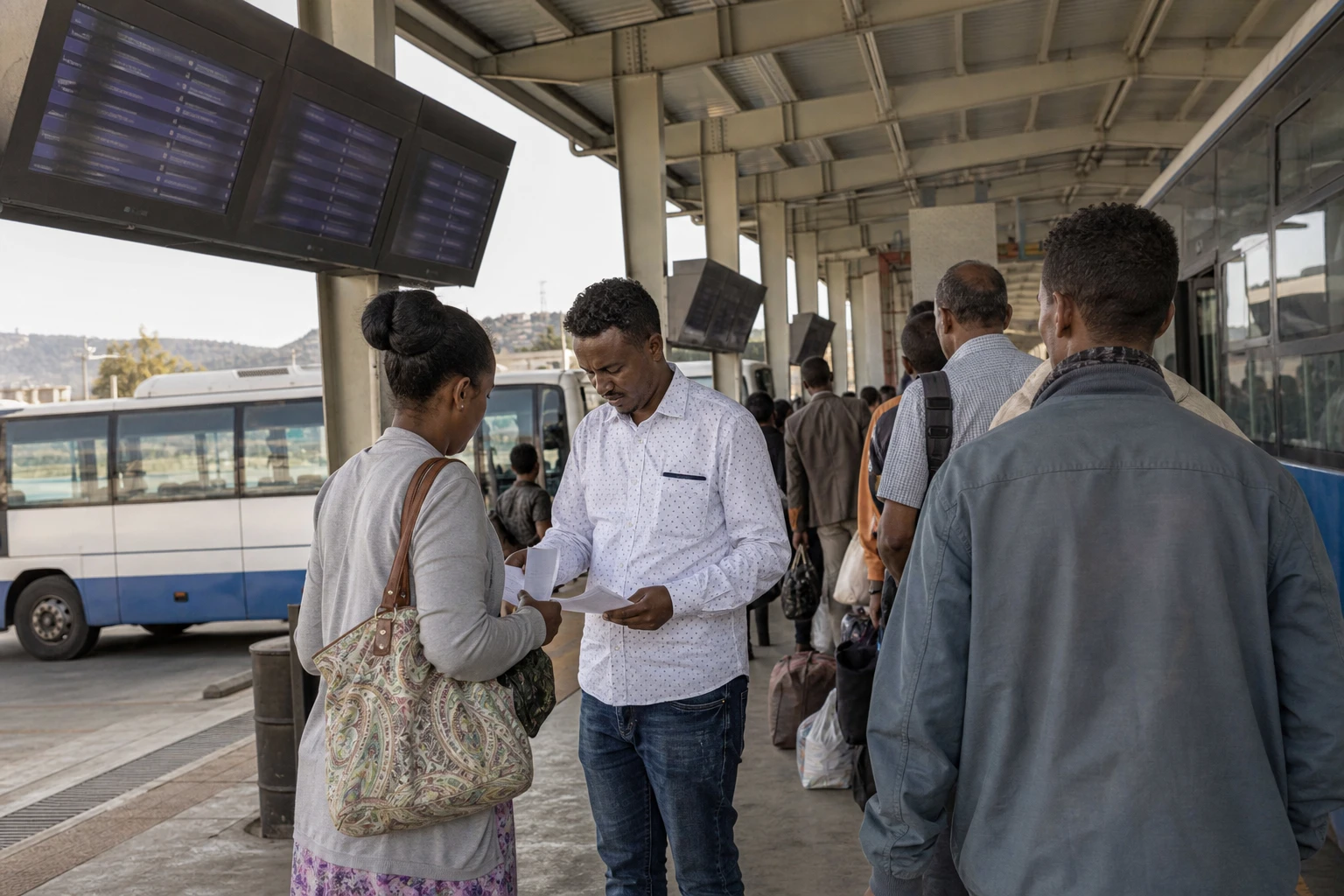
In Ethiopia, the question is no longer simply whether the 2022 peace is holding. Since Sunday 20 September 2026, an alliance bringing together several armed groups has directly challenged federal authority. Three days later, Tigrayan forces took control of airports in the north of the country. The risk is now that the conflict will spread beyond Tigray.
An alliance extending beyond Tigray
The Tigray People’s Liberation Front, or TPLF, announced on 20 September that it had formed a coalition with six other armed and political organisations. The alliance brings together Tigrayan forces, including the Fano militias of the Amhara region and the Oromo Liberation Army, active in Oromia.
The Ogaden National Liberation Front, a group active in the Somali region, as well as armed organisations from Afar, Benishangul-Gumuz and the Gumuz people, are also among the signatories. Coalition members say they want Prime Minister Abiy Ahmed’s government to step down and a political transition to begin.
This realignment is significant. These groups do not necessarily share the same vision for Ethiopia. Some advance territorial or communal claims. Others oppose the centralisation of power or military operations conducted by Addis Ababa. Their rapprochement therefore reflects less an ideological unity than a shared interest: weakening the federal government.
Such a coalition will nonetheless be difficult to coordinate. The organisations involved are based in distant regions and have separate chains of command. Some have fought one another in the past. Their ability to conduct joint operations has yet to be demonstrated.
Clashes reported around strategic infrastructure
On Wednesday 23 September, residents of Mekele, the Tigray regional capital, said forces linked to the TPLF had taken control of the city’s airport, which had until then been under the authority of the federal government. Similar reports concerned the airports of Aksum and Shire.
The African Union Commission confirmed the seizure and occupation of the three facilities, as well as the detention of federal personnel. It called for maximum restraint and immediate de-escalation. The African Union’s statement on tensions in northern Ethiopia also urges neighbouring countries to avoid any action that could worsen the crisis.
Ethiopian Airlines has suspended flights to several airports in Tigray. The decision disrupts residents’ travel, as well as the transport of personnel, goods and potential humanitarian aid. In a region where roads remain unreliable and public services were severely damaged by the previous war, the closure of air links can quickly isolate towns.
Federal authorities accuse Tigrayan forces of launching attacks on government positions in Tigray, Afar and Amhara. Officials close to the TPLF, for their part, say they are conducting a defensive operation and accuse the government of supporting groups hostile to the Tigrayan administration.
The information available does not yet make it possible to establish a reliable toll from the fighting. No consolidated figure for civilian or military casualties should therefore be presented as definitive. The two sides’ accounts remain largely contradictory, while independent access to the areas concerned remains limited.
Pretoria peace deal under severe pressure
Tigray has only just emerged from a war that pitted federal forces and their allies against forces linked to the TPLF from November 2020 to November 2022. The cessation-of-hostilities agreement signed in Pretoria, South Africa, helped reduce the fighting and gradually restore communications.
Its implementation, however, remains incomplete. The disarmament of combatants, the return of displaced people, the reopening of public services and the resolution of territorial disputes continue to fuel tensions. The status of some areas disputed between Tigray, Amhara and Afar remains particularly sensitive.
The question of foreign forces is another source of instability. During the war, Eritrean troops intervened alongside federal forces. Addis Ababa now accuses Asmara of supporting hostile groups. Eritrea rejects the accusations. Any direct involvement by neighbouring countries could turn an internal crisis into a regional confrontation.
For residents, the consequences go beyond troop movements. In towns, a resumption of fighting threatens transport, telecommunications and commercial activity. In rural areas, it risks disrupting harvests and access to markets. Displaced families, already facing difficult returns, could be forced to flee once again.
A test for Addis Ababa and the regional architecture
Abiy Ahmed’s government must now respond on two fronts. It needs to prevent the attacks from spreading while avoiding an offensive that would shatter the peace mechanisms. An exclusively military response could strengthen alliances between armed groups. Conversely, rushed negotiations without security guarantees could further undermine federal authority.
The TPLF must also clarify its aims. The seizure of airports and the announcement of a national coalition mark a shift in approach from the framework of the Pretoria agreement. If this strategy continues, it could isolate the Tigrayan administration and make it harder to resume dialogue with Addis Ababa.
The Intergovernmental Authority on Development, IGAD, is directly concerned. The organisation brings together several countries in the Horn of Africa, a region already weakened by the war in Sudan and tensions between Ethiopia and Eritrea. A new Ethiopian crisis would affect borders, trade and population movements.
The African Union retains a central role, having supported the negotiations that led to the 2022 agreement. It also has a high-level panel dedicated to Ethiopia’s peace process. Its immediate priority is to secure humanitarian access, verify the facts on the ground and bring the parties back to a political channel.
Three factors will be decisive in the coming days: the alliance’s ability to hold its positions, the federal government’s military response and any potential involvement by Eritrea. The suspension of flights to Tigray is already a tangible warning sign. It shows that the crisis is no longer confined to rivalry between leaders. It is directly affecting the movement of people and daily life in a region still scarred by war.