Algeria
 Egypt
 Libya
 Morocco
 Sudan
 Tunisia
 Benin
 Burkina Faso
 Cabo Verde
 Côte d'Ivoire
 Ghana
 Guinea
 Guinea-Bissau
 Liberia
 Mali
 Mauritania
 Niger
 Nigeria
 Senegal
 Sierra Leone
 The Gambia
 Togo
 Cameroon
 Central African Republic
 Chad
 DR Congo
 Equatorial Guinea
 Gabon
 Republic of the Congo
 São Tomé and Príncipe
 Burundi
 Comoros
 Djibouti
 Eritrea
 Kenya
 Madagascar
 Malawi
 Mauritius
 Mozambique
 Rwanda
 Seychelles
 Somalia
 South Sudan
 Tanzania
 Uganda
 Angola
 Botswana
 Eswatini
 Lesotho
 Namibia
 South Africa
 Zambia
 Zimbabwe
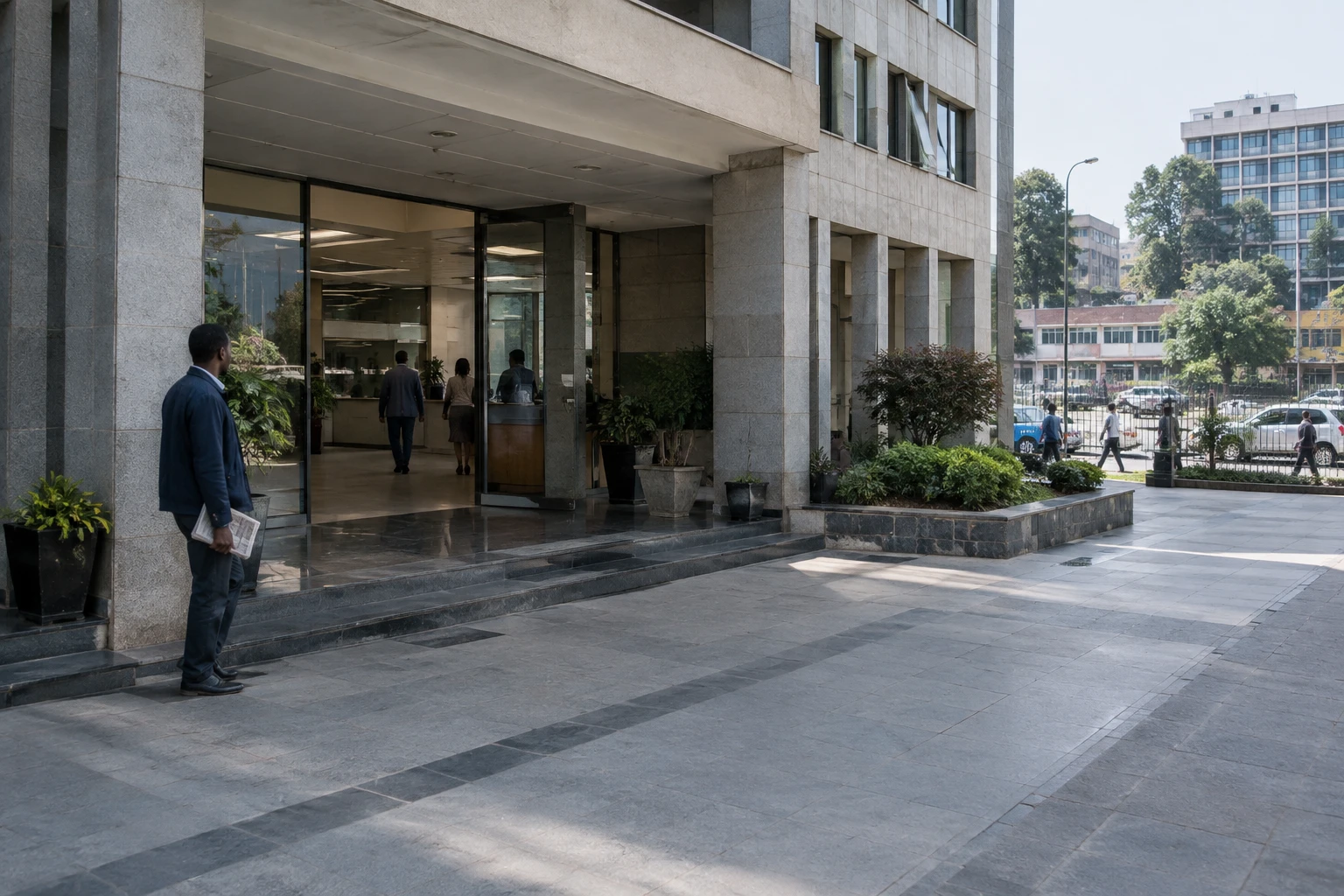
In Ethiopia, an administrative decision can now cut the public off from a printed newspaper, its digital edition and its publications in two languages. The suspension of The Reporter therefore raises a practical question: who will still be able to document the country’s political debates and tensions when independent media lose their authorisation to operate?
Private media outlet suspended indefinitely
The Ethiopian Media Authority (EMA), the public body responsible for regulating the sector, ordered The Reporter’s suspension with effect from Monday 2 November 2026. The measure covers its print and digital activities. At the time of the announcement, no date for a review had been specified.
The EMA accuses the outlet of repeatedly publishing content it considers contrary to national interests and “distorted” information. It also believes that some reports, described as “unbalanced and biased”, could harm foreign investment, tourism and Ethiopian diplomacy. These are the reasons given by the authority, not conclusions independently established.
According to available reports, the newspaper’s activities could resume if it complies with its legal and ethical obligations. However, the public information consulted does not detail either the articles in question or the concrete steps for challenging or lifting the measure. This lack of detail makes it difficult to assess the allegations independently.
Founded in 1995, The Reporter publishes in Amharic and English, in print and online. The suspension therefore affects several formats and audiences, beyond readers of its print edition alone. It follows the withdrawal, in February 2026, of the authorisation of Addis Standard, another independent media outlet, a decision that the outlet is contesting.
Regulation at the heart of national power dynamics
The decision comes amid an already tense media landscape. The Tigray conflict, which ended with a peace agreement in November 2022, and ongoing violence in the Amhara region have increased the difficulties faced by journalists covering sensitive areas. These contexts do not, on their own, explain the suspension, but they heighten the stakes around access to pluralistic information.
The Addis Standard case has fuelled questions about the use of regulatory powers. In February, the EMA revoked its authorisation, citing repeated breaches of the rules and harm to national interests. The Committee to Protect Journalists reported that the outlet had challenged the decision. In August, Human Rights Watch also described pressure targeting the outlet, including the arrest of its editor-in-chief and a search of its premises, according to information gathered by the organisation.
These cases do not prove that every regulatory decision is without basis. They do, however, raise a procedural question: are the allegations sufficiently specific, can the media outlets concerned respond, and is there an effective appeal? For the authorities, regulation can be presented as a way to ensure compliance with the law and ethical standards. For journalists and their organisations, broadly worded grounds can also have a chilling effect, especially when the consequences are immediate.
The impact is not limited to newsrooms. In Addis Ababa, readers, advertisers and media professionals can directly see a title disappear from newsstands or screens. In the regions, where access to verified local information may already be uneven, a reduction in the number of active media outlets risks narrowing the available choices. The economic effects also concern journalists, printers and other workers involved in producing and distributing the newspaper.
Reporters Without Borders’ ranking places Ethiopia 148th out of 180 countries in 2026, compared with 145th in 2025. This indicator brings together several dimensions of press freedom; on its own, it does not assess the legality of The Reporter’s suspension. The organisation also points to a difficult working environment for media in the country.
An issue extending beyond Ethiopia’s borders
Addis Ababa is home to the headquarters of the African Union. The treatment of the press in Ethiopia therefore has continental resonance, without in itself representing the situation across all African countries. In East Africa, Ethiopia is also a member of IGAD, the regional organisation bringing together several states in the Horn of Africa. The flow of reliable information matters in a region where crises and their consequences regularly cross borders.
The next developments to watch are the possible publication of detailed allegations, The Reporter’s response and whether an appeal or review procedure is available. It will also be necessary to verify whether the suspension does indeed cover all the group’s editions and services. For now, the EMA’s announcement establishes the measure and its stated reasons; on its own, it does not resolve the allegations against the newspaper.
The central issue, then, is not simply the closure of a title, but the transparency of the mechanism that made it possible. Clear rules, verifiable grounds and an effective means of challenge would help readers and authorities alike to distinguish legitimate regulation more clearly from a lasting restriction on information.