Algeria
 Egypt
 Libya
 Morocco
 Sudan
 Tunisia
 Benin
 Burkina Faso
 Cabo Verde
 Côte d'Ivoire
 Ghana
 Guinea
 Guinea-Bissau
 Liberia
 Mali
 Mauritania
 Niger
 Nigeria
 Senegal
 Sierra Leone
 The Gambia
 Togo
 Cameroon
 Central African Republic
 Chad
 DR Congo
 Equatorial Guinea
 Gabon
 Republic of the Congo
 São Tomé and Príncipe
 Burundi
 Comoros
 Djibouti
 Eritrea
 Kenya
 Madagascar
 Malawi
 Mauritius
 Mozambique
 Rwanda
 Seychelles
 Somalia
 South Sudan
 Tanzania
 Uganda
 Angola
 Botswana
 Eswatini
 Lesotho
 Namibia
 South Africa
 Zambia
 Zimbabwe
A small vineyard with strategic ambitions
In Addis Ababa, wine is no longer just a niche drink served in a handful of hotels and restaurants. In Ethiopia, it is also becoming a marker of investment, agricultural expertise and industrial upgrading. The country is starting from a low base, but making progress in a sector where raw materials, technology and the domestic market matter as much as prestige.
This shift is part of a broader context. Ethiopia is seeking to attract capital, diversify its economy and strengthen external partnerships, notably with France, which remains an economic and diplomatic presence in the country. The latest official announcements in Addis Ababa have again highlighted the bilateral relationship, at a time when Ethiopian authorities want to show they can host long-term agricultural, industrial and logistics projects.
Vineyards around Lake Ziway and a deeper history than many think
Ethiopian wine did not emerge by chance. One of the country’s leading producers says winemaking has existed in Ethiopian culture for more than a millennium, although modern commercial viticulture dates back to the mid-20th century, when Awash Wine was founded in 1956. The company now describes itself as the country’s oldest producer, with a central role in local distribution.
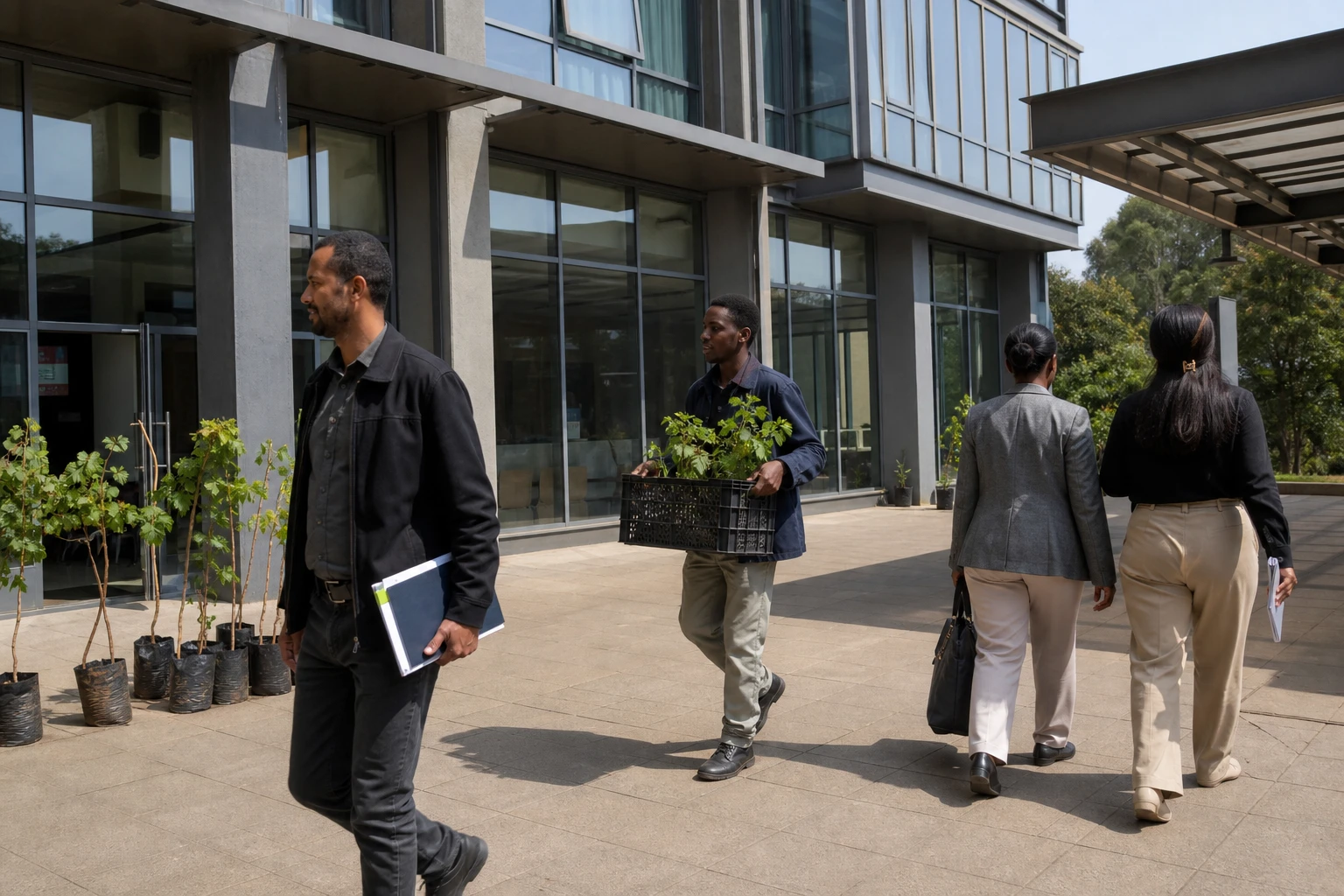
Alongside this long history, another branch has developed near Ziway, south of Addis Ababa. French grape varieties, particularly from Bordeaux, have been planted there to adapt production to Ethiopian soil and climate. Specialist sources also report that Cabernet Sauvignon imported from Bordeaux is grown locally, while news reports have shown French teams supporting agronomic trials. The challenge is not simply to make wine, but to learn how to do so in conditions very different from those of European vineyards.
This is crucial. A vineyard’s success does not come from simply transplanting a grape variety. It depends on altitude, soil, water availability, vineyard management and the organisation of the supply chain. In Ethiopia, these are precisely the factors that make wine a demanding industrial product, rather than a mere symbol of imported modernity.
France as a technical partner, not just a market
The partnership with French experts is part of the broader relationship between Paris and Addis Ababa. Bilateral co-operation is not limited to diplomacy or major investment announcements; it also involves agronomy, training and technical support. French institutions such as Bordeaux Sciences Agro, the University of Bordeaux and specialist viticulture networks demonstrate that Bordeaux expertise remains a global benchmark in the wine industry.
In Ethiopia, this expertise is being used to select the most suitable grape varieties and develop production capable of serving the local market. The sector remains modest by global standards, but is growing in a country where local drinks are taking an increasingly large share of urban consumption. Producers are betting on consumers who are becoming more open to domestic products, as well as on distribution networks in major cities.
Exports, however, should be approached with caution. Available trade data show that Ethiopia remains a very small player in the global wine market and that its export flows are limited. A World Bank report on Ethiopian trade also notes that the country’s wine exports are very small. In other words, the immediate challenge is not to conquer Bordeaux or Nairobi, but to build a profitable and sustainable domestic industry.
What this development means for Ethiopia’s economy
The growth of viticulture has several effects on the Ethiopian economy. First, it creates added value in agriculture, rather than allowing all the wealth to leave the country as unprocessed raw materials. It also supports jobs in cultivation, processing, bottling, transport and marketing. Finally, it raises the profile of an urban agri-food sector that can engage with tourism, restaurants and large retailers.
The contrast between the capital and the regions nevertheless remains marked. Addis Ababa concentrates purchasing power, sales networks and consumers most exposed to premium products. Agricultural areas, meanwhile, bear the risks of climate change, irrigation constraints and the costs of adapting grape varieties. This is often where the project’s real viability will be determined, far more than in talk of a “future African wine giant”.
This issue should also be viewed in the context of Ethiopian economic diplomacy. The authorities are seeking to diversify their partners, attract foreign companies and show that the country is not limited to major infrastructure projects or coffee exports. The wine industry serves as a low-key showcase, highlighting precision agriculture, private investment and the development of local expertise.
Regional implications for the Horn of Africa
Regionally, the evolution of Ethiopian wine matters to the Horn of Africa and to East Africa as a whole. Ethiopia, a member of IGAD, operates in a region where agricultural trade, logistics corridors and local processing are becoming increasingly important. If the industry continues to take shape, it could inspire other domestic markets in the region that are also seeking to move upmarket without copying European models.
The continental implications are broader still. Ethiopia’s experience shows that an African country can use imported expertise to build a local industry without ignoring its own agronomic constraints or market identity. It is also a useful reminder that the African Continental Free Trade Area is about more than raw materials: it can also support processed-goods industries, provided production, quality and distribution advance together.
The story is still unfolding. Ethiopia does not yet have a dominant continental vineyard industry, but it has laid the foundations for a sector in which local expertise and French technical support are working together. What happens next will depend on three very practical factors: a stable investment framework, the ability to improve yields and the capacity to absorb domestic demand, which is still developing.