Algeria
 Egypt
 Libya
 Morocco
 Sudan
 Tunisia
 Benin
 Burkina Faso
 Cabo Verde
 Côte d'Ivoire
 Ghana
 Guinea
 Guinea-Bissau
 Liberia
 Mali
 Mauritania
 Niger
 Nigeria
 Senegal
 Sierra Leone
 The Gambia
 Togo
 Cameroon
 Central African Republic
 Chad
 DR Congo
 Equatorial Guinea
 Gabon
 Republic of the Congo
 São Tomé and Príncipe
 Burundi
 Comoros
 Djibouti
 Eritrea
 Kenya
 Madagascar
 Malawi
 Mauritius
 Mozambique
 Rwanda
 Seychelles
 Somalia
 South Sudan
 Tanzania
 Uganda
 Angola
 Botswana
 Eswatini
 Lesotho
 Namibia
 South Africa
 Zambia
 Zimbabwe
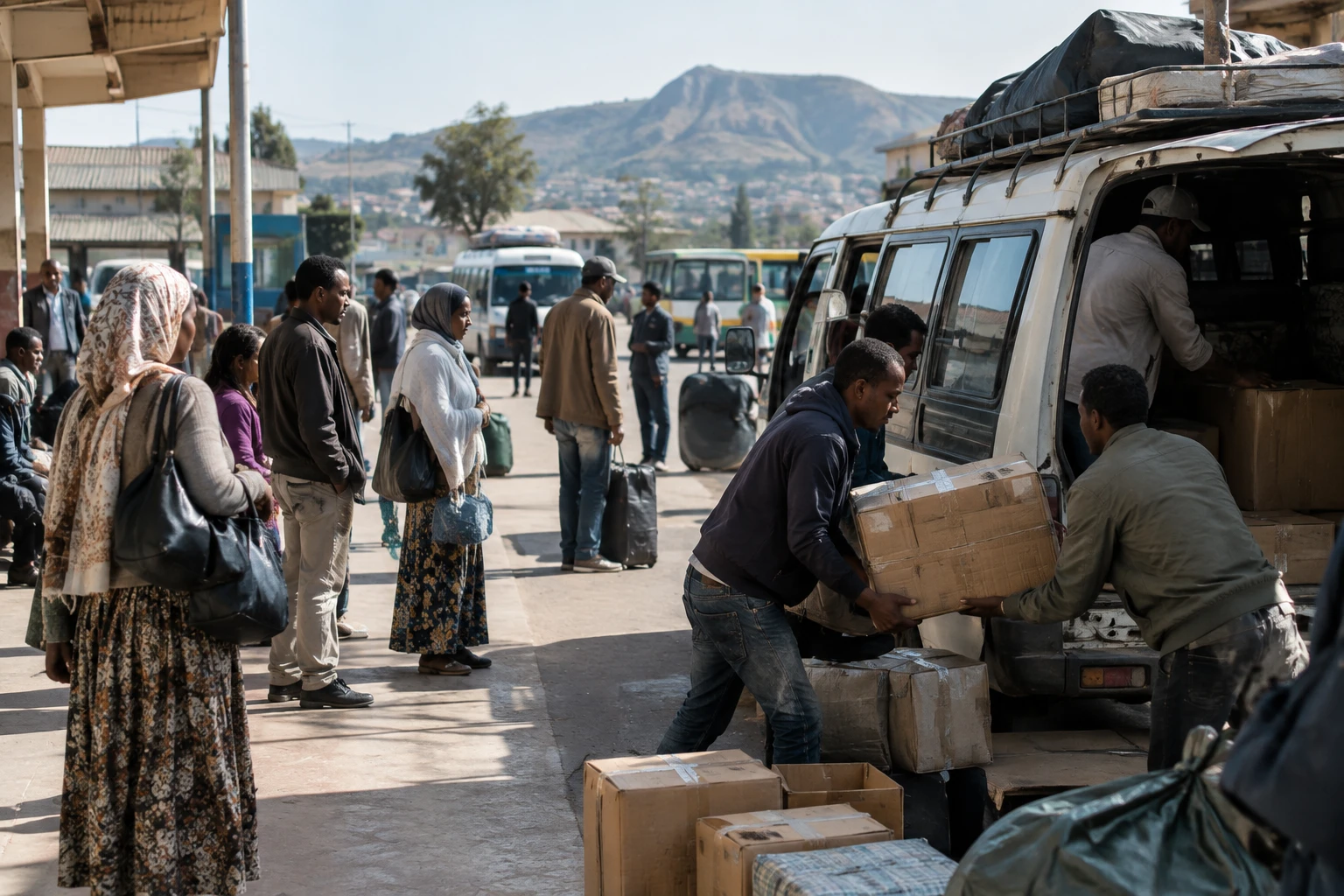
In northern Ethiopia, humanitarian aid must now address two emergencies at once: the lasting needs of displaced people and the new obstacles created by the resumption of fighting. Access to roads, markets and essential services is becoming as decisive as the amount of funding announced.
Funding targeted at four regions
On 13 October 2026, the United Nations announced an allocation of $8.5 million from the Central Emergency Response Fund, or CERF. The mechanism allows resources to be released quickly for underfunded crises. The funding is intended to support more than 202,700 people in the regions of Tigray, Amhara, Afar and Benishangul-Gumuz, as well as in other areas facing acute needs.
The response will cover drinking water, sanitation, hygiene, health, nutrition, shelter and protection. Teams will prioritise people recently displaced or forced to flee several times, as well as communities whose essential services have been interrupted. The UN Resident and Humanitarian Coordinator in Ethiopia, Ozonnia Ojielo, said the funds would complement operations already being carried out by the government and its partners.
The announcement comes after fighting resumed in the north from late September. The UN Secretary-General has reported clashes in Tigray, Afar and Amhara and called on the parties to resume dialogue within the framework of the 2022 Pretoria Agreement. The United Nations has also voiced concern about the risk of regional escalation. Reports on the shifting front line remain fluid; casualty figures therefore cannot be given without independent verification.
Fighting undermines humanitarian access
The deteriorating security situation is having a direct impact on aid delivery. The September 2026 analysis by the food security monitoring network FEWS NET notes disruptions to transport, markets and fuel supplies in affected areas. Households can therefore lose access to food and essential goods even when stocks or funding are available. In Tigray, the resumption of food aid in July aimed to reach more than 1.1 million people, mainly displaced people; the fighting risks complicating distributions.
The context extends beyond the conflict alone. The meher harvest, the main harvest of the rainy season, is delayed in several areas of the north. FEWS NET also reports rainfall deficits and below-average harvest prospects in some regions. Rural families are therefore seeing their agricultural incomes and access to food decline, while road disruptions are putting pressure on prices and trade. In towns, the closure or irregular operation of markets is also affecting households that buy most of their food.
National needs were already high before the latest escalation. For 2026, UNICEF estimates that 8.9 million people, including 6.3 million children, may need humanitarian assistance. The agency puts the resources required for its own operations in the country at $401.5 million. These figures describe needs and funding targets: they do not mean that all the people concerned will actually receive aid.
Significant funding, but not a complete response
With this new allocation, CERF will have committed more than $22.5 million in Ethiopia since the start of 2026. Part of its support also funds anticipatory measures in response to dry conditions linked to El Niño, particularly in Afar and Amhara. In September, the European Union announced an additional €18 million, bringing its planned humanitarian aid for the year to €61 million. Its priorities include food, health, water, shelter and protection for displaced people and host communities.
These allocations are not directly comparable: they come from different donors, cover several sectors and do not necessarily fund the same periods or populations. Above all, funding does not guarantee access. The safety of humanitarian workers, the movement of convoys and the ability to reach remote rural areas determine how effective operations can be. Displaced people need immediate assistance, but also continuous services; host communities, meanwhile, must share resources already under pressure.
An Ethiopian and regional issue
The Pretoria Agreement, concluded in November 2022 between the federal government and the Tigray authorities, had ended two years of war. The resumption of fighting is testing this peace framework and mediation efforts. The African Union, which supported the process, remains a central actor in encouraging de-escalation. Addis Ababa is home to both the Ethiopian government and the headquarters of the continental organisation: developments in the country therefore have particular diplomatic significance, without making Ethiopia a summary of Africa.
The region is also part of IGAD, the Intergovernmental Authority on Development, a cooperation organisation for the Horn of Africa. Tensions in the north matter to neighbouring countries because of their potential effects on stability and cross-border displacement. In the coming weeks, two points will be decisive: the effective resumption of dialogue under the Pretoria framework and the ability of actors to maintain safe and unhindered humanitarian access. Without these conditions, the $8.5 million may address targeted needs, but will struggle to compensate for the lasting interruption of services and trade.
Background sources: 14 October 2026 United Nations statement in Ethiopia, UNICEF 2026 humanitarian appeal, FEWS NET food security analysis, European aid announcement and UN update on humanitarian access difficulties.