Algeria
 Egypt
 Libya
 Morocco
 Sudan
 Tunisia
 Benin
 Burkina Faso
 Cabo Verde
 Côte d'Ivoire
 Ghana
 Guinea
 Guinea-Bissau
 Liberia
 Mali
 Mauritania
 Niger
 Nigeria
 Senegal
 Sierra Leone
 The Gambia
 Togo
 Cameroon
 Central African Republic
 Chad
 DR Congo
 Equatorial Guinea
 Gabon
 Republic of the Congo
 São Tomé and Príncipe
 Burundi
 Comoros
 Djibouti
 Ethiopia
 Kenya
 Madagascar
 Malawi
 Mauritius
 Mozambique
 Rwanda
 Seychelles
 Somalia
 South Sudan
 Tanzania
 Uganda
 Angola
 Botswana
 Eswatini
 Lesotho
 Namibia
 South Africa
 Zambia
 Zimbabwe
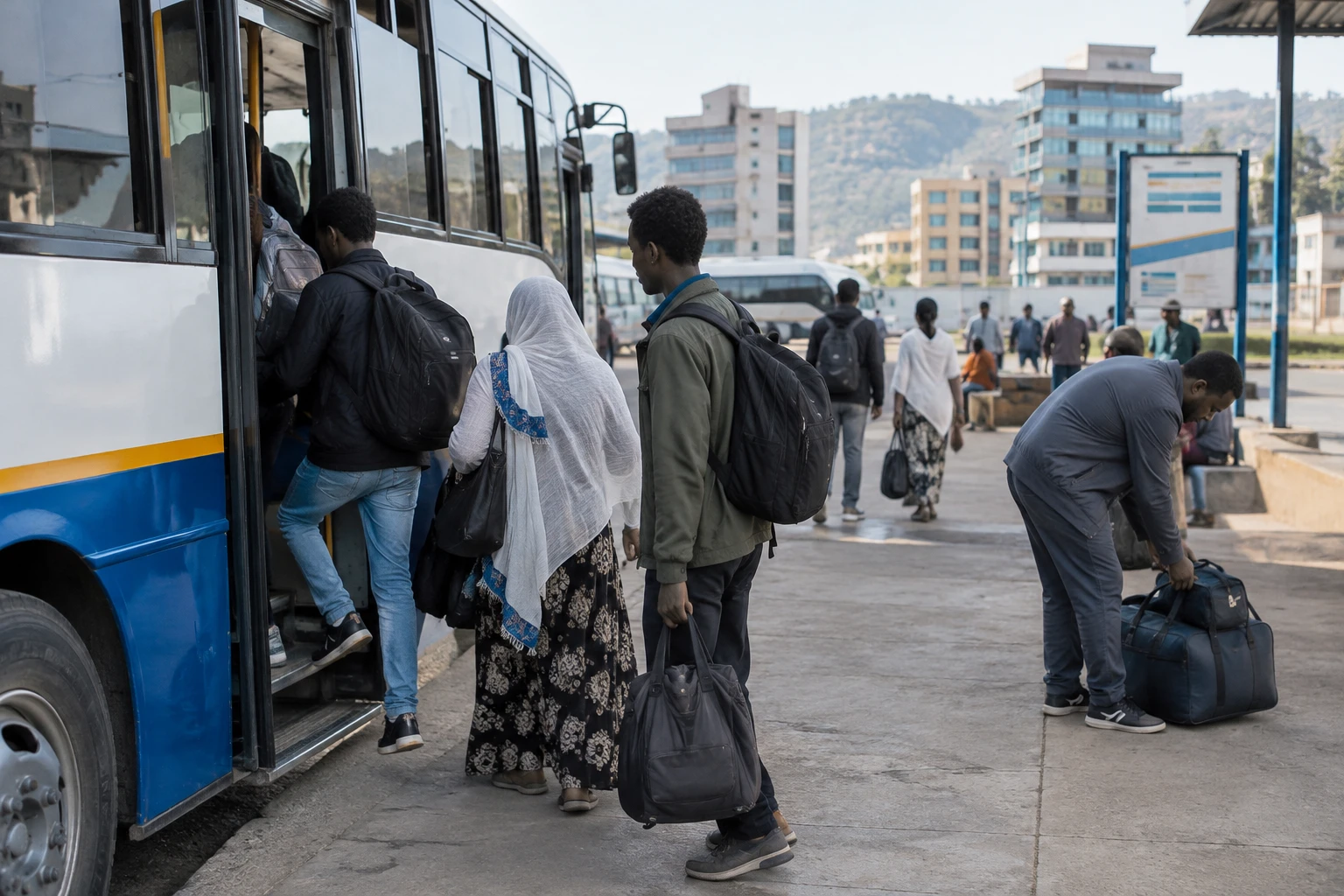
When two neighbours stop talking, troop movements in a border region can quickly take on much wider significance. That is the risk now emerging in northern Ethiopia, where accusations between Addis Ababa and Asmara coincide with renewed fighting in Tigray.
A tense border and broken diplomatic channels
Tigray lies in northern Ethiopia, along the border with Eritrea. The region is only just emerging from a devastating war, which ended with the Pretoria Agreement of 2 November 2022 between the Ethiopian federal government and the Tigray People’s Liberation Front (TPLF), the political movement that had long governed the region.
Peace did not, however, resolve disagreements over power-sharing, security and the return of displaced people. Tensions again led to clashes between federal forces and Tigrayan fighters from late September 2026. Ethiopia accuses the TPLF of taking up arms again and suspects Eritrea of supporting it. Asmara rejects accusations of interference.
The dispute also reflects a bilateral relationship marked by ruptures. The two countries fought a bloody border war from 1998 to 2000. Their rapprochement in 2018, led by Ethiopian Prime Minister Abiy Ahmed and Eritrean President Isaias Afwerki, earned Abiy the Nobel Peace Prize in 2019. But that understanding unravelled after the Tigray war, in which Eritrean forces fought alongside the Ethiopian federal army.
On 1 October 2026, Addis Ababa announced the closure of its embassy in Eritrea and the expulsion of ten Eritrean diplomats. Asmara subsequently declared that it was severing diplomatic relations. The decision reduces the scope for defusing an incident through direct exchanges. Both countries are members of IGAD, the regional organisation for East Africa, but mediation is not automatic and requires the parties’ agreement.
Opposing accusations and reported troop movements
On 9 October, Eritrean Information Minister Yemane Gebremeskel accused Abiy Ahmed’s government of waging a “war of aggression” against his country for more than three years. The wording reflects Asmara’s position; on its own, it is not proof of Ethiopian operations against Eritrea.
The previous day, Ethiopian Foreign Minister Gedion Timothewos had denounced the presence of Eritrean soldiers in Tigray. In a letter to France’s mission to the UN, he called the presence a “blatant act of aggression” and invoked Ethiopia’s right to defend itself. He said the troops were between 30 and 60 kilometres inside Ethiopian territory. This figure was put forward by Addis Ababa and should be treated as such, in the absence of accessible independent verification of the precise extent of the deployment.
Separate reports nevertheless lend support to the existence of Eritrean military movements. Witnesses quoted by the African news agency APA reported a deployment in northern Tigray. The Associated Press, for its part, relayed reports of Eritrean soldiers in localities near the border, attributed to local actors and witnesses. These accounts corroborate reported incursions, but do not establish their precise scale, chain of command or purpose.
Statements by the two governments should therefore remain attributed. The information available does not make it possible to determine all responsibility for the ongoing clashes. Nor does it, on its own, confirm the existence of an open war between the two states.
Tigray is first to face the consequences
For Tigray’s residents, the immediate issue is not only diplomatic. Renewed fighting could disrupt travel, undermine trade and complicate access to services, while the region continues to bear the effects of the 2020-2022 war. Field reports remain difficult to verify amid fighting and limited communications.
The consequences would not be the same everywhere. Communities near military routes and the border risk being directly affected by troop movements. In Mekelle, the regional capital, instability is weighing on the administration and markets. In rural areas, insecurity could further isolate communities and disrupt travel to health centres or places where supplies are available. These effects will, however, depend on how the operations actually develop.
The crisis is also putting pressure on Ethiopia’s federal authorities. Addis Ababa must contain an armed challenge in Tigray while preventing tensions with Asmara from opening another front. For the Eritrean government, accusations of interference and the diplomatic rupture are deepening its isolation, while any presence of its forces beyond the border could lead to a more direct confrontation.
Relations are also shaped by the question of Ethiopia’s access to the Red Sea. Ethiopia, a landlocked country since Eritrea’s independence in 1993, argues that it needs access to the sea. This demand fuels Asmara’s concerns about its sovereignty. It is not proof that the current crisis was caused by this issue, but it adds to the climate of mistrust between the two capitals.
Regional risk, with no outcome yet clear
An expansion of the conflict would have repercussions across the Horn of Africa, a region where diplomatic rivalries intersect with internal crises. IGAD, which brings together several East African countries, and the African Union have frameworks for dialogue. But the breakdown in bilateral relations makes regional intermediaries able to relay messages and prevent incidents all the more important.
The short-term priority is to establish the facts: the location of forces, the nature of the clashes and the responsibility of the various actors. Official statements, witness observations and agency reports provide some evidence, but do not replace independent access to the areas concerned. Figures and military accusations should therefore remain attributed until confirmed by several independent sources.
What happens next will depend in particular on how the fighting in Tigray develops, on any further cross-border movements and on possible mediation efforts. If diplomatic channels remain closed, a local operation or border incident could be interpreted as a deliberate attack. That is the main danger: that accusations still in dispute turn into a direct confrontation between two countries that have already experienced open war.
For corroborated reports on the movements reported in Tigray, see accounts by the African news agency APA and the Associated Press on Eritrean soldiers reported in Ethiopian localities. The context of the diplomatic rupture was also reported by Al Jazeera.