Algeria
 Egypt
 Libya
 Morocco
 Sudan
 Tunisia
 Benin
 Burkina Faso
 Cabo Verde
 Côte d'Ivoire
 Ghana
 Guinea
 Guinea-Bissau
 Liberia
 Mali
 Mauritania
 Niger
 Nigeria
 Senegal
 Sierra Leone
 The Gambia
 Togo
 Cameroon
 Central African Republic
 Chad
 DR Congo
 Equatorial Guinea
 Gabon
 Republic of the Congo
 São Tomé and Príncipe
 Burundi
 Comoros
 Djibouti
 Ethiopia
 Kenya
 Madagascar
 Malawi
 Mauritius
 Mozambique
 Rwanda
 Seychelles
 Somalia
 South Sudan
 Tanzania
 Uganda
 Angola
 Botswana
 Eswatini
 Lesotho
 Namibia
 South Africa
 Zambia
 Zimbabwe
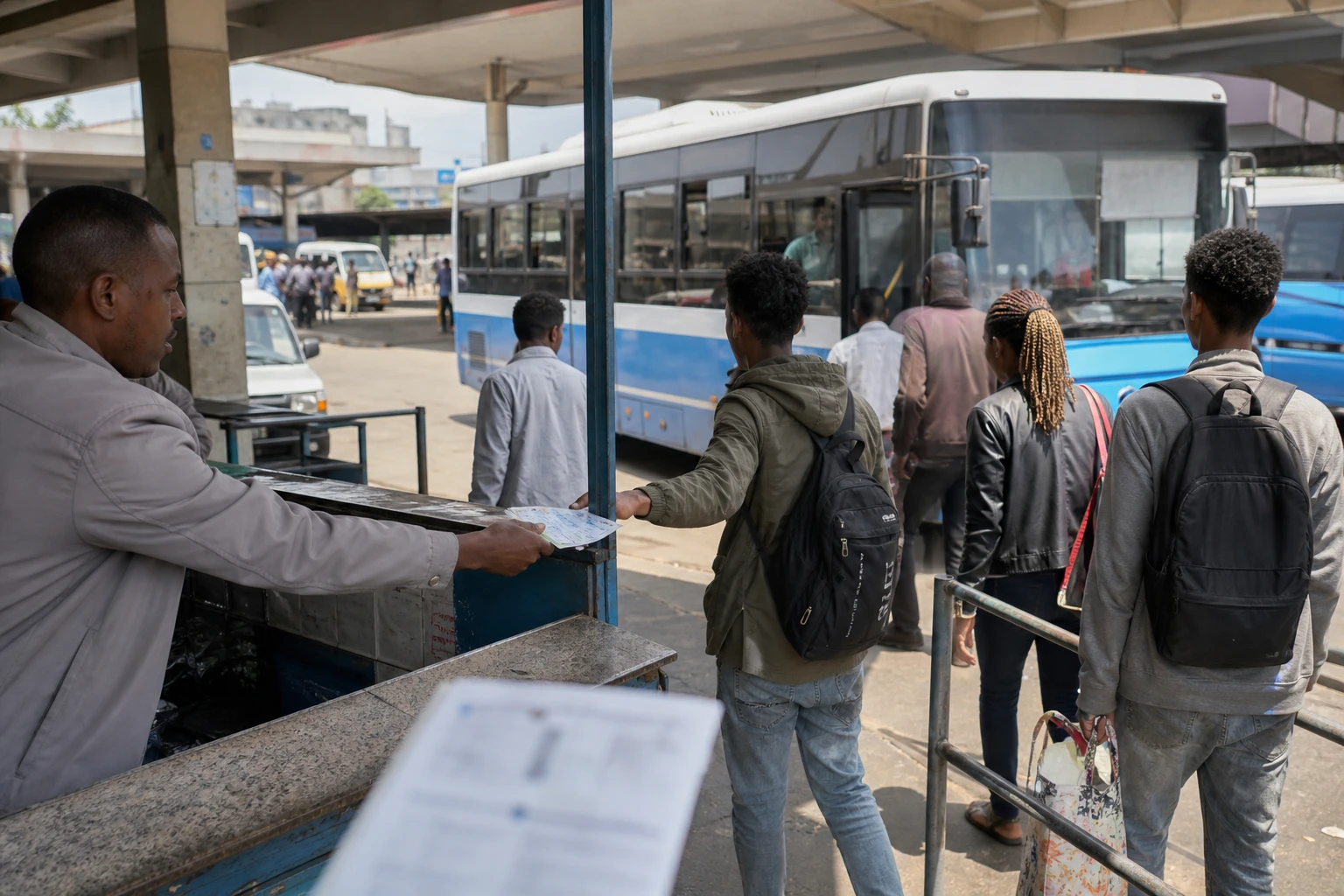
The diplomatic rupture between Addis Ababa and Asmara is more than a simple cooling of relations. It comes as northern Ethiopia descends into fighting once again and the question of access to the Red Sea hardens power dynamics in the Horn of Africa.
Rupture amid military escalation
On 1 October 2026, Ethiopia announced the closure of its embassy in Asmara, the Eritrean capital. Addis Ababa also declared ten Eritrean diplomats persona non grata, meaning unwelcome on its territory, giving them 48 hours to leave the country.
Ethiopia’s foreign ministry justified the decision by citing “direct and indirect acts of hostility and belligerence”. It accused the diplomats concerned of engaging in activities that posed a threat to Ethiopia’s national security and violated the Vienna Convention on Diplomatic Relations.
A few hours later, Asmara announced that it was severing all diplomatic relations with Addis Ababa. Eritrea’s foreign ministry rejected Ethiopia’s accusations. It said Abiy Ahmed’s government had pursued a hostile policy towards Eritrea for three years.
In its response, Asmara accused Ethiopia in particular of seeking sovereign access to the Red Sea by putting pressure on Eritrean ports and coastal areas. The Eritrean government also said Addis Ababa had hosted, trained or armed Eritrean opposition groups. These accusations have not been independently verified.
The rupture comes after explosions were reported in several parts of Addis Ababa overnight from 30 September to 1 October. Ethiopian authorities confirmed that blasts had occurred, but the precise circumstances and any possible casualties have yet to be established.
The main details of Ethiopia’s decision were reported by Associated Press, and later confirmed by Spain’s EFE news agency and Agence France-Presse.
Tigray, the main flashpoint
The diplomatic crisis is unfolding as clashes resume in Tigray, a region in northern Ethiopia bordering Eritrea. Ethiopian federal forces are fighting combatants linked to the Tigray People’s Liberation Front (TPLF), which governed the region for many years before the 2020 war.
The Tigray conflict officially ended with the Pretoria Agreement, signed in November 2022 under the auspices of the African Union. The agreement brought two years of war to a halt. Its implementation remains incomplete, however, particularly on disarmament, the return of displaced people and the resolution of disputed territories.
Tensions have risen in recent months. Ethiopia accuses the TPLF of preparing a new offensive and suspects Eritrea of backing groups hostile to the federal government. Asmara denies the accusations and presents Ethiopian statements about its role as a pretext for future military action.
The confrontation therefore involves several levels of power. Addis Ababa is defending the authority of the federal government. The TPLF is seeking to preserve its influence in Tigray. Asmara wants to prevent any development that might threaten its security or control of Red Sea ports.
The African Union has called for restraint and de-escalation between Ethiopia, Eritrea and Egypt. The inclusion of all three countries highlights the widening scope of the issue. The crisis is no longer confined to the Ethiopia-Eritrea border. It also affects the balance of power in the Nile basin and the Red Sea.
A return to an old rivalry
The two countries are emerging from a recent history marked by war. Eritrea gained independence from Ethiopia in 1993. Five years later, a border conflict broke out between the two states. The 1998-2000 war killed tens of thousands of people and left the border militarised for nearly two decades.
The 2018 rapprochement opened a dramatic period of thaw. Ethiopian Prime Minister Abiy Ahmed and Eritrean President Isaias Afwerki restored diplomatic relations and links between the two countries. The initiative earned Abiy Ahmed the Nobel Peace Prize in 2019.
The Tigray war nevertheless reversed that trend. From 2020, Eritrean forces fought alongside the Ethiopian federal army against the TPLF. After the Pretoria Agreement, the former allies drifted apart. The disagreement concerns, in particular, Eritrea’s role in the post-war period and Addis Ababa’s maritime ambitions.
Red Sea access at the heart of the standoff
Ethiopia has been landlocked since Eritrea gained independence. Its foreign trade depends mainly on the port of Djibouti, whose use represents a significant cost to its economy. Addis Ababa is therefore seeking to diversify its maritime outlets.
For the Ethiopian government, access to the sea is a strategic and economic issue. It affects imports, exports, food security and the country’s ability to sustain growth. For Eritrea, any Ethiopian claim to a port or coastal area is a direct threat to its sovereignty.
The dispute therefore goes beyond the question of borders. It affects port infrastructure, trade routes and the security of the Red Sea corridor. It also unfolds in a region where the interests of Egypt, Sudan, Somalia, the Gulf states and powers involved in protecting maritime traffic intersect.
The diplomatic rupture will have political consequences first. Official channels for dialogue are narrowing just as military accusations multiply. For the public, the effects could be felt in cross-border travel, family ties, informal trade and access to consular services.
The border regions and Tigray are most exposed. Political decisions are concentrated in the Ethiopian capital, but rural communities will be directly affected by any further road closures, market disruptions or advance of fighting. Eritrea, meanwhile, risks becoming even more diplomatically and economically isolated.
A regional risk to watch
The immediate priority is to prevent the diplomatic crisis from turning into open confrontation. The African Union will need to monitor implementation of the Pretoria Agreement and keep channels of discussion open with the parties, even when accusations are made publicly.
The next signs will be decisive: developments in the fighting in Tigray, troop movements near the borders, further diplomatic expulsions, control of routes to the Red Sea, and the positions taken by Egypt and Sudan.
By severing relations on 1 October 2026, Ethiopia and Eritrea crossed a significant political threshold. The crisis remains centred on the Horn of Africa, but its potential effects extend to maritime trade, regional security and the stability of a region already weakened by several conflicts.