Algeria
 Egypt
 Libya
 Morocco
 Sudan
 Tunisia
 Benin
 Burkina Faso
 Cabo Verde
 Côte d'Ivoire
 Ghana
 Guinea
 Guinea-Bissau
 Liberia
 Mali
 Mauritania
 Niger
 Nigeria
 Senegal
 Sierra Leone
 The Gambia
 Togo
 Cameroon
 Central African Republic
 Chad
 DR Congo
 Equatorial Guinea
 Gabon
 Republic of the Congo
 São Tomé and Príncipe
 Burundi
 Comoros
 Djibouti
 Ethiopia
 Kenya
 Madagascar
 Malawi
 Mauritius
 Mozambique
 Rwanda
 Seychelles
 Somalia
 South Sudan
 Tanzania
 Uganda
 Angola
 Botswana
 Eswatini
 Lesotho
 Namibia
 South Africa
 Zambia
 Zimbabwe
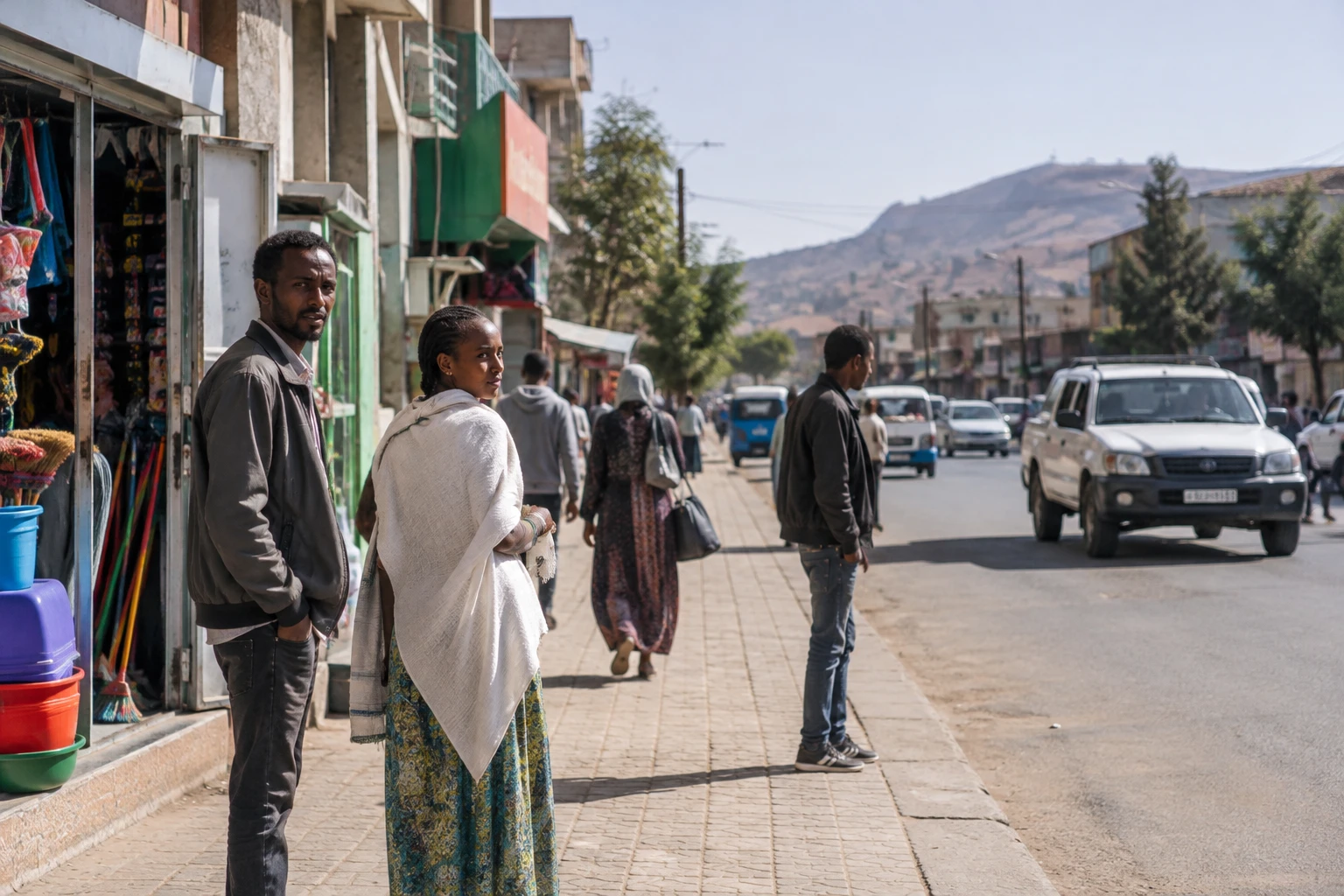
Reports of drone strikes in Adigrat, in northern Ethiopia, have raised fears that the fighting in Tigray could take on a new dimension. But the identity of the forces targeted and the circumstances of the attack remain difficult to establish independently. In a region where alliances have shifted several times, this caution matters as much as the warning itself.
Military presence reported near the border
On 7 October 2026, Eritrean soldiers reportedly crossed the Ethiopian border at Zalambessa before heading towards Adigrat and Idaga Hamus, according to conflict monitor ACLED. The organisation says Ethiopian forces used drones to strike troops and ammunition in the area. Witnesses quoted by media outlets also reported military vehicles being hit and explosions.
These accounts do not, however, amount to independent confirmation of all the facts. The Associated Press reports that Eritrean forces were reported in several parts of Tigray and that ACLED attributed a strike to Ethiopian forces. The news agency says it was unable to verify these accounts independently. Neither Addis Ababa nor Asmara has confirmed the circumstances of the strikes or provided a verifiable casualty toll.
It is therefore not possible at this stage to establish the number of casualties, the extent of the damage or the precise status of the units involved. Accounts of destroyed vehicles and a possible withdrawal of soldiers remain attributed witness reports, not a confirmed toll.
Tigray, an unfinished peace
Tigray borders Eritrea and remains marked by the 2020–2022 war between Ethiopia’s federal government and the Tigray People’s Liberation Front (TPLF). The agreement signed in Pretoria in November 2022 halted the main fighting, without resolving all the political rivalries or security issues in the region.
The recent resumption of clashes between federal forces and Tigrayan groups is putting that truce under pressure. The movements of fighters and drone operations are part of an already complex internal Ethiopian crisis. A confirmed Eritrean intervention, or the perception that one has taken place, could add an interstate confrontation to the conflict.
Relations between the two neighbours briefly improved after Abiy Ahmed came to power in 2018. Eritrea subsequently took part in the Tigray war alongside Ethiopian federal forces. Since the fighting ended, relations have deteriorated again. The current accusations of support for armed groups are disputed by both capitals.
Diplomatic rupture and maritime stakes
The military crisis comes after a diplomatic escalation. On 1 October, Ethiopia ordered the closure of its embassy in Asmara and the expulsion of ten Eritrean diplomats. Eritrea responded by severing diplomatic relations. The decision reduces the official channels available at a time when accusations and troop movements are multiplying.
The dispute also concerns access to the Red Sea. Ethiopia, which has been landlocked since Eritrea’s independence in 1993, relies heavily on its neighbours’ ports for its foreign trade. Abiy Ahmed’s government advocates seeking access to the sea. Asmara sees some Ethiopian statements as a threat to its sovereignty. These positions describe the two governments’ interpretations; they do not, on their own, prove their military intentions.
The potential consequences would not be the same for everyone. For the federal authorities, the presence of Eritrean forces on Ethiopian soil, if confirmed, would pose a direct challenge to national sovereignty. For the people of Adigrat and nearby towns, uncertainty can disrupt travel, markets and access to services, even without an established casualty toll. Rural communities near border routes are particularly exposed to military movements and travel restrictions.
A crisis to watch in the Horn of Africa
The region falls within the remit of the Intergovernmental Authority on Development (IGAD), a co-operation organisation for the Horn of Africa. A deterioration in relations between Addis Ababa and Asmara would weigh on regional mediation efforts and could complicate border security. It comes amid an already tense environment, where domestic crises and rivalries between neighbours intersect.
For the African Union, based in Addis Ababa, the immediate challenge is to preserve avenues for de-escalation between the two states and support the implementation of the Pretoria agreement. But no public statement has established, at this stage, that specific mediation related to the reported strikes is under way. The AU’s role should therefore not be presented as an initiative already launched.
The next decisive developments will be independent confirmation of troop movements, clarification from the governments and the course of the fighting in Tigray. Until this information is available, it would be premature to speak of a direct confrontation between Ethiopia and Eritrea. The growing number of reported incidents and the diplomatic rupture nevertheless point to a serious crisis, whose effects could extend beyond border towns.
Reports of the strikes and deployments were published by the Associated Press and conflict monitor ACLED. The diplomatic rupture was reported by the Associated Press.