Algeria
 Egypt
 Libya
 Morocco
 Sudan
 Tunisia
 Benin
 Burkina Faso
 Cabo Verde
 Côte d'Ivoire
 Ghana
 Guinea
 Guinea-Bissau
 Liberia
 Mali
 Mauritania
 Niger
 Nigeria
 Senegal
 Sierra Leone
 The Gambia
 Togo
 Cameroon
 Central African Republic
 Chad
 DR Congo
 Equatorial Guinea
 Gabon
 Republic of the Congo
 São Tomé and Príncipe
 Burundi
 Comoros
 Djibouti
 Eritrea
 Kenya
 Madagascar
 Malawi
 Mauritius
 Mozambique
 Rwanda
 Seychelles
 Somalia
 South Sudan
 Tanzania
 Uganda
 Angola
 Botswana
 Eswatini
 Lesotho
 Namibia
 South Africa
 Zambia
 Zimbabwe
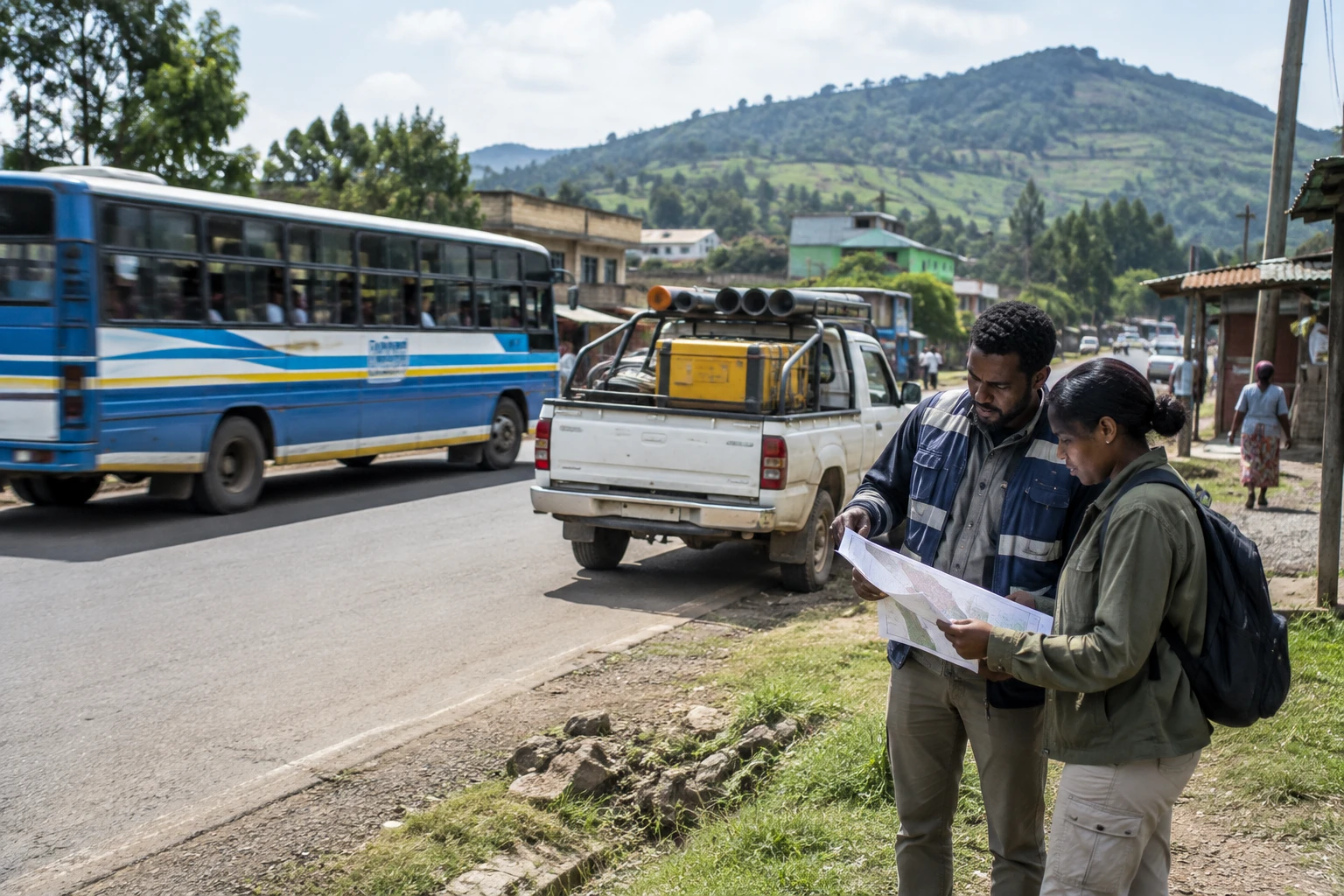
Generating electricity from heat beneath the ground could help Ethiopia supplement a grid largely powered by dams. But at Corbetti, in Oromia, a decisive step remains: drilling must establish whether the geothermal resource can sustain a power plant.
A project in a strategic region
The Corbetti site is about 250 kilometres south of Addis Ababa. It lies in the Rift Valley, an area where geological activity offers significant geothermal potential. Geothermal energy involves harnessing heat from beneath the ground to produce steam and drive electricity-generating turbines.
The project is designed to proceed in stages. Its power purchase agreement with state-owned Ethiopian Electric Power provides for up to 150 megawatts (MW) in two phases: a first 50 MW power plant, followed by a 100 MW expansion. These capacities remain development targets, not output that is already available. PIDG details Corbetti’s phases and power purchase agreement.
The timetable has already been delayed. In May 2024, PIDG — an infrastructure development finance group — said the power purchase agreement had been extended by two years to allow the project to prepare its exploration programme. The deadline highlights the gap between the potential announced and the actual construction of facilities. PIDG’s statement on the extension.
Drilling must confirm the resource
The project’s developers have awarded UK company Marriott Drilling Group a contract for up to four exploration wells. Drilling is scheduled to start in 2027 near Shashemene, in Oromia. The wells are intended to measure the resource’s characteristics: temperature, pressure, flow rate and the ability of the rocks to allow fluids to circulate. Without this data, it is impossible to size the production wells and power plant.
The contract and drilling timetable have also been reported by specialist publication ThinkGeoEnergy. However, the information available does not specify the cost or duration of the work. The awarding of the contract, which marks a step forward, should therefore be distinguished from confirmation of the resource, which will depend on what is found underground. An update on Marriott Drilling’s contract.
The financial structure is also evolving. Taranis Operations has become the majority shareholder, while PIDG retains about 40% of the project. The group announced an additional $7.2 million contribution through InfraCo Africa. This commitment funds the project’s development, but does not mean that all the investment needed for the power plant has been secured. Information on the shareholding change and financial contribution comes from announcements by the project stakeholders and has been reported by the specialist press.
Diversifying a grid dominated by hydropower
In 2024, hydropower accounted for 97.1% of Ethiopia’s electricity generation, according to World Bank data based on statistics from the International Energy Agency. This figure confirms that generation is heavily concentrated in dams. Geothermal energy could provide a steady source of renewable power, including when sunshine or wind conditions change. It would not eliminate dependence on water resources, but could reduce it if the project goes ahead. Hydropower generation data for Ethiopia.
The issue goes beyond the composition of the energy mix. More diverse generation can strengthen grid stability and support the needs of households, services and businesses. However, a new power plant alone cannot guarantee improved access to electricity: transmission lines, reliable distribution networks and solutions suited to remote communities are also needed.
The effects will therefore vary between areas. Major urban centres and businesses connected to the grid can benefit directly from additional generation. In rural areas, where access remains more limited, connections and mini-grids matter as much as installed capacity. Exploration work will also bring local economic activity, but lasting jobs will depend on construction and operation, stages that are still conditional.
An Ethiopian and regional issue
Ethiopia is a member of IGAD, the regional organisation for the Horn of Africa, and is also developing electricity trading with its neighbours. More diverse domestic generation can contribute to national energy security and export capacity. But regional benefits will depend on cross-border infrastructure, trade agreements and the actual reliability of supply.
The Corbetti project is therefore part of a broader ambition: to make renewable resources a driver of development and regional co-operation. For now, the date to watch is the drilling scheduled for 2027. The results will show whether the first 50 MW can move from project plans to construction, and whether expansion to 150 MW is technically and financially viable.