Algeria
 Egypt
 Libya
 Morocco
 Sudan
 Tunisia
 Benin
 Burkina Faso
 Cabo Verde
 Côte d'Ivoire
 Ghana
 Guinea
 Guinea-Bissau
 Liberia
 Mali
 Mauritania
 Niger
 Nigeria
 Senegal
 Sierra Leone
 The Gambia
 Togo
 Cameroon
 Central African Republic
 Chad
 DR Congo
 Equatorial Guinea
 Gabon
 Republic of the Congo
 São Tomé and Príncipe
 Burundi
 Comoros
 Djibouti
 Ethiopia
 Kenya
 Madagascar
 Malawi
 Mauritius
 Mozambique
 Rwanda
 Seychelles
 Somalia
 South Sudan
 Tanzania
 Uganda
 Angola
 Botswana
 Eswatini
 Lesotho
 Namibia
 South Africa
 Zambia
 Zimbabwe
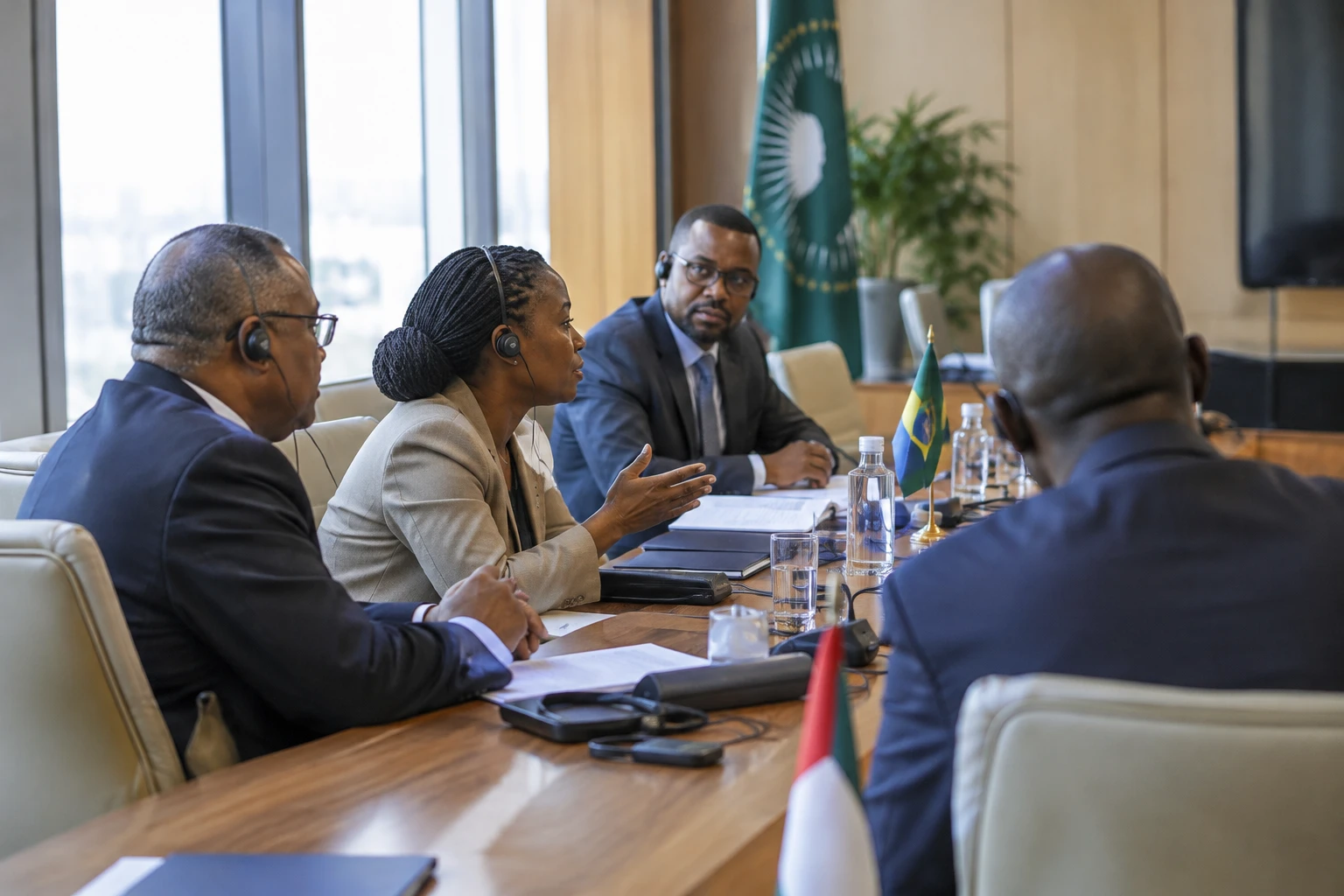
In Adwa, the arrival of government forces does not yet mean a return to normal life. Businesses have remained closed and residents have reported the looting of public buildings, including the hospital. In Tigray, every change in military control raises the same question: who will provide security and essential services after the fighters have passed through?
An advance in a region already battered
Adwa lies in northern Ethiopia, close to the border with Eritrea. The city occupies a strategic position in central Tigray, a region only just emerging from a two-year war whose political balance remains fragile. Mekelle, its regional capital, also returned to the control of forces allied with the federal government in early October.
The resumption of fighting at the end of September put fresh pressure on the Pretoria Agreement, signed on 2 November 2022 by the Ethiopian government and the Tigray People’s Liberation Front (TPLF). The agreement, concluded under the auspices of the African Union, ended hostilities in the previous war and established a framework for their lasting cessation. It did not, however, resolve all the political and security tensions between Addis Ababa and Tigrayan leaders.
The 2020–2022 conflict severely disrupted health services, transport and communications in the region. Residents, traders and local administrations therefore remain particularly vulnerable when fighting resumes or roads and air links are cut.
Adwa and Mekelle come under government control
On Sunday 11 October 2026, troops from the Ethiopian national army and allied forces took control of Adwa, according to conflict event monitoring by ACLED. The TPLF had left the city the previous day, according to information provided by local sources. Businesses there were closed. Reports of looting, including at the hospital, could not be independently confirmed and must remain attributed.
The advance follows the entry of government-allied forces into Mekelle on 3 October. Tigrayan fighters had announced their withdrawal from the regional capital after fighting resumed. On 11 October, Ethiopian Airlines reinstated flights to Mekelle, suspended since Tigrayan forces took the airport on 23 September. The resumption offers a useful link for travellers and personnel, but is not enough to establish that travel or services have been restored across the region.
In Mekelle, Getachew Reda, a former Tigrayan leader who became an adviser to Prime Minister Abiy Ahmed, promised “visible change” before supporters who had gathered to welcome him at the airport. He did not specify the measures envisaged. The political promise therefore offers no indication yet of the composition of the regional authorities, security guarantees for residents or the functioning of local institutions.
Military control does not resolve the question of allegations of foreign interference either. In a letter to the UN Security Council, Ethiopian Foreign Minister Gedion Timothewos invoked self-defence and accused Eritrea of sending troops into Ethiopia and occupying areas in the north. The document did not specify the locations concerned or provide public evidence, and the allegations have not been independently verified. Eritrea rejected Ethiopia’s justification and accused Addis Ababa of seeking sovereign access to the Red Sea.
Civilians at the centre of the stakes
For Adwa’s residents, the immediate priority is less what the authorities say than whether they can access healthcare, reopen businesses and travel without fear. The closure of the hospital, or its possible looting, would have direct consequences for patients and medical staff in a region where fighting has already weakened infrastructure. In the absence of independent verification, however, the extent of the damage remains unknown.
In Mekelle, the return of flights is a tangible sign that transport links are being restored. But the effects will not be the same for everyone: travellers with the means to do so may benefit more quickly from the resumption of air services, while residents of secondary towns and rural areas depend more on roads, markets and local services. The airport’s reopening alone does not guarantee the return of banks, telecommunications or healthcare throughout Tigray.
How the forces controlling the cities protect civilians and public property will also weigh on local confidence. A promise of change will have to translate into observable action: humanitarian access, functioning health facilities, people’s safety and dialogue with the communities concerned. Conversely, abuses or new restrictions could deepen political divisions.
A test for Ethiopia and the Horn of Africa
UN Secretary-General António Guterres called on the parties on 9 October to end hostilities and resume dialogue within the framework of the Pretoria Agreement. The African Union and the Intergovernmental Authority on Development (IGAD), an East African regional organisation, also called for de-escalation. Their aim is to prevent the fighting in Tigray from spreading or fuelling a confrontation between Ethiopia and Eritrea.
For Addis Ababa, retaking cities and restoring air links may strengthen the federal presence, but it cannot replace a political settlement. For Tigrayan leaders, withdrawing from some towns does not erase their demands or disagreements over the implementation of Pretoria. As for residents, they remain those most affected by continuing hostilities, even when they have no part in military decisions.
The significance of this sequence of events therefore extends beyond Adwa. It tests the ability of Ethiopia’s institutions, the African Union and IGAD to prevent a new escalation in the Horn of Africa. The next indicators will be the effective return of services, changes in military positions around Tigrayan cities and whether dialogue between the signatories of the 2022 agreement resumes.