Algeria
 Libya
 Morocco
 Sudan
 Tunisia
 Benin
 Burkina Faso
 Cabo Verde
 Côte d'Ivoire
 Ghana
 Guinea
 Guinea-Bissau
 Liberia
 Mali
 Mauritania
 Niger
 Nigeria
 Senegal
 Sierra Leone
 The Gambia
 Togo
 Cameroon
 Central African Republic
 Chad
 DR Congo
 Equatorial Guinea
 Gabon
 Republic of the Congo
 São Tomé and Príncipe
 Burundi
 Comoros
 Djibouti
 Eritrea
 Ethiopia
 Kenya
 Madagascar
 Malawi
 Mauritius
 Mozambique
 Rwanda
 Seychelles
 Somalia
 South Sudan
 Tanzania
 Uganda
 Angola
 Botswana
 Eswatini
 Lesotho
 Namibia
 South Africa
 Zambia
 Zimbabwe
An industrial gamble at the heart of Egypt’s transition
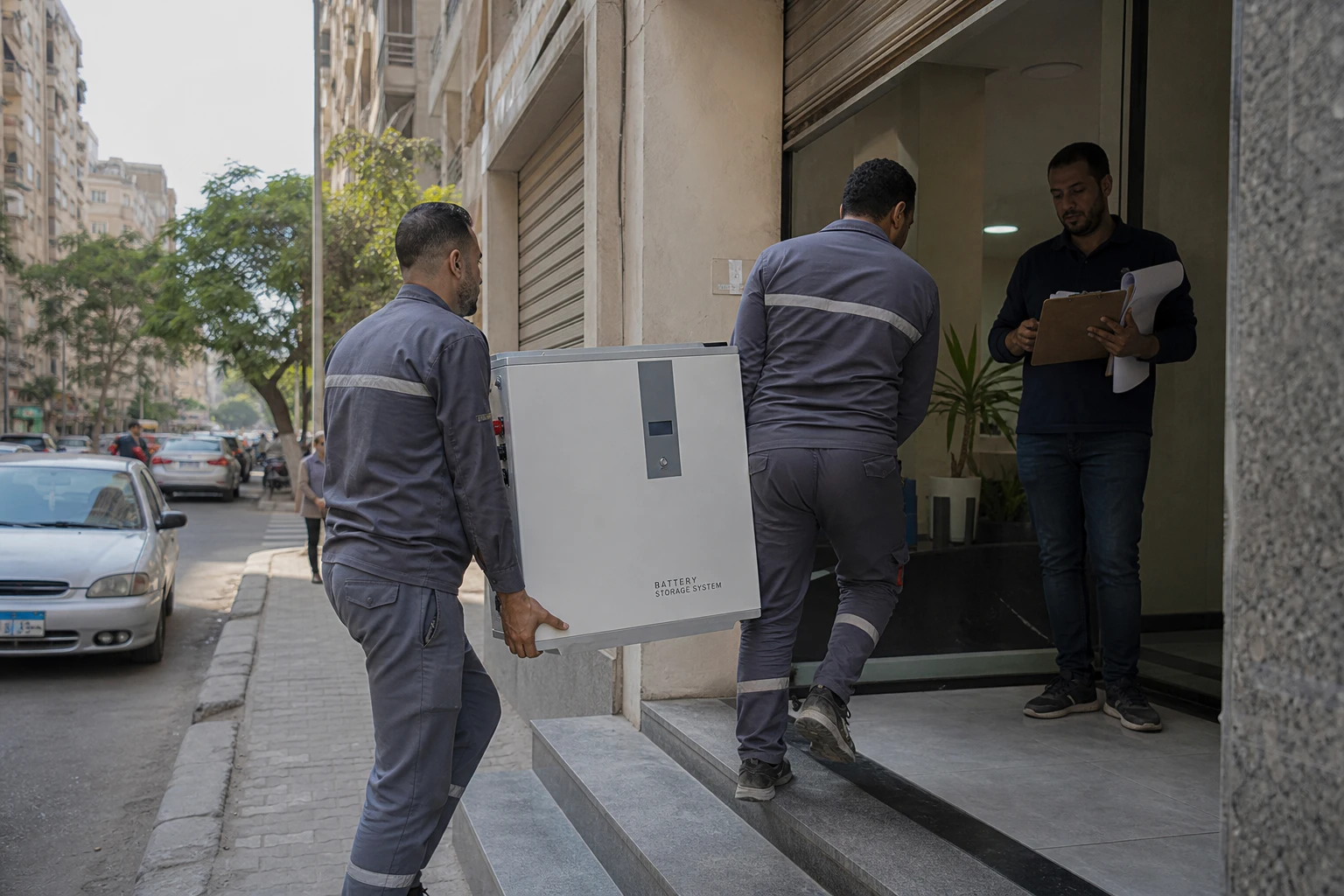
Sunshine alone is no longer enough. For a country such as Egypt, the challenge is no longer simply to generate more green electricity, but to store it, stabilise it and manufacture it locally. This is where part of the next phase of Egypt’s energy transition will be decided, beyond installed megawatts and capacity announcements. Storage batteries are becoming a strategic link because they make grids more flexible and help absorb fluctuations in solar and wind power.
Against this backdrop, Cairo is seeking to turn its natural advantage into an industrial one. The official target remains ambitious: to raise the share of renewables in the electricity mix to more than 42% by 2030, and then to more than 60% by 2040. Egyptian authorities have recently reaffirmed this trajectory, linking it to grid upgrades and the addition of battery storage.
The Suez Canal Economic Zone, a catalyst for value chains
Sungrow’s announced project is part of the Suez Canal Economic Zone, specifically the TEDA-Egypt industrial zone in Ain Sokhna. SCZONE, established under Law 83 of 2002 and revised in 2015, has become one of the key instruments of Egypt’s industrial strategy. It brings together ports, logistics, industry and services in a corridor geared towards trade with Asia, Europe and Africa.
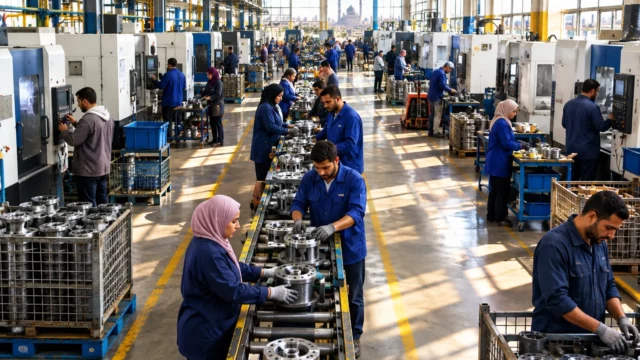
According to official Egyptian information, Sungrow’s plant is to be the first of its kind in the Middle East and Africa for battery energy storage systems, or BESS — equipment that stores electricity for later use. The facility is presented as a standalone industrial project, separate from the production of solar power plants themselves. It is also intended to help move the local ecosystem up the value chain, giving Egypt a more prominent role in the manufacture of clean technologies.
The announced investment is valued at $50 million. The project was first announced in 2025, when Egyptian authorities began referring to an agreement with Sungrow to localise the manufacture of storage batteries. In January 2026, Cairo then formalised a package of agreements related to renewables, including this industrial project in the Suez Canal Economic Zone.
What the figures say — and what they really mean
The Egyptian government is now making announcements on two fronts. On the one hand, it is accelerating solar and wind installations. On the other, it wants to prevent the grid from being overwhelmed by intermittent generation that it cannot absorb. This is why the authorities recently said Egypt had nearly 10,000 MW of renewable capacity on the grid by 2025, alongside almost 2,850 MW of battery storage. Other official announcements refer to 12,000 MW of renewables and 3,350 MW of storage by the end of 2026, followed by 20,000 MW by the end of 2029. Targets vary with strategic updates, but the direction remains the same: generate more, and integrate it better.
Data published by the Egyptian New and Renewable Energy Authority also show that installed capacity reached about 8.6 GW in the fourth quarter of the 2024/2025 financial year, spanning hydropower, wind, solar and biomass. This means the 42% target depends not only on new plants, but on an infrastructure leap: power lines, substations, grid management and storage. Without these, green electricity remains theoretical when demand rises, particularly in industrial and urban areas and at the country’s major projects.
Storage is therefore becoming a pillar of energy sovereignty. It helps smooth supply, reduce reliance on thermal backup plants and better secure peak demand. For a country that is a net importer of some of its energy needs, the stakes are also fiscal: less imported fuel and more value added captured locally. In the language of industry economists, Egypt no longer wants to be merely an equipment market, but a manufacturing and assembly site.
Regional perspective: Egypt seeks influence in Africa’s power grids
This project extends beyond the national context. For several years, Egypt has been positioning itself as a future energy hub between Africa, the Mediterranean basin and the Middle East. It is banking on electricity interconnections, green hydrogen and exports of clean electricity to neighbouring or European markets. In this context, local battery manufacturing is not simply a factory project. It is an instrument of industrial influence in a region where competition is intensifying among countries with sunshine, wind, land and access to the sea.
The choice of the Suez Canal zone is consistent with this ambition. SCZONE benefits from a logistical position linking ports, industry and trade corridors. It already serves as a showcase for investment in electronics, industrial components and renewable energy equipment. For the Egyptian authorities, the aim is clear: to attract projects capable of creating skilled jobs, increasing local content and bringing the country into global clean technology supply chains.
For manufacturers, the battle is now about delivery times, grid reliability and the regulatory environment. For households, the stakes are more tangible: less pressure on electricity supply, greater continuity of service and, ultimately, a more affordable energy bill. For the state, finally, projects of this kind must prove that the energy transition can also become an industrial policy, with factories, skills and exports. That is where Sungrow’s announcement takes on its full significance: it concerns not only a technology, but the place Egypt wants to occupy in the continent’s green economy.