Algeria
 Libya
 Morocco
 Sudan
 Tunisia
 Benin
 Burkina Faso
 Cabo Verde
 Côte d'Ivoire
 Ghana
 Guinea
 Guinea-Bissau
 Liberia
 Mali
 Mauritania
 Niger
 Nigeria
 Senegal
 Sierra Leone
 The Gambia
 Togo
 Cameroon
 Central African Republic
 Chad
 DR Congo
 Equatorial Guinea
 Gabon
 Republic of the Congo
 São Tomé and Príncipe
 Burundi
 Comoros
 Djibouti
 Eritrea
 Ethiopia
 Kenya
 Madagascar
 Malawi
 Mauritius
 Mozambique
 Rwanda
 Seychelles
 Somalia
 South Sudan
 Tanzania
 Uganda
 Angola
 Botswana
 Eswatini
 Lesotho
 Namibia
 South Africa
 Zambia
 Zimbabwe
When a high-profile figure falls in a drugs case, an entire narrative of control and public image comes under strain
In Egypt, major criminal cases concern more than just the courts. They also touch on how the state asserts its authority in a country where the fight against narcotics is still presented as a public security issue. The case of Sarah Khalifa, known to the general public for a programme focused on security and crime, fits this context. It blurs the lines between celebrity, information and criminal justice, at a time when synthetic drug trafficking is gaining ground in several markets across the MENA region and North Africa.
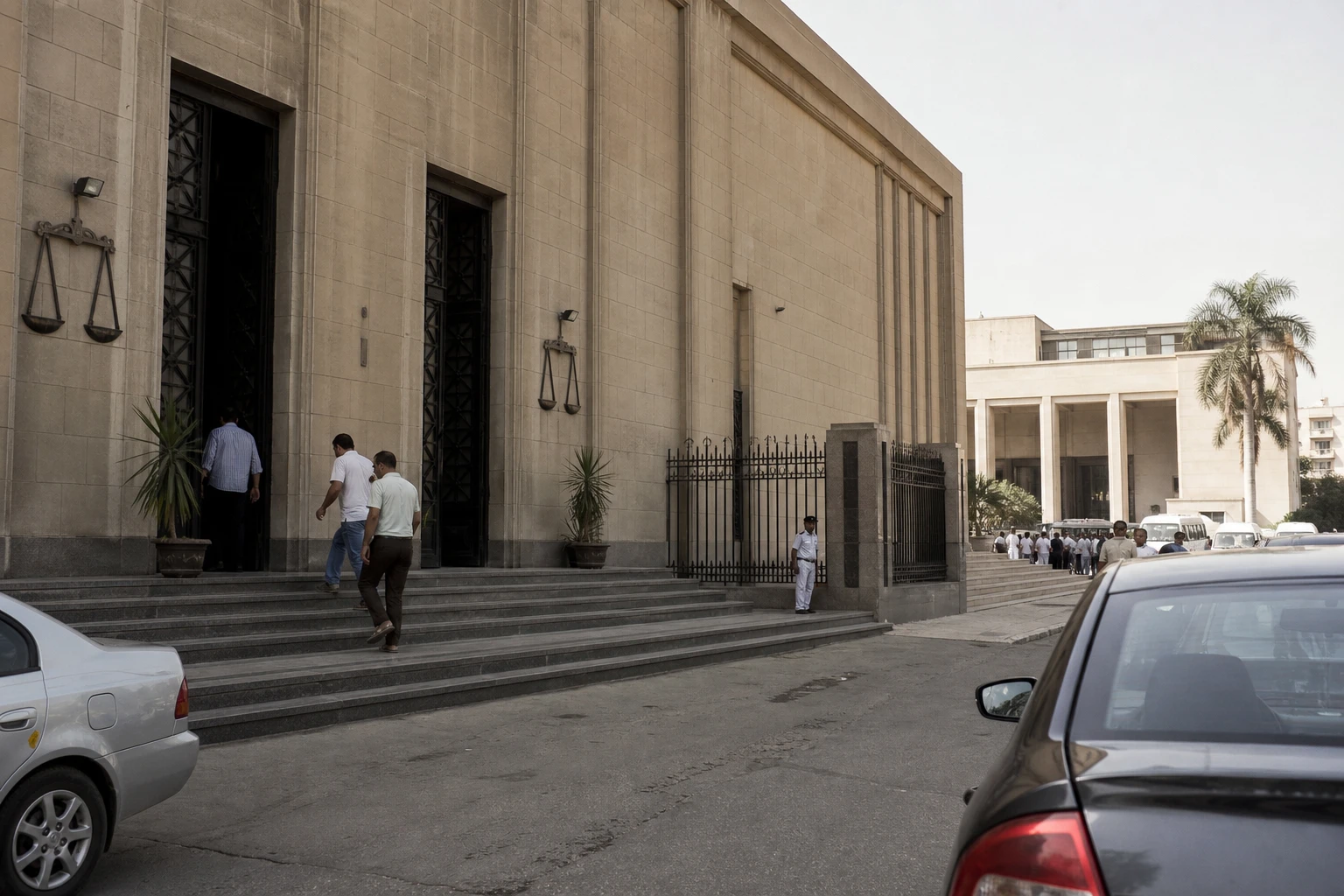
Cairo remains the political and judicial centre of this case. It was there that the criminal court delivered its ruling after several months of proceedings. Capital punishment remains in force in Egypt for several serious offences, including some drug-related crimes. In death penalty cases, the court must consult the grand mufti before delivering its verdict, but the opinion is advisory. Those convicted can then appeal to the Court of Cassation.
What the Cairo court decided
On Saturday 5 September 2026, Cairo’s criminal court sentenced Sarah Khalifa and 11 other people to death by hanging, according to several Egyptian and international media outlets. The defendants were accused of forming a criminal group tasked with importing substances used to manufacture drugs, then producing and selling them in Egypt. The court also found them guilty of illegal possession of weapons and ammunition, according to reports published in Cairo.
Authorities seized more than 750 kilos of drugs and raw materials, as well as tools and machinery found in two flats described as clandestine laboratories. These items formed the basis of a case closely followed by the local press, which has described a structured organisation with roles divided between importing, manufacturing and distribution. The case was referred to the grand mufti on 4 August 2026, before the judgment was delivered on 5 September.
Sarah Khalifa’s public profile gave the case an added dimension. A presenter and producer, she was associated with a programme devoted to security and crime. Media outlets have also noted her presence on social media. But in legal terms, her visibility changes nothing about the nature of the alleged offences. The court ruled on a case involving drug trafficking and manufacture, not celebrity.
A criminal case that also sheds light on Egypt’s strategy against synthetic drugs
This case comes amid a broader trend. UNODC says traffickers are exploiting technology, new routes and regional instability to spread new drugs, particularly synthetic substances. UN agencies also note that the manufacture and trafficking of amphetamines and other synthetic products are growing in the Middle East and Africa, where treatment and harm-reduction services often remain limited. In this landscape, Egypt appears both as a market and a transit point, and as a country taking a tougher criminal justice approach.
Egypt’s legal framework is longstanding, but it has been amended regularly. The main legislation on narcotics, Law 182 of 1960, has been amended several times. Egypt’s official databases on medicines and controlled substances also note that a ministerial decree published in February 2026 updated the schedules of controlled substances. In other words, the country is not simply punishing offences after the fact: it is continually refining its regulatory arsenal to keep pace with changing products, particularly synthetic substances.
The severity of the penalties remains a sensitive issue. Human rights organisations continue to criticise the use of the death penalty in cases that do not involve intentional homicide. But Egypt’s judicial system maintains its position: the justice ministry has previously argued that the mufti’s opinion is not binding and that those convicted can appeal. The National Council for Human Rights has also noted that the procedure provides for consultation with the mufti and avenues of appeal. The debate is therefore as much legal as it is political.
Figures cited by some NGOs offer another perspective. The Egyptian Commission for Rights and Freedoms has reported 541 death sentences handed down in the country in 2025. This figure, reported by several international media outlets, illustrates the enduring place of capital punishment in Egypt’s criminal justice system. It also says something about the authorities’ strategy: showing that they are taking a tough line in security cases, at the risk of fuelling criticism over the proportionality of sentences.
For Egypt, the significance extends beyond this one trial. The country must manage the flow of synthetic drugs, the social pressure associated with consumption, and the image of an uncompromising justice system. For North Africa, the challenge is broader still. Trafficking routes, precursor imports and the rise of clandestine laboratories also affect other countries in the region. The case is also a reminder that a well-known name is not enough to sum up a criminal case: behind the celebrity are above all a criminal market, logistical networks and a justice system seeking to send a signal.