Algeria
 Libya
 Morocco
 Sudan
 Tunisia
 Benin
 Burkina Faso
 Cabo Verde
 Côte d'Ivoire
 Ghana
 Guinea
 Guinea-Bissau
 Liberia
 Mali
 Mauritania
 Niger
 Nigeria
 Senegal
 Sierra Leone
 The Gambia
 Togo
 Cameroon
 Central African Republic
 Chad
 DR Congo
 Equatorial Guinea
 Gabon
 Republic of the Congo
 São Tomé and Príncipe
 Burundi
 Comoros
 Djibouti
 Eritrea
 Ethiopia
 Kenya
 Madagascar
 Malawi
 Mauritius
 Mozambique
 Rwanda
 Seychelles
 Somalia
 South Sudan
 Tanzania
 Uganda
 Angola
 Botswana
 Eswatini
 Lesotho
 Namibia
 South Africa
 Zambia
 Zimbabwe
When freedom of navigation becomes a national security issue
In Cairo, Egypt put a simple but consequential idea back on the table: a sea route must not become a lever for blackmail. In a region where the Bab el-Mandeb Strait, the Red Sea and the Suez Canal carry weight in global trade, every rise in tension quickly translates into higher costs, ships being rerouted and economic vulnerability for coastal states.
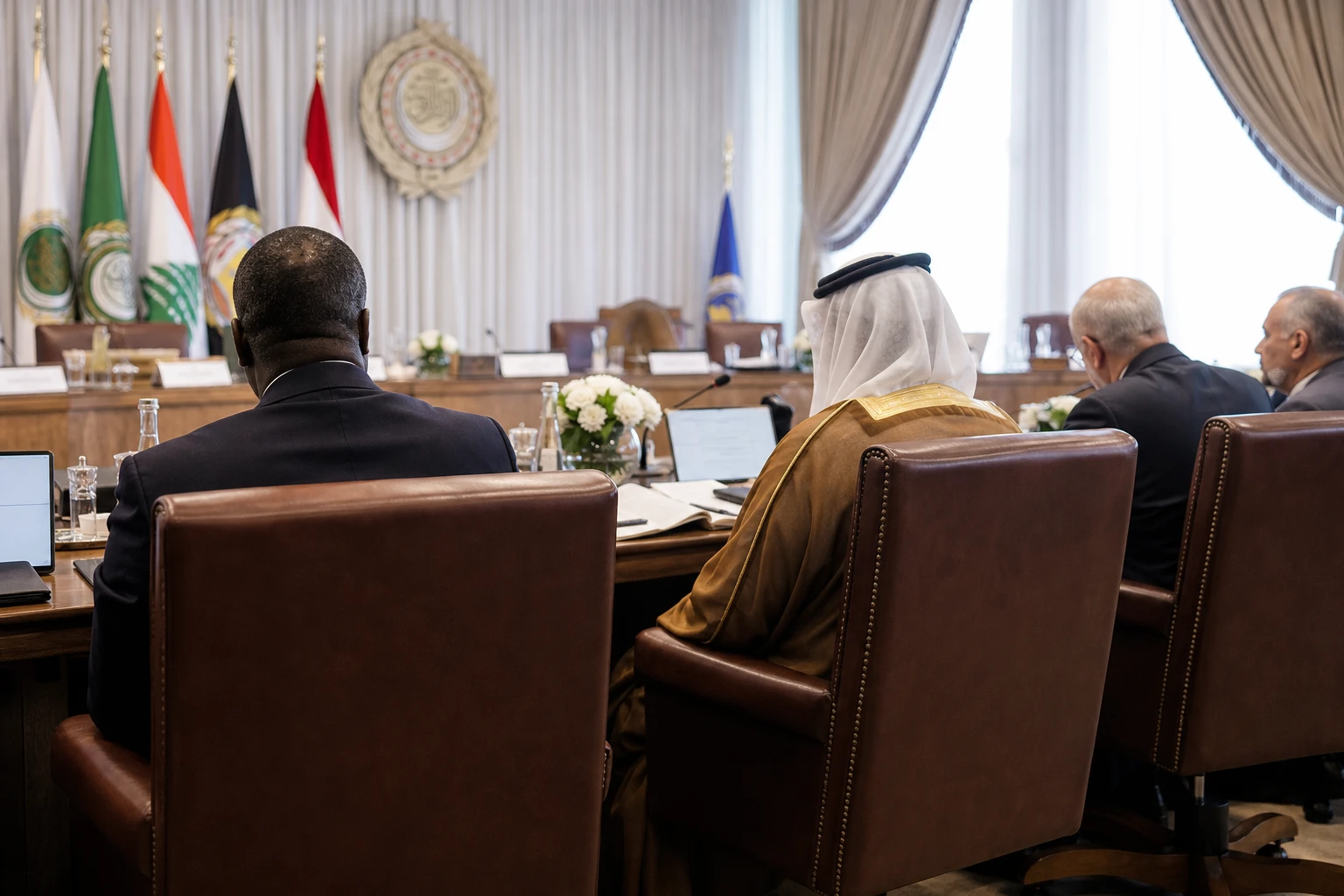
This position comes amid an already packed Arab agenda. On 7 September 2026, the Council of the Arab League met at ministerial level in Cairo for its 166th ordinary session, with discussions dominated by regional crises, maritime security and state sovereignty. The secretary-general of the Arab League is Ahmed Aboul Gheit, not another name sometimes found in certain dispatches.
Cairo’s message: protect routes and avoid escalation
Egyptian Foreign Minister Badr Abdelatty stressed the need to guarantee freedom of navigation and reject the use of maritime corridors as an instrument of pressure or escalation. His intervention is in keeping with Cairo’s longstanding diplomatic approach: calling for calm, containing the regional conflagration and defending international maritime law. Arab ministers also underscored the importance of respecting the sovereignty and territorial integrity of states in the region.
The context is a tense Middle East, with exchanges of fire, rivalries for influence and persistent concern over straits and maritime corridors. Egypt, which presents itself as a mediating power as well as a coastal state directly exposed to these risks, is defending a principle that concerns both its own security and that of its partners in the Gulf and the Levant. In recent days, Cairo has also stepped up consultations with Oman, Bahrain and other Arab capitals, urging de-escalation and the protection of navigation.
Why Egypt is so insistent
For Egypt, this is no theoretical issue. The Suez Canal remains one of the pillars of the national economy and a major passage between Asia and Europe. Disruptions in the Red Sea have already weighed on canal revenues: they fell to $3.991bn in 2024, from $10.25bn in 2023, before a partial recovery was subsequently reported by the canal authority. This volatility shows just how closely maritime security is tied to Egypt’s budgetary balance.
Cairo’s message is therefore aimed at several audiences at once. To Arab capitals, it is a reminder that a maritime crisis always becomes an economic crisis in the end. To shipping companies, it signals that the stability of corridors is not a diplomatic luxury but a condition of trade. And to the Egyptian public, it points to a very tangible issue: foreign-currency revenues, port jobs, logistics activity and the state’s ability to cushion external shocks.
This approach is also part of a broader Arab understanding of regional security. Rather than treating the crises in the Gulf, the Levant and the Red Sea separately, Cairo sees them as a single cluster of risks. This is reflected in discussions on Iran, state sovereignty and the consequences of military escalation for international maritime routes.
A reach extending beyond the Middle East
For the African continent, the issue goes beyond the Middle East. The Red Sea also borders the Horn of Africa, where security vulnerabilities, port tensions and transit concerns intersect. When maritime routes close or become more expensive, African countries that export, import or have coastlines quickly pay the price, from freight costs to delays in supplies.
Egypt, in North Africa, is speaking from a distinctive position: it is a member of the Arab League, a key Mediterranean player and guardian of a strategic passage for trade between the two shores of Africa and beyond. Its diplomacy emphasises a vision of collective security that matters to the African Union too, because it links regional stability, state sovereignty and the movement of goods. What happens next will depend on Arab consultations, mediation channels with Tehran and efforts to contain any spread of the conflict to maritime corridors.