Algeria
 Egypt
 Libya
 Morocco
 Sudan
 Tunisia
 Benin
 Burkina Faso
 Cabo Verde
 Côte d'Ivoire
 Ghana
 Guinea
 Guinea-Bissau
 Liberia
 Mali
 Mauritania
 Niger
 Nigeria
 Senegal
 Sierra Leone
 The Gambia
 Togo
 Cameroon
 Central African Republic
 Chad
 DR Congo
 Equatorial Guinea
 Gabon
 Republic of the Congo
 São Tomé and Príncipe
 Burundi
 Comoros
 Djibouti
 Eritrea
 Ethiopia
 Madagascar
 Malawi
 Mauritius
 Mozambique
 Rwanda
 Seychelles
 Somalia
 South Sudan
 Tanzania
 Uganda
 Angola
 Botswana
 Eswatini
 Lesotho
 Namibia
 South Africa
 Zambia
 Zimbabwe
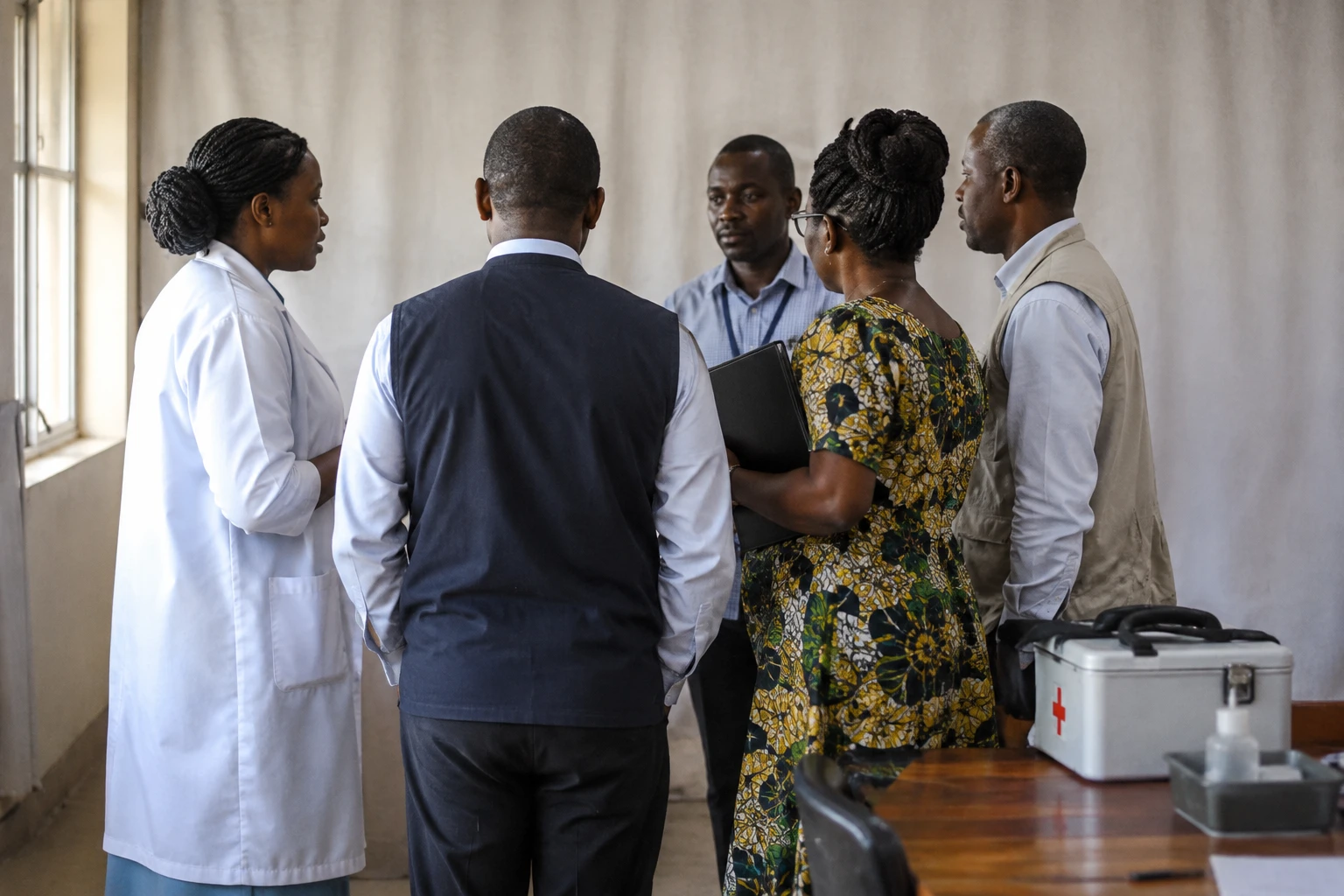
Ebola’s spread is measured not only by the number of provinces affected. It is also testing health services’ ability to continue routine care, as teams track a strain for which no vaccine has been approved.
In the Democratic Republic of the Congo (DRC), confirmation of cases in Nord-Ubangi extends the area of concern to the border with the Central African Republic. The priority is now twofold: contain chains of transmission and keep essential care accessible to the population.
A new province, pending official confirmation
Two cases of Bundibugyo virus disease have reportedly been confirmed in Nord-Ubangi, according to two health officials cited by Reuters on 15 October 2026. At that date, Congolese authorities had not yet officially announced the infections. The information should therefore be treated with this caveat.
If confirmed, Nord-Ubangi would become the eighth province affected. The province shares a border with the Central African Republic, but this does not mean transmission has been established there. The proximity nevertheless calls for coordinated monitoring of travel and cross-border health alerts.
The outbreak, declared in May 2026, remains particularly active. Figures released by Congolese authorities and reported by the Associated Press on 13 October showed 9,066 confirmed cases and 4,381 deaths. Reuters reported more than 9,000 cases and more than 4,000 deaths two days later. These figures describe the national situation before the reported cases in Nord-Ubangi; they should not be confused with a tally for that province alone.
Ituri remains a major centre of the outbreak, while cases have also been reported in several provinces in the east and north-east. The disease has crossed national borders: Uganda has had cases linked to the outbreak, and Kenya has confirmed infections linked to the same chain of transmission. Kenya’s Ministry of Health confirmed the first imported case on 6 October.
A strain that complicates the response
Bundibugyo is a species of Ebola virus, distinct from the Zaire strain associated with several previous major outbreaks. This difference has practical consequences: vaccines approved against the Zaire strain are not an approved vaccine against Bundibugyo. The response therefore relies in particular on rapid case identification, isolation, contact tracing, supportive care and infection prevention.
The response does not depend solely on treatment centres. Authorities must trace people who have been in contact with cases, circulate reliable information and enable medical teams to work in areas that are sometimes difficult to reach. Travel between cities, mining settlements and border areas can complicate tracing. This makes links between Congolese health services and neighbouring countries all the more important.
The World Health Organization (WHO) describes the outbreak as having spread to several provinces. Africa CDC, the African Union’s public health agency, is also monitoring the situation and stresses the need to coordinate regional responses. These institutions provide a framework for surveillance and support, but local detection, community trust and resources available on the ground remain decisive.
Protecting care beyond Ebola
An epidemic can disrupt services that are not directly related to the virus. In Ituri, UNFPA has documented the difficulties faced by pregnant women and maternal health teams. Fear of infection, population movements and pressure on facilities can deter patients from attending antenatal appointments or seeking skilled birth assistance.
Maintaining these services is part of the response, not a secondary priority. Screening and prevention measures at health centres can reduce risks while allowing obstetric emergencies to be treated. Conversely, if patients forgo care out of fear or because services are inaccessible, the consequences can affect families even when there is no Ebola infection.
The situation varies by area. In urban areas, hospitals may be more accessible, but they may also receive more patients and contacts to be traced. In rural or remote areas, distance, roads and staff availability complicate medical referrals. Displacement linked to insecurity in the east of the country adds another constraint for communities and health workers alike.
Communication also matters. Messages should explain preventive measures and how to access care without stigmatising sick people or their relatives. Clear information delivered by health professionals and local representatives helps people report symptoms and seek care. It does not replace equipment, teams or transport, but it can support their effectiveness.
A regional alert requiring sustained coordination
The Nord-Ubangi border is a reminder that epidemics do not follow administrative boundaries. The DRC shares routes and borders with several countries in Central Africa and the Great Lakes region. The Economic Community of Central African States (ECCAS), which brings together Central African countries, provides a relevant regional framework, alongside direct health cooperation between states and African Union mechanisms.
The immediate priority is to verify and document the reports from Nord-Ubangi, then establish the locations of exposure and identify the contacts concerned. Monitoring cases in Kenya and other affected countries should also help distinguish imported infections from any potential local transmission. Within the DRC, the evolution of outbreaks outside Ituri and the continuity of maternal care will be important indicators.
This outbreak also highlights a continental challenge: an effective response depends as much on surveillance and laboratories as on public trust and the protection of routine health services. Regional coordination can close gaps, provided alerts are verified quickly and local teams have the resources they need.