Algeria
 Egypt
 Libya
 Morocco
 Sudan
 Tunisia
 Benin
 Burkina Faso
 Cabo Verde
 Côte d'Ivoire
 Ghana
 Guinea
 Guinea-Bissau
 Liberia
 Mali
 Mauritania
 Niger
 Nigeria
 Senegal
 Sierra Leone
 The Gambia
 Togo
 Cameroon
 Central African Republic
 Chad
 DR Congo
 Equatorial Guinea
 Gabon
 Republic of the Congo
 São Tomé and Príncipe
 Burundi
 Comoros
 Djibouti
 Eritrea
 Ethiopia
 Madagascar
 Malawi
 Mauritius
 Mozambique
 Rwanda
 Seychelles
 Somalia
 South Sudan
 Tanzania
 Uganda
 Angola
 Botswana
 Eswatini
 Lesotho
 Namibia
 South Africa
 Zambia
 Zimbabwe
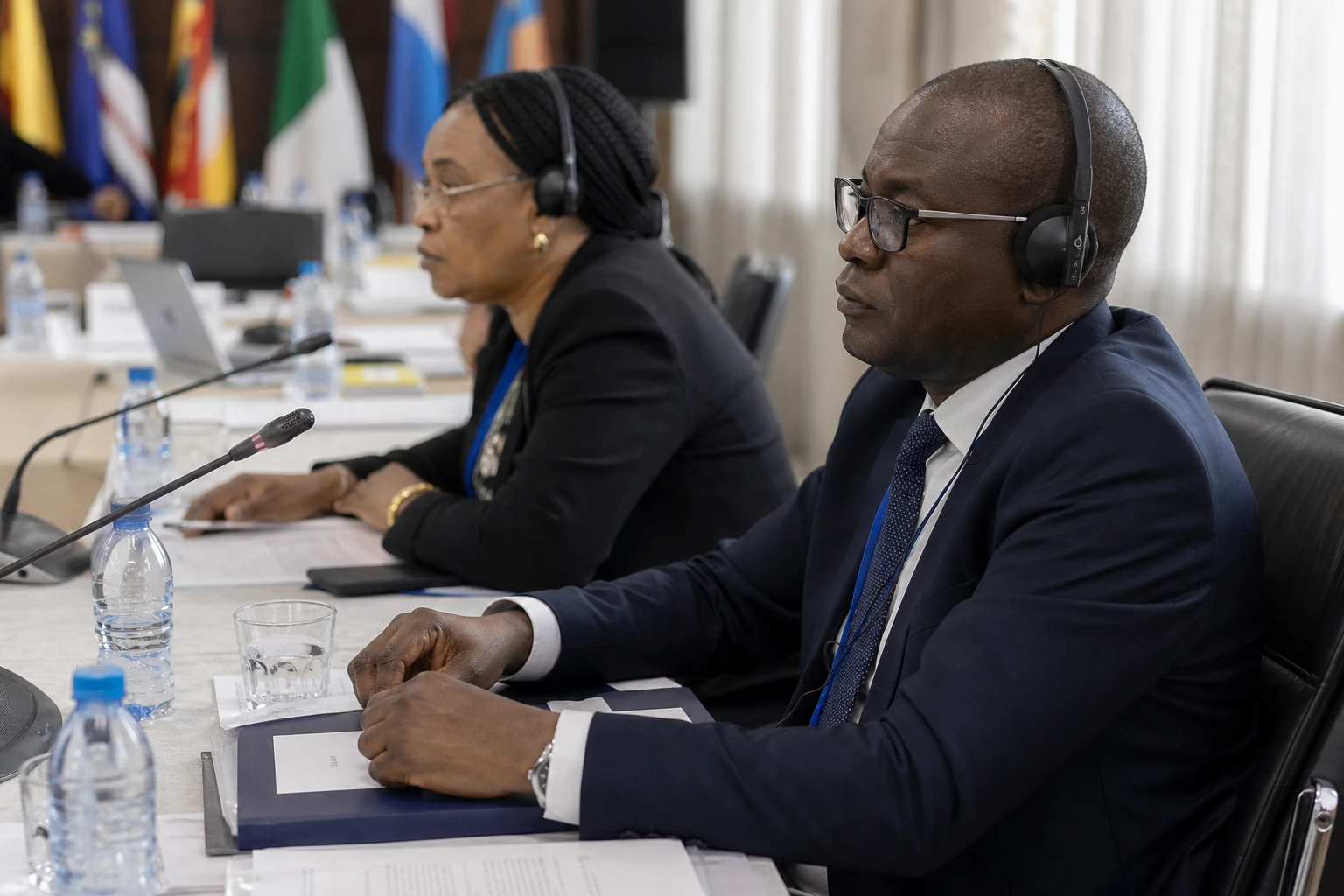
In the east, the response remains under strain
In Kinshasa and the eastern provinces, one question dominates: how can an epidemic that is receding in some places but still accelerating elsewhere be contained? In the Democratic Republic of the Congo, the response to Ebola is entering a decisive phase. The virus continues to circulate, especially in North Kivu, while some outbreaks in Ituri are finally showing more encouraging signs.
This contrast sums up the situation in the DRC. The country has launched a revised 180-day plan in Kinshasa to strengthen the health response. Africa CDC, the African Union’s health agency, says the emergency remains continental. The organisation stresses that falling case numbers in some outbreak areas are not yet enough to say transmission has been broken.
What the response data show
The epidemic is the DRC’s 17th Ebola outbreak, caused this time by the Bundibugyo virus. According to the WHO, the outbreak began in May 2026 in the country’s north-east, before spreading to several provinces. As of 7 September, the World Health Organization said North Kivu remained the second most affected province, with 1,066 cumulative cases and 453 cases reported in the previous 21 days.
The Congolese government and its partners describe the response as more structured than it was at the start of the outbreak. On 4 September, in Kinshasa, they presented a revised 180-day multisectoral plan. The document aims to accelerate surveillance, contact tracing, access to care and logistical coordination. The WHO and Africa CDC are supporting the plan.
But the curve is not falling everywhere. The WHO reported that the Kayna area in North Kivu had also been affected, a sign that the outbreak was spreading geographically. Africa CDC also notes that the reductions observed in Ituri are real but uneven, while some health zones in North Kivu continue to record rapid increases.
This spread complicates the work of health teams. The WHO and Africa CDC say North Kivu has faced heavy pressure on treatment centres, with high occupancy rates. The local context adds to the challenge: population mobility, hard-to-reach health zones, movement along informal routes and heavy pressure on infrastructure.
Why North Kivu carries so much weight in the crisis
North Kivu is not a province like any other. It is an area of intense movement, forced displacement and cross-border trade. In a province already marked by insecurity, population movements make contact tracing slower, more costly and sometimes incomplete. The WHO also points out that informal border crossings remain a possible route for the virus to spread.
For health authorities, this changes everything. Hospitals and treatment centres are not fighting a virus alone. They must also contend with mistrust, delays in seeking care, overcrowding at some sites and the need to work closely with communities. Africa CDC stresses that the response must be led with local people, not simply conducted for them.
The economic impact is real, too. A prolonged epidemic disrupts local markets, transport, artisanal mining activities and trade along the Congo River. The “Congo River Ebola-Free” initiative, launched in August, shows that Kinshasa also wants to protect the country’s main commercial arteries, not just the identified outbreak areas.
At the national level, the stakes are as political as they are medical. A response that holds in the east strengthens the state’s credibility in a region where that credibility is often tested. Conversely, prolonged failure reinforces the idea of an administration that speaks from the capital but struggles to reach local areas. The fight against Ebola is therefore also a test of public administration.
A health crisis intersecting with political tensions
On 15 September, in Kinshasa, the opposition protested against a proposed constitutional amendment. Police dispersed the demonstration with tear gas and warning shots, according to witnesses quoted by several international media outlets. One opposition figure died in this context, according to reports from the scene. The event had been authorised, but it escalated after clashes with supporters of the government.
This political issue adds another layer of fragility. When institutional debates become more heated, public health is often pushed into the background. Yet, in a country the size of the DRC, the stability of prevention systems, the flow of information and trust between the state and citizens matter just as much as stocks of medical equipment.
The situation in the DRC must also be viewed in a regional context. The country shares borders with nine states and remains a health crossroads for Central Africa and the Great Lakes region. When Ebola spreads in the east, the issue is not just national. It concerns Uganda, Rwanda, Burundi, Tanzania and, more broadly, the continent’s health security, which the African Union is seeking to strengthen through Africa CDC.
The next test will be one of endurance. If the outbreaks that are receding continue to decline and North Kivu finally slows, the DRC will be able to speak of a genuine turning point. Otherwise, the epidemic will continue to move from one health zone to another, at a high human and logistical cost. For Kinshasa, the immediate goal is therefore not to declare victory. It is to hold the line, province by province, until transmission is durably interrupted.