Algeria
 Egypt
 Libya
 Morocco
 Sudan
 Tunisia
 Benin
 Burkina Faso
 Cabo Verde
 Côte d'Ivoire
 Ghana
 Guinea
 Guinea-Bissau
 Liberia
 Mali
 Mauritania
 Niger
 Nigeria
 Senegal
 Sierra Leone
 The Gambia
 Togo
 Cameroon
 Central African Republic
 Chad
 DR Congo
 Equatorial Guinea
 Republic of the Congo
 São Tomé and Príncipe
 Burundi
 Comoros
 Djibouti
 Eritrea
 Ethiopia
 Kenya
 Madagascar
 Malawi
 Mauritius
 Mozambique
 Rwanda
 Seychelles
 Somalia
 South Sudan
 Tanzania
 Uganda
 Angola
 Botswana
 Eswatini
 Lesotho
 Namibia
 South Africa
 Zambia
 Zimbabwe
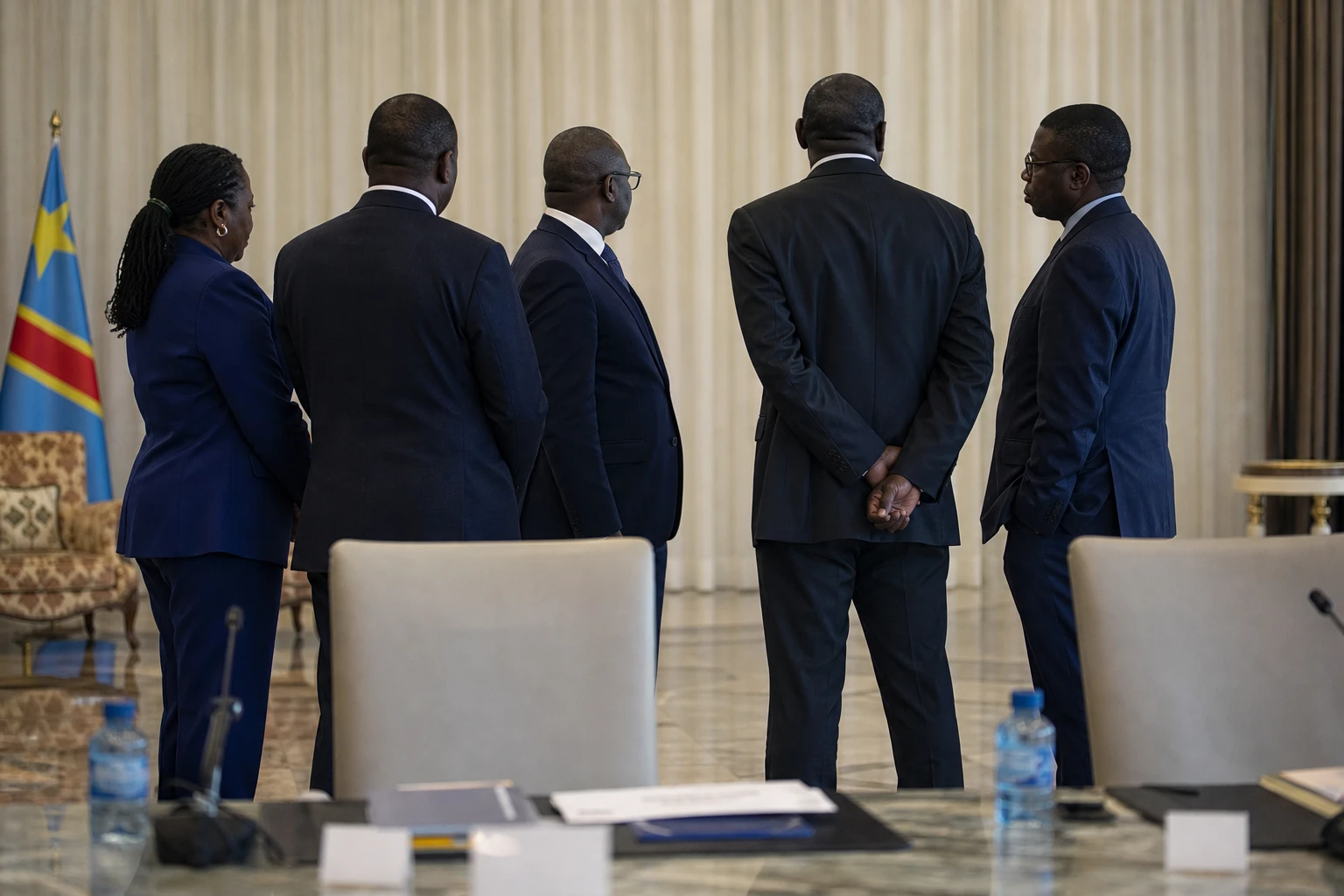
A tour combining international profile with practical calculations
In Kinshasa, diplomacy is not confined to ministerial salons. It also serves to secure alliances, facilitate trade and underline that the Democratic Republic of the Congo wants to count in the Francophonie, the Great Lakes region and southern Africa. The series of engagements begun in Gabon and continued in Tanzania follows this logic of purposeful engagement, at a time when regional balances remain fragile.
The regional context matters as much as the optics. Gabon has recently reaffirmed its intention to host the African Union Summit in 2027, while the DRC has officially put forward Juliana Amato Lumumba’s candidacy for the post of secretary-general of the International Organisation of La Francophonie, with the election due to take place at the Phnom Penh Summit in November 2026. At the same time, Tanzania remains a key partner for Kinshasa within the Southern African Development Community, SADC, and the East African Community, EAC.
In Gabon, reciprocal support and bilateral commitments
In Libreville, discussions focused first on diplomatic support. According to published information, Gabon backed the Congolese candidacy for the Francophonie, while Kinshasa was asked to support two Gabonese bids: Libreville’s candidacy for the Council of the International Telecommunication Union, with the election scheduled for November in Doha, and Gabon’s bid to host the African Union Summit in 2027. This reciprocity is standard in multilateral diplomacy, but becomes decisive when several African capitals are seeking greater influence in global forums.
The two capitals also formalised three agreements: a general cooperation framework covering, among other areas, justice, the environment, health and mining; an agreement exempting diplomatic and service passport holders from visa requirements; and a mechanism for regular political and diplomatic consultations. A joint commission is to oversee implementation of these commitments. On paper, the move is diplomatic. In practice, it paves the way for faster exchanges between government departments, better movement of public officials and more regular coordination on sensitive issues.
In Tanzania, security and trade corridors take centre stage
In Zanzibar, the focus shifted. The 2022 DRC-Tanzania joint communiqué had already established a foundation: trade, investment, infrastructure, finance, energy, defence, security and immigration were among the priority sectors, with a permanent joint commission tasked with following up on decisions. This foundation is no abstraction. It directly links the DRC to the Swahili coast through roads, railways and ports that underpin supplies to the country’s south-east.
Security is the first issue. Cooperation between Kinshasa and Dodoma is based on a memorandum signed in 2022, and the DRC had already sought Tanzanian expertise in the spring to train officers and senior personnel of the FARDC. The precedent of Éric Nkuba’s arrest in Dar es Salaam and subsequent transfer to Kinshasa also showed that the bilateral relationship is not limited to statements of principle. In a region where armed groups, logistics networks and diplomatic fronts intersect, every act of security cooperation has immediate political significance.
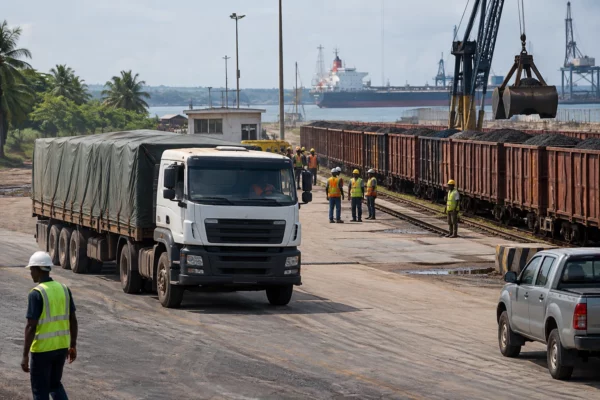
The second issue is economic. The Dar es Salaam corridor remains strategically important for the DRC’s exports and imports, particularly for its mining south-east. Regional work on the borders between Tanzania and Zambia has already highlighted very practical problems: delays, multiple checks, cash payments and imperfect coordination between administrations. Regional institutions, from SADC to the EAC, are pushing for smoother border crossings and simplified trade arrangements, because the costs of crossing borders feed through to prices, delivery times and business competitiveness.
What this diplomacy means for the DRC and the region
For the Congolese government, the tour serves two purposes. It reinforces the image of a president active across several African arenas, while advancing more material interests: support for a Francophone candidacy, backing in African forums, security cooperation with a stable neighbour and a more secure maritime outlet for economic flows. For the public, the stakes are measured less in communiqués than in results: faster movement of goods, fewer losses at borders and a greater capacity for the state to work with others against armed threats in the east.
The significance goes beyond the bilateral relationship. In the Francophonie, the contest for the leadership of the OIF shows that African states no longer want merely to defend the French language there, but also to wield political, cultural and economic influence. In regional organisations, the DRC is pursuing several tracks at once: SADC for security and southern corridors, the EAC for integration in the east, and the African Union for continental legitimacy. What happens next will depend on upcoming technical meetings, decisions on the candidacies and the ability of joint commissions to turn announcements into useful procedures. That is where this tour will be judged, far more than by arrival photographs.