Algeria
 Egypt
 Libya
 Morocco
 Sudan
 Tunisia
 Benin
 Burkina Faso
 Cabo Verde
 Côte d'Ivoire
 Ghana
 Guinea
 Guinea-Bissau
 Liberia
 Mali
 Mauritania
 Niger
 Nigeria
 Senegal
 Sierra Leone
 The Gambia
 Togo
 Central African Republic
 Chad
 DR Congo
 Equatorial Guinea
 Gabon
 Republic of the Congo
 São Tomé and Príncipe
 Burundi
 Comoros
 Djibouti
 Eritrea
 Ethiopia
 Kenya
 Madagascar
 Malawi
 Mauritius
 Mozambique
 Rwanda
 Seychelles
 Somalia
 South Sudan
 Tanzania
 Uganda
 Angola
 Botswana
 Eswatini
 Lesotho
 Namibia
 South Africa
 Zambia
 Zimbabwe
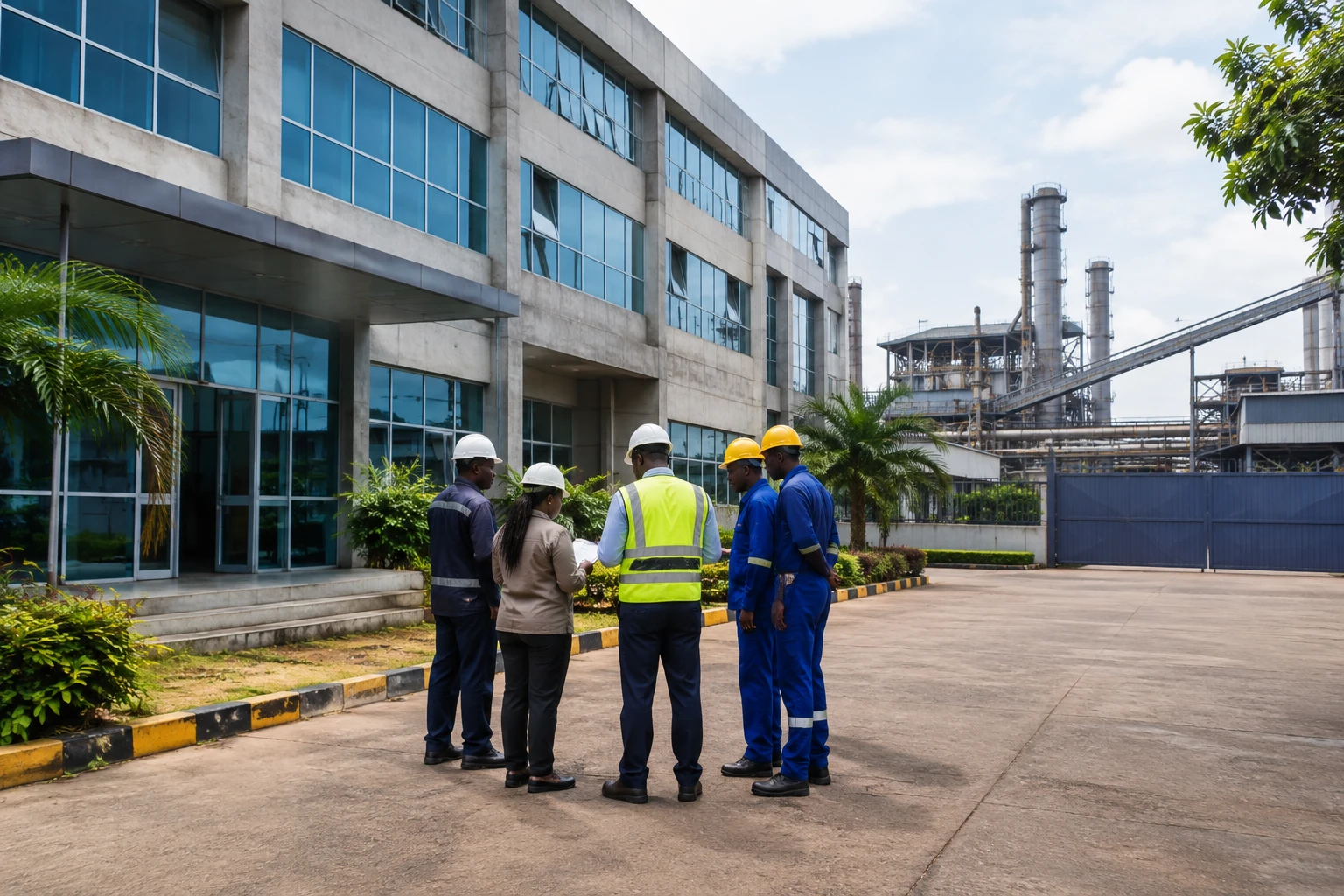
In the Bassa industrial zone of Douala, a fatal accident at a steelworks has brought a very concrete question back to the fore: were the measures announced after an earlier fire actually implemented? The investigation will have to establish the cause of the explosion and determine whether any shortcomings contributed to the tragedy.
A second incident in six months
On Monday 2 November 2026, an explosion followed by a fire struck the facilities of Metafrique Steel, a metal-processing company in the Bassa industrial zone. The Littoral governor, Samuel Dieudonné Ivaha Diboua, reported four deaths and sixteen serious injuries. The injured were taken to Douala General Hospital.
This toll, reported by several Cameroonian and international media outlets, may change. The following day, a local media outlet reported a different toll — five dead and fifteen injured — without this revision being confirmed by the other sources consulted. The figures of four dead and sixteen injured therefore remain those attributed to the authorities’ initial statements.
The governor visited the site and questioned compliance with the safety instructions issued after an earlier fire, which occurred during the night of 30 April to 1 May 2026. That incident left ten people injured, according to reports published at the time by Cameroonian media. Ivaha Diboua called for the factory’s activities to be halted while responsibility was established. At this stage, the sources consulted do not report a formal closure order.
Metafrique Steel’s management, for its part, attributed the incident to an “external factor” and said its causes remained to be determined. This account is not an investigation finding. The technical circumstances of the incident, as well as any possible liabilities, remain to be established.
Investigation awaited, responsibilities to be clarified
The governor’s statements and those of the company present different interpretations of the accident. One raises the question of safety requirements that may have been ignored after the first fire; the other points to an external cause. Only a documented investigation can assess the competing hypotheses and establish how events unfolded.
It will be necessary to determine which measures were requested after the May incident, whether they were implemented and what inspections have been carried out since. The findings should also shed light on how the site’s warning and firefighting systems operated. The information available does not yet answer these questions.
This distinction matters to employees and their families. It also matters to workers at other companies in the sector, residents of Bassa and the services responsible for industrial safety. A suspension, if formally ordered, would also affect the company’s operations and its employees. The number of jobs cited in the original material has not been confirmed by the independent sources consulted and therefore cannot be presented as established.
Douala, an industrial hub and regional crossroads
Douala accounts for a significant share of Cameroon’s port and industrial activity. The Bassa zone is home to companies that process raw materials and supply, among other sectors, the construction industry. This activity supports jobs and production chains, but it also requires controls suited to the specific risks posed by furnaces, molten metals and electrical installations.
Responsibility for prevention does not rest with a single actor. Companies must apply safety rules and protect their employees. The relevant authorities must inspect facilities and ensure compliance with requirements. In the event of an accident, emergency services and healthcare facilities must be able to respond quickly. The investigation will have to clarify how these responsibilities intersect in this particular case, without prejudging its findings.
The case extends beyond Douala. Cameroon is a member of the Economic and Monetary Community of Central Africa (CEMAC), which brings together six Central African countries in economic and monetary co-operation. Industrial-site safety also concerns regional production chains, the standards applied to companies and the protection of workers beyond national borders. However, none of the information consulted allows us to say that a CEMAC body is directly responsible for investigating this accident.
What the next steps must clarify
The decisive point will be the publication of precise findings: the origin of the explosion, the condition of the equipment, the instructions issued after the first fire and the inspections carried out. Confirmation or revision of the human toll will also need to be followed. For the victims’ families, the injured and the factory’s staff, these details will shape public understanding of the tragedy and any subsequent administrative or legal proceedings.
In Douala, as in Cameroon’s other industrial hubs, repeated incidents at the same site raise a question about continuity in inspections: do recommendations made after an accident lead to verifiable changes? The answer will depend less on accusations exchanged in the first hours than on the investigation’s findings and how its recommendations are implemented.