Algeria
 Egypt
 Libya
 Morocco
 Sudan
 Tunisia
 Benin
 Burkina Faso
 Cabo Verde
 Côte d'Ivoire
 Ghana
 Guinea
 Guinea-Bissau
 Liberia
 Mali
 Mauritania
 Niger
 Nigeria
 Senegal
 The Gambia
 Togo
 Cameroon
 Central African Republic
 Chad
 DR Congo
 Equatorial Guinea
 Gabon
 Republic of the Congo
 São Tomé and Príncipe
 Burundi
 Comoros
 Djibouti
 Eritrea
 Ethiopia
 Kenya
 Madagascar
 Malawi
 Mauritius
 Mozambique
 Rwanda
 Seychelles
 Somalia
 South Sudan
 Tanzania
 Uganda
 Angola
 Botswana
 Eswatini
 Lesotho
 Namibia
 South Africa
 Zambia
 Zimbabwe
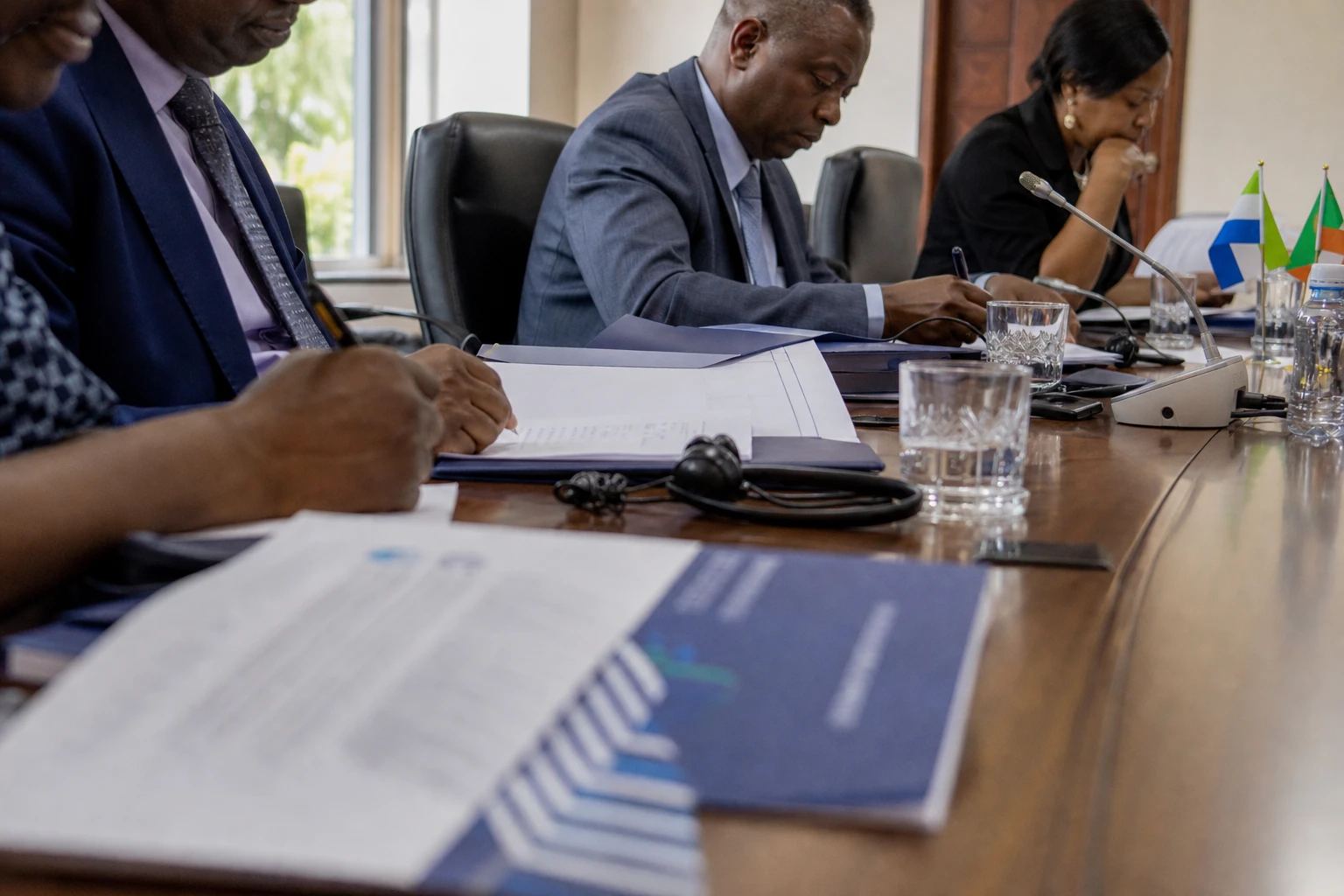
A technical handover in an economy seeking lasting support
In Sierra Leone, the economic debate is no longer limited to growth figures. It is focused above all on a very practical question: how to turn a fragile recovery into lasting jobs in a country where many young people enter the labour market with no immediate prospects. The appointment of a new World Bank Group representative in Freetown is part of this search for delivery, not merely announcements.
Sierra Leone remains a West African state closely linked to ECOWAS, the Economic Community of West African States, which brings together fifteen countries in the region. This membership matters because price shocks, population movements, trade routes and energy policies quickly cross national borders. In Freetown, budget choices, private investment and public services must also be viewed on a West African scale.
What Aissatou Diallo’s arrival means
The World Bank announced on 1 September 2026 the appointment of Aissatou Diallo as country director for Sierra Leone. The Guinean national, based in Freetown, will oversee a portfolio worth nearly $1.2 billion and lead strategic dialogue with the Sierra Leonean government, development partners, the private sector and civil society. The institution says she will support the country programme, inclusive growth, human capital, resilience and private investment.
Ms Diallo’s background explains the choice. The World Bank says she has nearly thirty years’ experience in development finance, including more than twenty years with the Group. She has worked on country operations management, portfolio management, policy dialogue and fragile environments. Before Freetown, she represented the Group in Libreville and then Malabo. In a country where project delivery matters as much as project design, this operational continuity is an important signal.
The appointment comes as the Sierra Leonean government seeks to consolidate an uneven recovery. The World Bank Group puts growth at 4.6% in 2025, while the International Monetary Fund forecasts 4.5% in 2026. The World Bank attributes the improvement to agriculture, services and domestic demand, amid disinflation. The IMF, for its part, notes that inflation has fallen sharply after reaching much higher levels in 2023.
But macroeconomic recovery does not erase social vulnerabilities. World Bank data show that poverty remains widespread, with the poverty rate at $3 a day standing at 41.5% in 2018, and households continuing to be exposed to price and income shocks. Other institutional documents note that monetary poverty remains more severe in rural areas than in urban centres. In other words, an improvement in GDP does not automatically mean daily life improves in Makeni, Bo or Kenema.
Jobs, poverty and migration: the heart of Sierra Leone’s challenge
The real test for the new leadership will be employment. In recent documents, the World Bank has stressed the low level of formal job creation and the weight of the informal sector. The IMF, meanwhile, has highlighted very high youth unemployment in its country assessments. In this context, irregular migration appears less an exception than a survival strategy for some young people, particularly when agricultural incomes remain volatile and the urban economy cannot absorb new arrivals quickly enough.
The World Bank and the government have already expanded support in energy, water, social protection, agriculture and governance. A further $80 million in financing was approved in December 2024 to support macroeconomic stability and resilience. The portfolio now managed from Freetown will therefore have to do more than add up projects: it will need to link budget reforms, productive investment and access to basic services.
For the Sierra Leonean government, the challenge is also political. When growth remains concentrated in a few activities, social frustration can rise quickly. When inflation falls but incomes stagnate, households do not immediately feel the improvement. The new World Bank representative will therefore have to navigate between expectations of rapid results and the long-term nature of structural reforms. This is often where the credibility of development partnerships is at stake.
A West African perspective beyond Sierra Leone
At regional level, Sierra Leone shares the same concerns as several ECOWAS neighbours: youth employment, the cost of living, dependence on food imports, weak local value chains and the need for reliable infrastructure. The appointment of a Sierra Leonean or a national of a neighbouring country—as in this case, a Guinean—to a senior economic role in the sub-region also illustrates the movement of West African expertise within international institutions.
This issue also matters to the African Union because it raises a broader question: how do African countries turn aid and financing into genuine national capacity? In Sierra Leone, the answer will be measured in schools, health centres, access to electricity, businesses that hire and roads that reduce the isolation of regions. The next point to watch will be whether and how the new management of the World Bank portfolio translates into budget choices and visible projects in the coming months.