
 Algeria
 Egypt
 Libya
 Morocco
 Sudan
 Tunisia
 Benin
 Burkina Faso
 Cabo Verde
 Côte d'Ivoire
 Ghana
 Guinea
 Guinea-Bissau
 Liberia
 Mali
 Mauritania
 Niger
 Senegal
 Sierra Leone
 The Gambia
 Togo
 Cameroon
 Central African Republic
 Chad
 DR Congo
 Equatorial Guinea
 Gabon
 Republic of the Congo
 São Tomé and Príncipe
 Burundi
 Comoros
 Djibouti
 Eritrea
 Ethiopia
 Kenya
 Madagascar
 Malawi
 Mauritius
 Mozambique
 Rwanda
 Seychelles
 Somalia
 South Sudan
 Tanzania
 Uganda
 Angola
 Botswana
 Eswatini
 Lesotho
 Namibia
 South Africa
 Zambia
 Zimbabwe
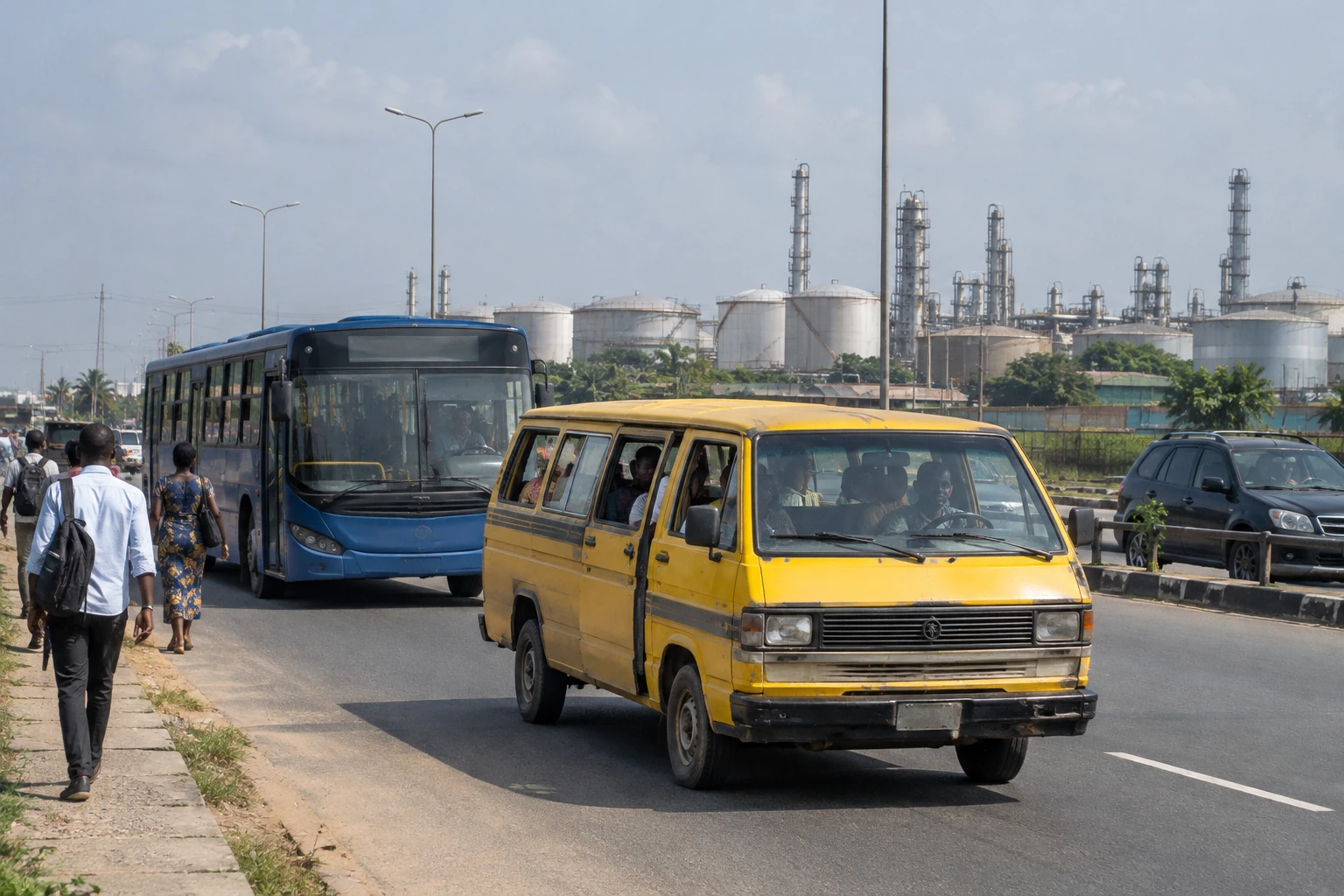
Can a giant refinery also become an investment accessible to ordinary savers? In Nigeria, the closure of Dangote’s public share offer opens a new chapter in private financing for African energy infrastructure. But the number of countries represented does not yet show how much the company has actually raised.
A Nigerian offering with continental reach
Nigeria is Africa’s largest oil producer, but for a long time it has relied on imports to supply its markets with refined fuels. This dependence has weighed on public finances, foreign exchange reserves and the prices paid by households and businesses.
The Dangote refinery, located in Lekki, Lagos State, is part of this contradiction: a major crude-producing country seeking to process more of its own resource. The site is privately owned. Its production and sales nevertheless affect consumers, transport operators and businesses in Nigeria, as well as markets across West Africa.
The country is a member of ECOWAS, the Economic Community of West African States, which brings neighbouring countries together around regional cooperation and trade. For their economies, additional refining capacity can widen supply options. On its own, however, it does not guarantee low prices or regular distribution.
Subscription closes, amount still unknown
The public share offer by Dangote Petroleum Refinery and Petrochemicals closed on 27 October 2026, after a two-week extension. The original schedule had set the closing date for 13 October. The offer’s official website says applications are being verified and the share allocation has not yet been completed.
The company says it received applications from investors in 120 countries, across six continents and all 54 African countries. Nigerian media outlet TheCable also reported these figures and said the extension was approved by the Securities and Exchange Commission, Nigeria’s financial markets regulator. These figures relate to the geographical origin of applications; they do not yet show how many applications were validated or the final distribution of shares.
The amount actually raised had not been disclosed when the offer closed. The stated target was $1.6 billion. Earlier in October, Aliko Dangote said the target had been exceeded by “more than three or four times”. That remains his statement: without a published final result, it does not establish the amount raised.
The official website presents the offer as a step towards broadening the refinery’s shareholder base. The participation of African individuals is therefore central to the public account of the offer. Allocation figures will nevertheless be needed to establish what share of the securities actually goes to retail investors, and what share to other categories of investor.
Industrial capacity, multiple dependencies
The refinery says it currently has the capacity to process 700,000 barrels of crude a day. Its expansion project aims to raise this to 1.4 million barrels a day. This second phase is a stated target, not capacity that is already operational. If achieved, it could place the site among the largest in the world.
The scale of the project is not enough to measure its impact on the economy. The availability and cost of crude oil, the actual use of the units, financing for the expansion and distribution networks will also matter. For motorists and transport operators, the practical issue remains access to fuel and its price. For the state, potential effects include imports, revenue and foreign exchange reserves. For local producers and independent distributors, a dominant refinery could also shift commercial balances.
The benefits are therefore neither automatic nor the same for everyone. Increased production capacity could reduce some import needs, but the outcome will depend on the volumes supplied to the Nigerian market and the prices charged. Regions far from major storage centres and informal traders will not necessarily benefit on the same terms as large industrial customers.
The refinery says it wants to increase its capacity to 1.4 million barrels a day. Financing for this expansion and its timetable remain issues to watch. The planned increase would also heighten the need to supply the site regularly with crude and transport its products to markets.
The test begins after the subscription
The offer’s closure signals interest in an African industrial asset and the continent’s financial markets. It does not yet prove that the offering has met its financial target or that ownership will be widely spread among small savers. Allocation results and publication of the final amount will provide firmer answers.
For Nigeria and its West African neighbours, the next test will be industrial and commercial: will the refinery be able to produce at scale, deliver regularly and contribute to more predictable supply? In Abuja, the federal capital, the authorities are also monitoring the effects of a major private-sector player on energy security and the domestic market. The outcome will weigh on the regional debate over local processing of resources and African financing for infrastructure.



