Algeria
 Egypt
 Libya
 Morocco
 Sudan
 Tunisia
 Benin
 Burkina Faso
 Cabo Verde
 Côte d'Ivoire
 Ghana
 Guinea
 Guinea-Bissau
 Liberia
 Mali
 Mauritania
 Niger
 Nigeria
 Senegal
 Sierra Leone
 The Gambia
 Togo
 Cameroon
 Central African Republic
 Chad
 DR Congo
 Equatorial Guinea
 Gabon
 Republic of the Congo
 São Tomé and Príncipe
 Burundi
 Comoros
 Djibouti
 Eritrea
 Ethiopia
 Madagascar
 Malawi
 Mauritius
 Mozambique
 Rwanda
 Seychelles
 Somalia
 South Sudan
 Tanzania
 Uganda
 Angola
 Botswana
 Eswatini
 Lesotho
 Namibia
 South Africa
 Zambia
 Zimbabwe
In Nairobi, a science-fiction film asks a very concrete question
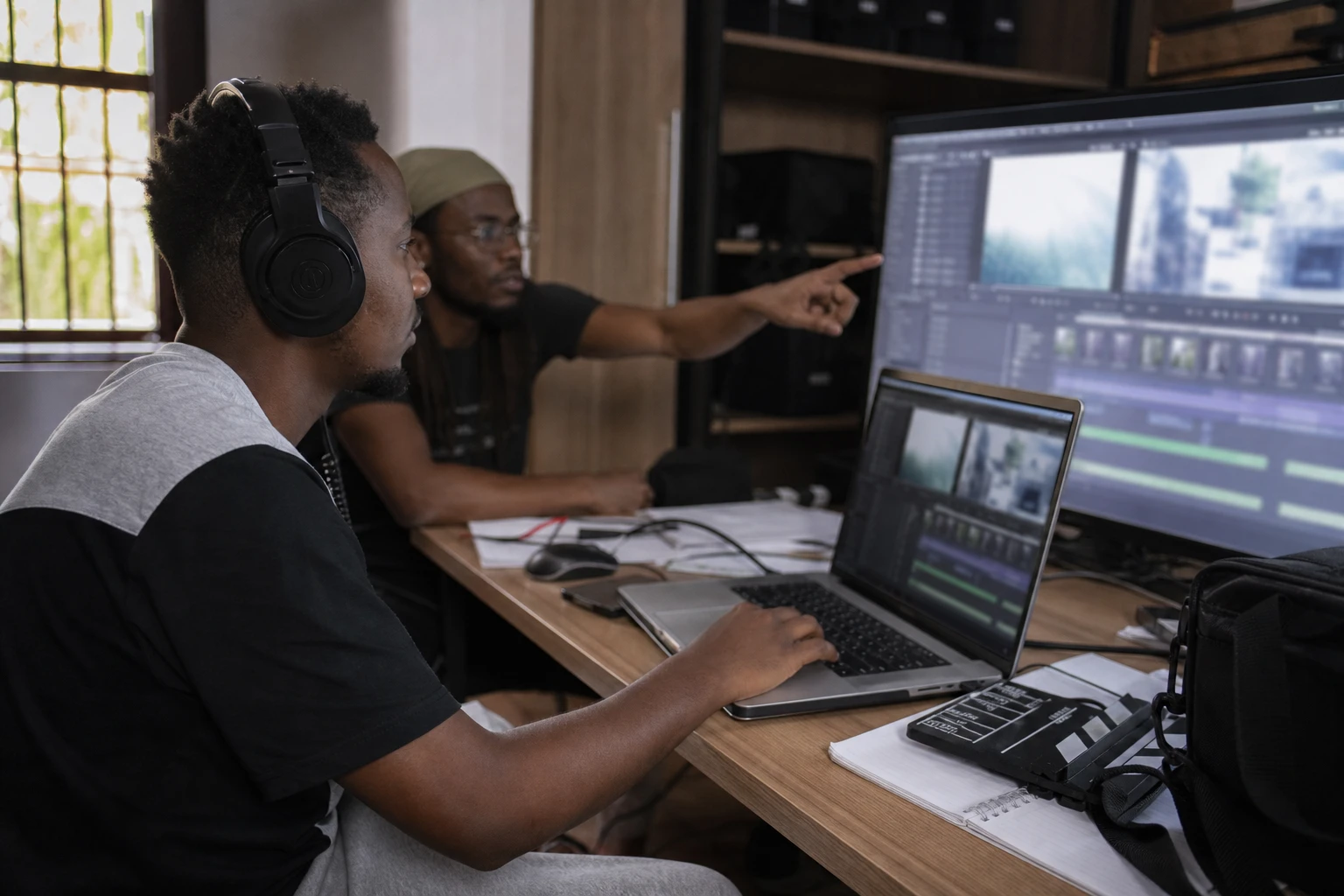
In Kenya’s film industry, the debate about artificial intelligence is no longer confined to laboratories or start-ups. It now touches the film set, the editing room and even the way an African story is presented to the public. With Memory of Princess Mumbi, Damien Hauser, a Kenyan filmmaker born in Zurich but deeply embedded in Kenya’s production networks, has placed this debate at the heart of a film selected for the official selection of the Giornate degli Autori in Venice and scheduled for the Venice Film Festival’s parallel independent section.
The starting point is simple, but highly relevant to Kenya today: how can ambitious cinema be made when budgets remain tight, cinemas are few and far between, and funders want projects that are immediately easy to understand? Hauser’s film offers a hybrid approach. It uses AI to create sets and extend real spaces, while allowing the actors, improvisation and unexpected gestures to carry most of the weight. Festival materials have already described this approach as a way to make a film that AI alone could not invent.
A Kenyan context: few screens, little room to manoeuvre, but a scene finding its voice
Hauser’s case is part of a Kenyan industry often described as creative, but held back by distribution. A recent overview published by The EastAfrican estimated that Kenya had only 14 cinema screens nationwide, mechanically limiting the circulation of local works. The same article also noted that financing remains one of the sector’s main obstacles.
This fragility explains why international recognition matters so much. In Kenya, the route to the screen often runs through Nairobi, where the few investors, festivals and some of the distribution networks are concentrated. The Kenya Film Commission has also held several meetings on financing, bringing together banks, regulators and industry professionals to seek models better suited to local production. This says a great deal about a market where technical innovation is advancing faster than infrastructure.
Against this backdrop, Memory of Princess Mumbi is a signal. The film was presented in Venice, then acquired for release in East Africa, with a premiere in Nairobi and screenings planned in several countries in the region. This regional circulation matters as much as the Venice selection, because it shows that a Kenyan film can also find an audience beyond the European festival circuit.
What Hauser says about AI, and what it reveals about African cinema
Hauser’s message is nuanced. AI, he says in essence, can reduce costs and open up visual worlds beyond the reach of small budgets. But as soon as it starts making decisions on its own, the author disappears. This dividing line matters, especially in a sector where many African filmmakers are still making do with limited resources without abandoning formal ambition.
His argument is part of a wider debate in Kenya. Local productions are often judged by their ability to persuade external funders, and this dependence can steer stories towards themes considered “urgent” by international funding bodies. The director does not deny the place of stories of suffering. He simply warns that making them the main subject of African cinema traps filmmakers in a narrow perspective. On this point, his reading aligns with that of many Kenyan observers who see a lack of local financing as one reason for the limited diversity of films being made.
The film also has an intimate dimension. Hauser links his project to the death of his brother, Charles, shortly before filming began. He explains that only gradually, during the editing stage, did the film become a work about memory, absence and the traces left by loved ones who have died. This personal dimension takes the project beyond a mere exercise in technological style. It connects it to a well-established tradition in African cinema: starting from an individual experience to speak about a world in transformation.
Why this selection matters beyond a single film
The Venice selection is first and foremost symbolic. For a Kenyan filmmaker, it raises visibility among distributors, festivals and funders. It does not solve anything on its own, but it shifts the balance of power. A project filmed with few actors and a lightweight camera can then be seen as a serious artistic proposition, rather than a simple craft experiment. This shift matters in a country where a film’s credibility is often decided even before its release.
It also says something about Kenya’s place in the East African cultural landscape. Nairobi remains the main centre for production, training and distribution, but demand extends beyond the capital. Regional releases, reaching Ethiopia, Uganda, Rwanda and Tanzania as well, show that a Kenyan story can travel within the East African Community without dissolving into a single model. Perhaps this is the film’s broader challenge: to prove that African cinema can use the tools of the moment, including AI, without giving up its voice or its narrative sovereignty.
Across the continent, the issue extends beyond cinema alone. It touches on the creative industries, ownership of images, cultural financing and the way Africa tells its own stories in ecosystems now shaped by generative technologies. In the months after its Venice presentation, it will therefore be less the accolade itself than the film’s journey through cinemas in Nairobi and the region that shows whether this promise of a more visible, autonomous and inventive Kenyan cinema can endure.