
 Algeria
 Egypt
 Libya
 Morocco
 Sudan
 Tunisia
 Benin
 Burkina Faso
 Cabo Verde
 Côte d'Ivoire
 Ghana
 Guinea
 Guinea-Bissau
 Liberia
 Mali
 Mauritania
 Niger
 Nigeria
 Sierra Leone
 The Gambia
 Togo
 Cameroon
 Central African Republic
 Chad
 DR Congo
 Equatorial Guinea
 Gabon
 Republic of the Congo
 São Tomé and Príncipe
 Burundi
 Comoros
 Djibouti
 Eritrea
 Ethiopia
 Kenya
 Madagascar
 Malawi
 Mauritius
 Mozambique
 Rwanda
 Seychelles
 Somalia
 South Sudan
 Tanzania
 Uganda
 Angola
 Botswana
 Eswatini
 Lesotho
 Namibia
 South Africa
 Zambia
 Zimbabwe
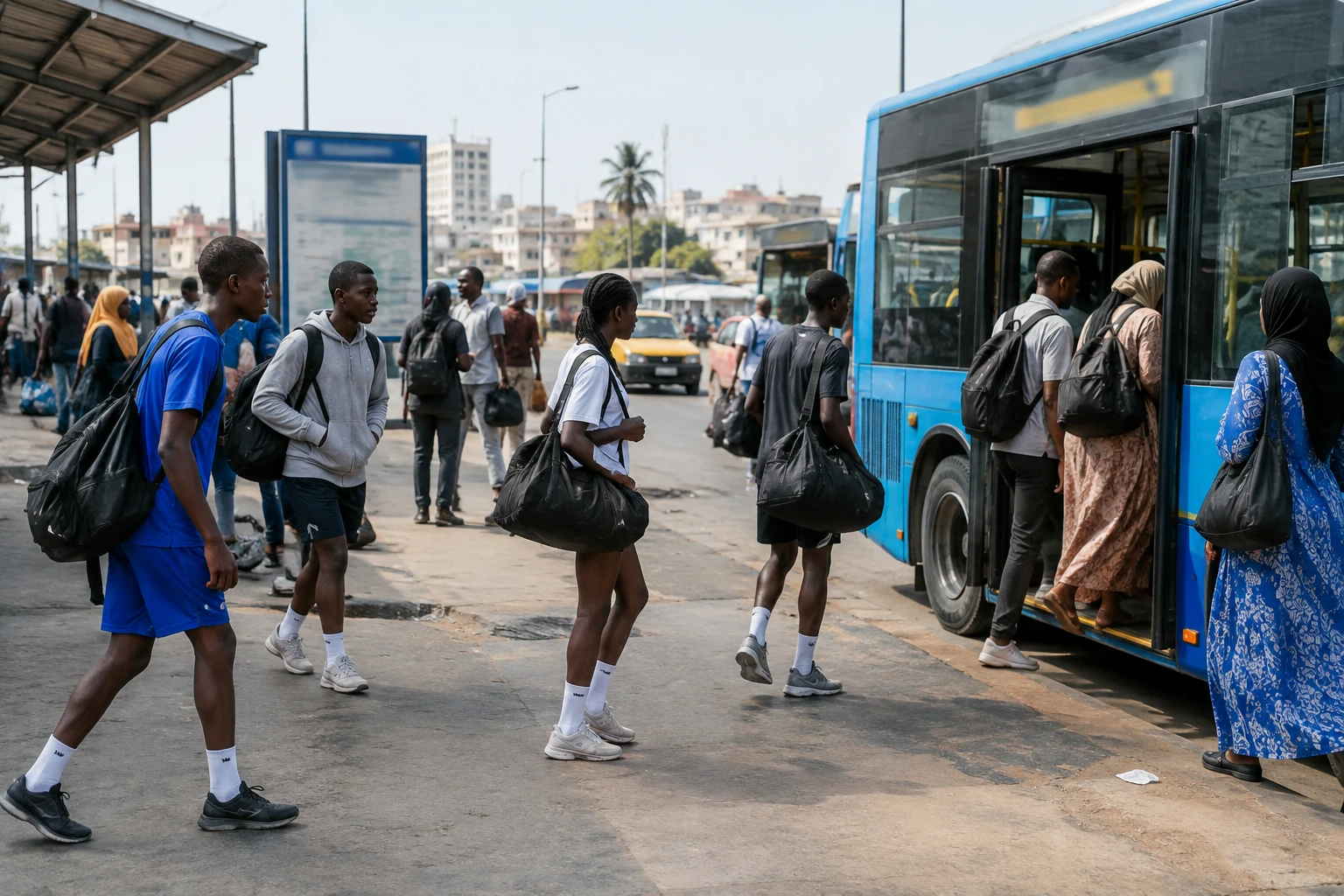
In Dakar, the Youth Olympic Games delivered more than podium finishes: they offered a glimpse of a generation whose next steps will depend as much on talent as on access to training, competitions and sustained support. Several young African medallists have already made a strong impression. But a title at 16 or 17 does not guarantee a place at the senior Olympic Games.
Dakar, Africa’s first Olympic stage
From 31 October to 13 November 2026, nearly 2,700 athletes aged 14 to 17 competed in 25 sports in Dakar, Diamniadio and Saly. This edition was the first Olympic event to be held on African soil. For Senegal, it also placed sport and the country’s capacity to host at the centre of a global event.
The competition is part of a West African movement. ECOWAS, the organisation bringing together countries in the region, partnered with the Senegalese National Olympic and Sports Committee to engage young people around the Games. The regional legacy, however, will be measured over time: in coach training, access to facilities and support for athletes after the delegations have left.
In Senegal, the results brought together established popular sports and new opportunities for visibility. Beach wrestling, whose Olympic events made their debut at these Games, notably earned the country three titles. Competitions were held across several cities and venues, so the benefits are not limited to Dakar, even though the capital attracts much of the attention and has a large share of the infrastructure.
Performances already drawing attention
In swimming, Japan’s Mana Ishikawa won four individual titles: the 50m, 100m and 200m breaststroke, followed by the 200m individual medley. The Olympic Council of Asia and the International Olympic Committee confirm that she is the first athlete to win four individual gold medals in the history of the Youth Olympic Games. Her run was a highlight of the competition, but does not predict how her career will unfold at senior level.
Senegal also saw Marie Sarr win taekwondo gold in the under-55kg category. In athletics, Egypt’s Yahya Sawab won the discus throw with 68.23 metres, according to competition results cited in available reports. These performances put two young Africans among the names to watch, but their progress will now depend on the competitions and resources they can access.
Nigeria’s Rosemary Nwankwo won the 100m. She is the third Nigerian sprinter to take the Youth Olympic title at that distance, after Josephine Omaka in 2010 and Rosemary Chukwuma in 2018. Repeated success points to a sprint programme capable of producing talent. The transition to senior categories remains a challenge in its own right, with different levels of competition and physical demands.
In skateboarding, American Julian Jeang-Agliardi won street gold and spoke of his ambition to target Los Angeles 2028. Other athletes, such as Egyptian swimmer Ali Zain, who won titles in three butterfly events, also made their mark. At this age, however, schedules can change quickly: a Youth Olympic medal is neither a qualification nor a guarantee of selection for the next Olympic Games.
Senegal’s medals and what comes after the Games
Beach wrestling gave Senegal its first Olympic titles. Élisabeth Diatta, 16, won the under-55kg event, followed by Maguette Diop in the under-80kg category and Ndèye Khady Anna Diatta in the under-45kg category. Senegal’s APS news agency and APA confirm the three victories. Their success is particularly visible in a sport often associated with men in Senegal.
The challenge now is to turn these results into lasting careers, particularly for young women. The titles were won in beach wrestling; they do not guarantee a transition to Olympic indoor wrestling. This distinction matters for the athletes, their coaches and the federations, which will need to build suitable pathways between the disciplines.
Regional results also show that needs extend beyond Senegal. Kenya won the women’s rugby sevens, while Madagascar took bronze, its first medal at the Youth Olympic Games. The Olympic body confirms these results. They raise the profile of African teams, but resources, medical support and access to international competitions remain practical challenges in turning a one-off performance into sustained progress.
The final medal table put China first, ahead of Japan and Russia. Egypt, Ethiopia and Senegal each won five gold medals. These results show the diversity of Africa’s performance centres, without suggesting that Africa is a uniform sporting whole. Sports, structures and pathways differ greatly from one country to another.
From podium glory to the continent’s next generation
The Youth Olympic Games help identify athletes and give them international experience. They do not replace senior championships or national training systems. For young Senegalese athletes, the challenge will be to maintain support after the event, in Dakar and in the regions. For other African teams, the question is similar: how can the attention generated by a medal be sustained through regular support?
In Dakar, the performances gave young audiences role models and several sports their first Olympic stage. What happens next will depend less on promises than on the resources devoted to the next generation. That is where the sporting legacy of the Games will be measured for Senegal, West Africa and the continent’s federations.



