Algeria
 Egypt
 Libya
 Morocco
 Sudan
 Tunisia
 Burkina Faso
 Cabo Verde
 Côte d'Ivoire
 Ghana
 Guinea
 Guinea-Bissau
 Liberia
 Mali
 Mauritania
 Niger
 Nigeria
 Senegal
 Sierra Leone
 The Gambia
 Togo
 Cameroon
 Central African Republic
 Chad
 DR Congo
 Equatorial Guinea
 Gabon
 Republic of the Congo
 São Tomé and Príncipe
 Burundi
 Comoros
 Djibouti
 Eritrea
 Ethiopia
 Kenya
 Madagascar
 Malawi
 Mauritius
 Mozambique
 Rwanda
 Seychelles
 Somalia
 South Sudan
 Tanzania
 Uganda
 Angola
 Botswana
 Eswatini
 Lesotho
 Namibia
 South Africa
 Zambia
 Zimbabwe
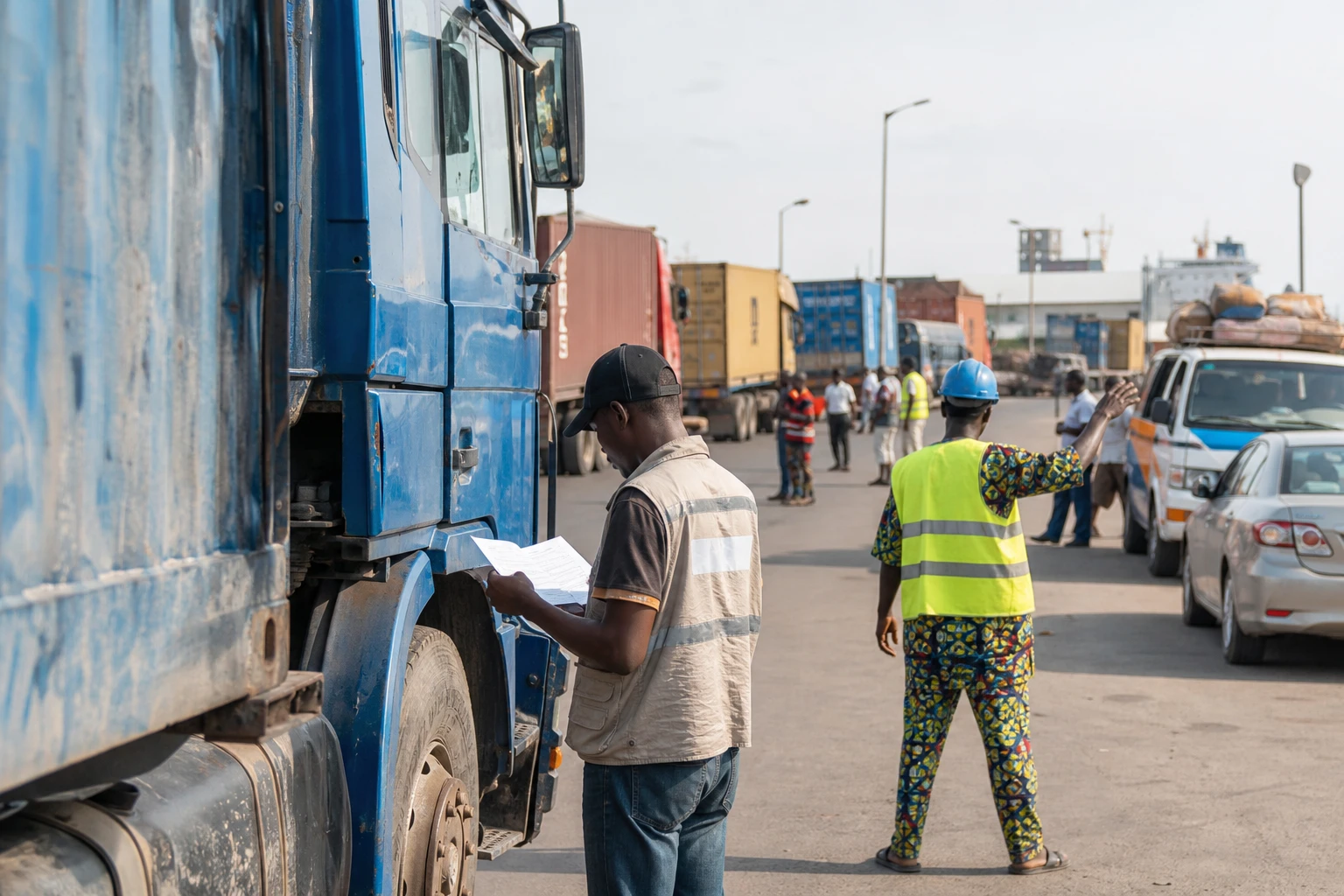
In Cotonou, the question is no longer simply how to handle more goods. The Port Autonome must also decide which markets to route them to. Persistent tensions between Benin and Niger have weakened a historic corridor. The Beninese port is now seeking other outlets in Burkina Faso, Nigeria and as far as Chad.
A port at the heart of West Africa’s shifting landscape
Cotonou port serves Benin, as well as several landlocked countries in the hinterland — territories inland that depend on access to the sea through another country. Niger, Burkina Faso and, to a lesser extent, Mali are among the markets concerned.
This regional role is part of the ECOWAS area, the Economic Community of West African States. However, the organisation has been going through a period of realignment since changes of government in Mali, Burkina Faso and Niger, followed by the three countries’ decision to leave ECOWAS in January 2025.
In this context, corridors are no longer determined solely by geography or transport costs. Political relations, road security and sovereign decisions by states directly influence trade flows. A border closure or administrative restriction can therefore quickly change the destination of port traffic.
The Cotonou-Niamey corridor has been particularly exposed to this reality. Relations between Benin and Niger have been strained since the change of government in Niamey in July 2023. The movement of goods and the export of Nigerien oil through the Sèmè-Podji terminal were subsequently affected by the dispute.
Burkina Faso takes on a greater role
Despite the deterioration of the Niger corridor, transit activity at Cotonou port is increasing. According to figures presented by the commercial directorate of the Port Autonome de Cotonou at an industry meeting held in 2026, transit accounted for 39.2 % of port traffic in 2025.
Burkina Faso accounted for 16 % of that transit traffic. Nearly one million tonnes of goods are said to have been transported to the country, largely in the form of hydrocarbons. The figure is attributed to Kévin Potier, the port’s commercial director. So far, it has not been published in a detailed statistical table accessible to the public.
The growth follows a simple logic. Burkina Faso remains an important market, with considerable demand for fuel, consumer goods and equipment. For operators, Cotonou offers a shorter sea route to the Gulf of Guinea than some alternatives, provided that overland transport remains competitive and sufficiently safe.
The corridor to Ouagadougou nevertheless remains exposed to risks affecting routes through northern Benin and areas near Burkina Faso. The security of convoys, border delays and insurance costs will affect the port’s ability to retain these volumes.
Nigeria and Chad: two different outlets
Nigeria is also taking on a growing role in flows linked to Cotonou. The two countries’ proximity facilitates trade, particularly for goods destined for border regions and businesses in south-western Nigeria.
This relationship does not mean Benin is replacing Nigerian ports. The terminals at Lagos, Onne and Port Harcourt serve a much larger domestic market. However, their users face recurring problems with congestion, road traffic and customs clearance. Cotonou can therefore capture some flows when the time saved outweighs the costs of crossing an additional border.
Chad represents another possibility. For several years, the country has been seeking to diversify its maritime entry points. The historic corridor through Cameroon and the port of Douala remains essential, but faces logistical and security constraints. In July 2025, a delegation from the Chad Shippers’ Council visited Benin to explore transit options through Cotonou.
According to Africa24, discussions between the two sides focused in particular on a logistics partnership and the transit of Chadian goods. Volumes remain modest, but the prospect is strategically important for N’Djamena, which wants to reduce its dependence on a single corridor.
Nigerien oil changes the nature of the link with Cotonou
Niger has not disappeared from the equation for Benin’s port. However, the nature of the flows has changed. Imports destined for the Nigerien market have been hit by the political crisis. At the same time, the Sèmè-Podji oil terminal has handled significant volumes of Nigerien crude for export.
The Sèmè-Podji facility is close to Cotonou. It is connected to the Agadem oil fields in Niger by a pipeline built with support from a Chinese partner. This infrastructure gives the two countries a shared economic interest, even when their political relations deteriorate.
Benin’s presidency has reiterated that the country remains ready to facilitate the transport of Nigerien oil, while calling for compliance with the procedures set out in the transit agreements. Niamey, for its part, has sought to secure its exports and safeguard its oil revenues in a tense regional environment.
Port growth to be consolidated
Total traffic at the Port Autonome de Cotonou rose from 9.6 million tonnes in 2024 to 14.7 million tonnes in 2025, an increase of about 52 %. These figures, published by La Nation based on the port’s budget data, are consistent with information released by the port authority.
Imports reached 8.2 million tonnes in 2025, while exports totalled 5.7 million tonnes, according to the available figures. The number of vessels handled also rose, from 725 to 841 in one year.
In the first half of 2026, the port handled about 7.7 million tonnes, compared with 6.68 million over the same period in 2025, a 16.6 % increase reported by La Marina BJ. Container traffic exceeded 500 000 twenty-foot equivalent units, a measure used for standard containers.
This momentum is underpinned by an investment programme launched in 2021. The port’s master plan includes several projects to expand capacity, reduce waiting times and improve truck movements. La Nation puts the programme’s cost at €461.6 million, or about 302.8 billion CFA francs.
The real test will be whether it lasts
Rising traffic does not yet guarantee lasting diversification. Volumes drawn in by a regional crisis may shift back as soon as a political agreement restores a competing corridor. The port will therefore need to turn temporary traffic into regular commercial relationships.
To do so, Benin will need to keep logistics costs competitive. Road quality, route security, the speed of customs formalities and predictable rules will be decisive. These factors directly affect hauliers, importers, traders and consumers.
The issue extends beyond Cotonou’s quays. For Sahelian countries, having several routes to the sea reduces the risk of supply disruptions. For Benin, diversification could boost port revenues and activity at the Glo-Djigbé industrial platform, which is developing new exports.
The next step will be to measure how much of the traffic to Burkina Faso, Nigeria and Chad is genuinely sustainable. Cotonou port is no longer competing solely with other ports in the Gulf of Guinea. It is also seeking to secure its place in West Africa’s new commercial geography.