Algeria
 Egypt
 Libya
 Morocco
 Sudan
 Tunisia
 Benin
 Burkina Faso
 Cabo Verde
 Côte d'Ivoire
 Ghana
 Guinea
 Guinea-Bissau
 Liberia
 Mali
 Mauritania
 Niger
 Nigeria
 Senegal
 Sierra Leone
 The Gambia
 Togo
 Cameroon
 Central African Republic
 Chad
 DR Congo
 Equatorial Guinea
 Gabon
 São Tomé and Príncipe
 Burundi
 Comoros
 Djibouti
 Eritrea
 Ethiopia
 Kenya
 Madagascar
 Malawi
 Mauritius
 Mozambique
 Rwanda
 Seychelles
 Somalia
 South Sudan
 Tanzania
 Uganda
 Angola
 Botswana
 Eswatini
 Lesotho
 Namibia
 South Africa
 Zambia
 Zimbabwe
An economy still driven by oil, but obliged to broaden its base
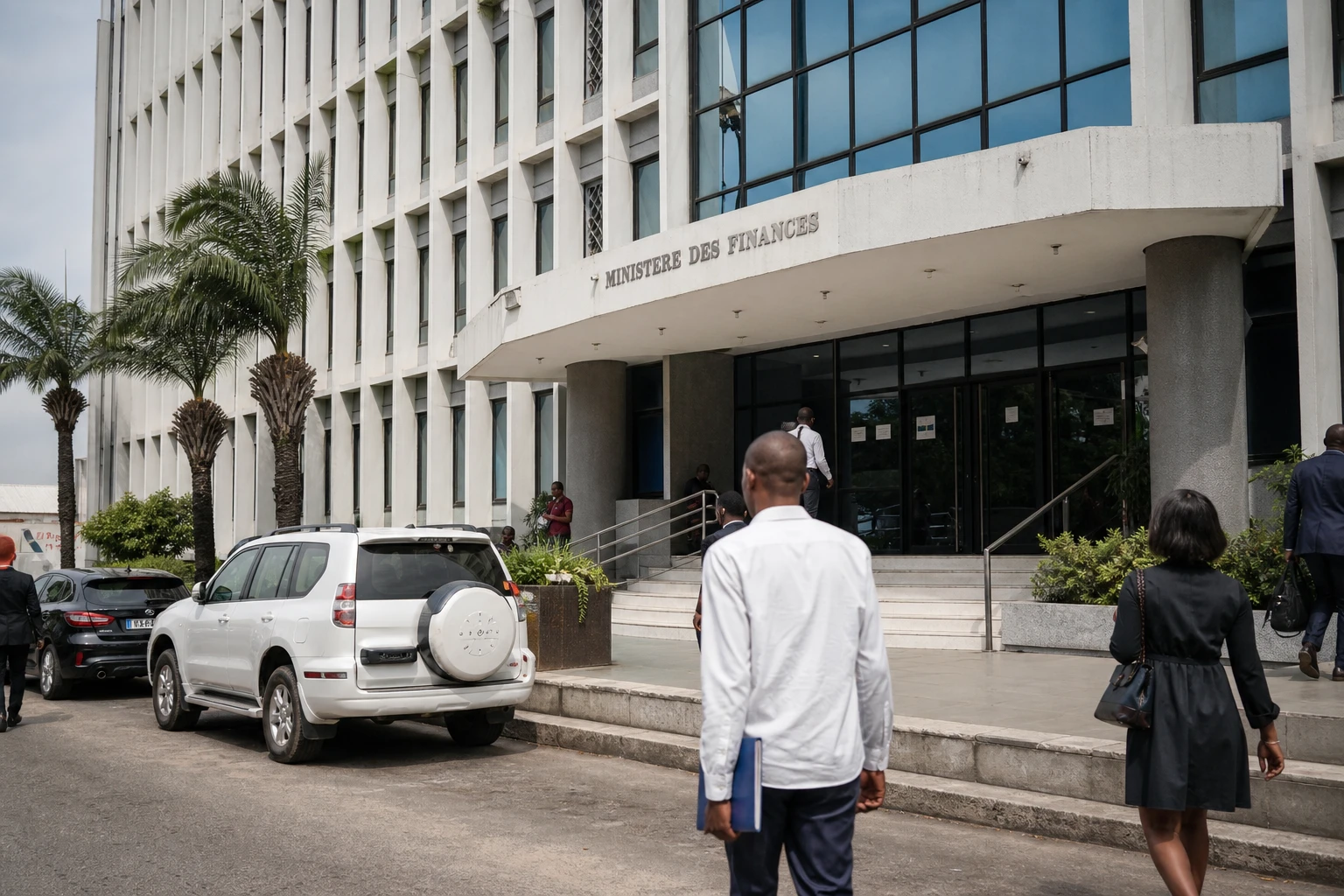
In Congo, the question is no longer simply whether growth is picking up again. It is who benefits from it, and how long it can last. In Brazzaville, the authorities are banking on a stronger rebound in 2027, in a country where oil remains the main driver of revenue, foreign exchange and much of the room for manoeuvre in the budget.
This framework is part of the 2022-2026 National Development Plan, which seeks a “strong, diversified and resilient” economy, and continues a political project presented as a path towards development. Congo is also bound by CEMAC, the Economic and Monetary Community of Central Africa, where fiscal discipline and price stability matter as much as the pace of growth.
The central point is this: according to the government’s budget document, Congolese growth is expected to reach 6.9% in 2027, up from 5.5% forecast for 2026. The government points to a dual boost, from oil and non-oil sectors, with a stronger recovery in hydrocarbons and faster growth in services, construction, agri-food and some manufacturing industries.
Ambitious figures, a clear gap with lenders’ forecasts
The authorities base this scenario on several drivers. First, the oil sector, where production is expected to be supported by new fields, increased output from Moho Nord and Banga Kayo, continued work at Moho Infills and the redevelopment of mature fields by Perenco. Next come investments announced by TotalEnergies and Eni. Finally, the non-oil sector is expected to expand gradually, with agriculture, services, construction and the manufacture of basic materials.
The official document also puts inflation at 3.7% in 2027, up from 3.4% in 2026. This would remain above CEMAC’s community benchmark, set at around 3%, a reminder that growth alone is not enough to stabilise prices for households. Transport, logistics, food imports and production costs would continue to weigh on consumers’ budgets.
The picture is not, however, universally shared. In its assessment published in 2026, the IMF projects average growth of about 3.6% over 2027-2030, well below the government’s scenario. The World Bank, meanwhile, points to a gradual recovery in 2026-2027, with average growth of around 3.1%, after 2.8% in 2025. This divergence does not mean that one institution is right and the other wrong. Rather, it shows that the level of oil production, the pace of reforms and the actual implementation of investments remain uncertain.
In other words, the 6.9% target depends on demanding conditions. Additional production is needed, projects must be completed, infrastructure must function, and the administration must be able to turn announcements into revenue and jobs. Without that, the projection remains an aspiration rather than a certainty.
What this means for the state, businesses and households
For public finances, the stakes are direct. Stronger growth broadens the tax base, increases room for manoeuvre and can help fund projects under the 2022-2026 National Development Plan. But Congo must also contend with heavy debt, persistent financing needs and the need to preserve the credibility of its commitments to external partners, including the IMF.
For businesses, particularly in non-oil sectors, the message is more nuanced. Growth driven by construction, telecommunications, banking services or agri-food can create opportunities. It can also stimulate local subcontracting chains. But this depends on the business climate, access to credit, regulatory stability and the state’s ability to clear its own arrears and ensure public payments.
For households, finally, the issue is tangible. Higher growth is only worthwhile if it translates into more jobs, more stable prices and better-funded public services. Yet in a country where oil revenues remain concentrated and Brazzaville and Pointe-Noire still account for a large share of formal activity, the gap between macroeconomic indicators and daily life may remain significant.
The government emphasises reforms: digitising revenue agencies, improving revenue mobilisation, enhancing the business climate, making greater use of public-private partnerships and prioritising high-impact investment. These choices are consistent with the official agenda, but their effectiveness will depend above all on implementation. In Congo, as across much of Central Africa, the challenge is not just to devise plans. It is to turn them into roads, energy, local processing and sustainable revenue.
A signal to watch across CEMAC and Central Africa
Beyond Congo, this trajectory matters to the whole of Central Africa. In a CEMAC zone where monetary stability rests on fiscal prudence, Congo’s performance affects regional momentum, foreign exchange reserves and perceptions of sovereign risk. Stronger growth can bolster confidence. But growth that depends too heavily on oil remains vulnerable to price and production shocks.
The next milestone is therefore as much political as economic: Brazzaville’s ability to turn its 2027 forecasts into a credible budget, actual implementation and visible diversification. That is where the difference will be made between a temporary upswing and deeper economic transformation. For Congo, the challenge is not simply to move faster. It is to advance with a broader productive base, less exposed to oil’s ups and downs.