
 Algeria
 Egypt
 Libya
 Morocco
 Sudan
 Tunisia
 Benin
 Burkina Faso
 Cabo Verde
 Côte d'Ivoire
 Ghana
 Guinea
 Guinea-Bissau
 Liberia
 Mali
 Mauritania
 Niger
 Nigeria
 Senegal
 Sierra Leone
 The Gambia
 Togo
 Central African Republic
 Chad
 DR Congo
 Equatorial Guinea
 Gabon
 Republic of the Congo
 São Tomé and Príncipe
 Burundi
 Comoros
 Djibouti
 Eritrea
 Ethiopia
 Kenya
 Madagascar
 Malawi
 Mauritius
 Mozambique
 Rwanda
 Seychelles
 Somalia
 South Sudan
 Tanzania
 Uganda
 Angola
 Botswana
 Eswatini
 Lesotho
 Namibia
 South Africa
 Zambia
 Zimbabwe
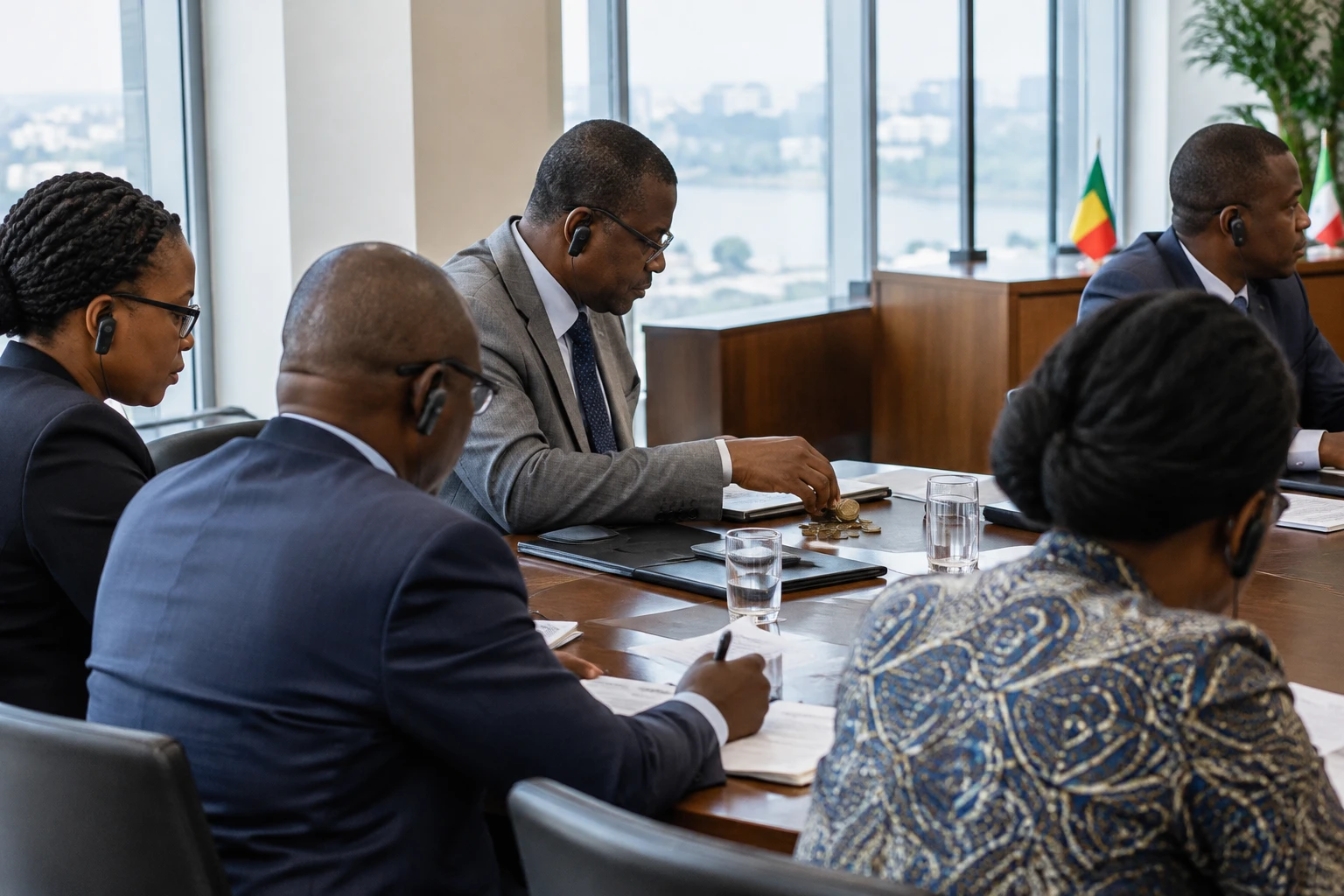
In markets, on public transport and in small shops across Central Africa, a few coins are often enough to pay for a journey or make up the cost of a purchase. Their withdrawal therefore raises a very practical question: how can old coins be replaced without making everyday payments even more difficult?
The Bank of Central African States (BEAC), the central bank shared by the six countries of the Central African Economic and Monetary Community (CEMAC), is organising their exchange over a one-year period. The coins concerned will no longer be accepted for payment from 1st November 2026, but can still be exchanged according to a specific timetable.
A decision shared by the six CEMAC countries
The measure applies to Cameroon, the Central African Republic, the Republic of the Congo, Gabon, Equatorial Guinea and Chad. In this monetary area, the CFA franc issued by BEAC circulates across national borders. A coin valid in one member country can therefore also be used in the other five.
The withdrawal was decided on 7 October 2026 by the Ministerial Committee of the Central African Monetary Union (UMAC), the body that coordinates member states’ monetary rules. The decision covers five old series, issued between 1958 and 1985, and not all coins of these denominations. Information provided by monetary authorities and relayed in several countries confirms the timetable and arrangements for the operation. The Republic of the Congo’s Ministry of Finance sets out the arrangements announced by BEAC; BEAC’s national directorate in Gabon has also provided details.
Seven denominations are affected: 1, 5, 10, 25, 50, 100 and 500 CFA francs. Coins from the 2006 and 2024 series, however, retain their legal tender status and continue to be accepted in all six countries. The year engraved on a coin or its denomination alone may therefore not be enough to identify it: users will need to check which series it belongs to, particularly with their bank or at a BEAC branch.
A two-stage timetable to recover their value
Holders will be able to exchange the old coins free of charge from 1st November 2026 to 31 July 2027 at banks, microfinance institutions and BEAC branches. Then, from 1st August to 31 October 2027, only the central bank’s branches will carry out the exchange.
From 1st November 2027, the exchange period will end. Any remaining coins will no longer be convertible. This deadline makes practical information just as important as the decision itself: knowing where exchange points are and how accessible they are will be crucial for people with small amounts of money who live far from bank branches or BEAC offices.
A date clarification is necessary. 1st November 2026 falls on a Sunday, not a Monday. The end of their use as a means of payment has been announced for that date; the following Monday is 2 November. The official communications consulted do indeed set the start of the operation as 1st November. It is therefore best to distinguish the legal date of withdrawal from branch opening hours, which may vary by institution.
Small change, a daily concern in the operation
BEAC justifies the renewal on several grounds: harmonising coins in circulation around the newer series, limiting the recovery of old coins for the value of their metals, and improving the availability of small-denomination coins. These are coins used to pay small amounts or give change.
A shortage of coins can disrupt transactions far beyond banks. It affects customers, shopkeepers, transport operators and market vendors, whose payments often involve modest sums. When change is scarce, purchases may be rounded up, postponed or settled in another way. These constraints do not affect large retailers, which have more payment options, and small businesses, where cash remains central, to the same extent.
The central bank plans to put 500 million new coins into circulation each year and aims to have three billion coins available by 2030. The target is ambitious; its impact will nevertheless depend on the actual pace of production, distribution across the six countries and allocation between cities and less well-served areas. The withdrawal of the old series alone will therefore not resolve supply difficulties if the new coins do not reach the right places at the right time.
A monetary operation that will also be decided on the ground
For the authorities, the challenge is regional: to withdraw coins that have become old while ensuring payments continue in an area with a shared currency. For users, success will be measured more simply: being able to exchange their coins free of charge, without confusion or excessive travel. Banks and microfinance institutions will play an important role during the first nine months; BEAC will then be the only exchange network.
The transition will also test public communication. Dates, denominations and series must be explained clearly to prevent coins that can still be exchanged from being rejected, or coins that remain valid from being wrongly treated as demonetised. BEAC has said that the 2006 and 2024 series remain valid throughout CEMAC; this distinction is essential for shopkeepers and consumers alike.
In the coming months, the key issue to watch will therefore be not only whether new coins are actually available, but also whether branches are open and the public is informed, particularly outside capital cities. Across CEMAC, the same decision must be implemented in six economies with different realities. The timetable is shared; its implementation will depend on the ability of financial networks and national authorities to make the exchange accessible throughout the region.



