Algeria
 Egypt
 Libya
 Morocco
 Sudan
 Tunisia
 Benin
 Burkina Faso
 Cabo Verde
 Côte d'Ivoire
 Ghana
 Guinea
 Guinea-Bissau
 Liberia
 Mali
 Mauritania
 Niger
 Nigeria
 Senegal
 Sierra Leone
 The Gambia
 Togo
 Cameroon
 Central African Republic
 Chad
 DR Congo
 Equatorial Guinea
 Gabon
 São Tomé and Príncipe
 Burundi
 Comoros
 Djibouti
 Eritrea
 Ethiopia
 Kenya
 Madagascar
 Malawi
 Mauritius
 Mozambique
 Rwanda
 Seychelles
 Somalia
 South Sudan
 Tanzania
 Uganda
 Angola
 Botswana
 Eswatini
 Lesotho
 Namibia
 South Africa
 Zambia
 Zimbabwe
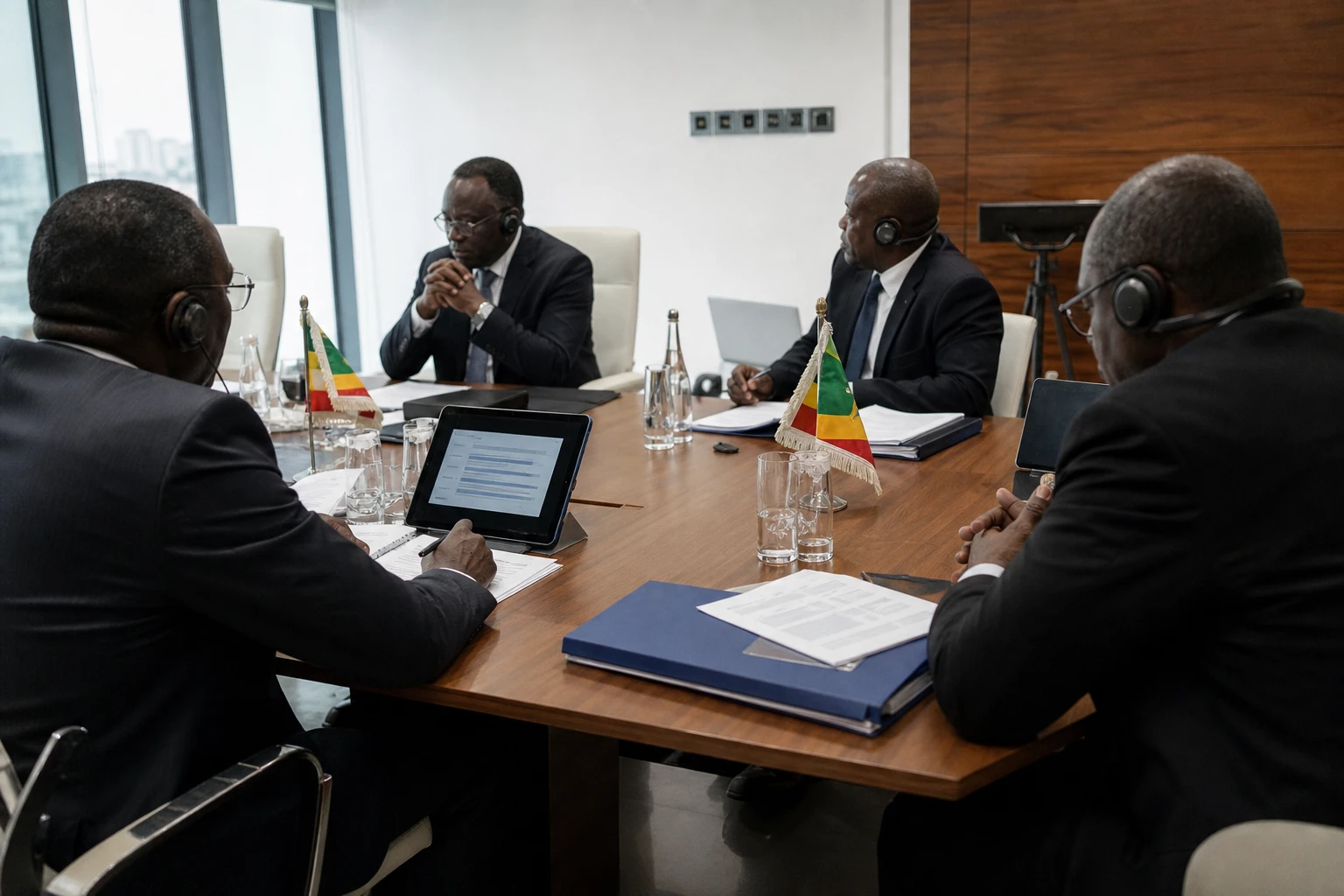
In Bacongo, in southern Brazzaville, a building is soon to become one of the key sites in Congo’s digital transformation. Its mission will appear simple: to store, protect and process state data on national territory. But its timeline also highlights the practical challenges of a major digital project, from funding and energy to technical requirements.
A strategic project for Congo
The national data centre is being built as part of the Central Africa Backbone project, or CAB. This initiative aims to strengthen digital links in Central Africa through fibre-optic networks and infrastructure capable of hosting digital services.
In its Congolese component, the project represents total funding of €66.55 million. The African Development Bank is providing €52.47 million, while the Congolese state is contributing €14.5 million. About €13.8 million is earmarked for the construction and operationalisation of the national data centre.
The project also includes more than 600 kilometres of fibre-optic cable. These links connect Congo to Cameroon and the Central African Republic. They form a regional digital corridor, with the data centre set to provide a national hosting facility.
The Bacongo site occupies the former premises of the African Union of Posts and Telecommunications. The building has three floors and a basement. It is to house server rooms, monitoring and control areas, and the equipment needed for power supply and cooling.
Deadlines pushed back several times
The initial schedule envisaged delivery in December 2024, when civil engineering work was about 60% complete in May of the same year, according to the African Development Bank.
The launch was subsequently announced for November 2025. The project has, however, been delayed. The difficulties included securing the final tranche of funding and installing the equipment essential to operating the site.
In June 2025, the African Development Bank said the work was 90% complete. CAB project coordinator Michel Ngakala said at the time that generators, transformers and voltage regulators had been installed. The server rooms and some of the civil engineering work remained to be completed.
On 22 September 2026, Deputy Prime Minister Jean-Jacques Bouya visited the site again. The Congolese News Agency reported a completion rate of 82%, a figure that contrasts with the 90% estimate given by the AfDB in June 2025. The difference may be explained by different calculation methods or by the inclusion of additional technical work.
Congolese authorities are now announcing that the centre will be operational before the end of 2026. This deadline should be distinguished from an official inauguration. A completed building only becomes fully operational after testing the servers, air conditioning, fire safety, electrical redundancy and monitoring systems.
Hosting public data on national territory
The future centre is intended to centralise the hosting of public digital data and applications used by the administration. It is therefore more than just a building filled with servers. It is infrastructure designed to support state services, exchanges between government departments and the storage of sensitive data.
Congo already has computing facilities attached to certain government departments, particularly in the finance sector. The Bacongo site is intended to serve a national purpose, however. It could provide a reference infrastructure for several ministries and public institutions.
This centralisation could reduce dependence on servers located outside the country. It could also make it easier to control access, back up information and ensure the continuity of public services. Digital sovereignty, however, depends on more than the location of the machines. It also relies on data governance, cybersecurity, local expertise and equipment maintenance.
For government departments, the challenge will therefore be to set clear rules. Which data should be hosted in Congo? Who can access it? How will backups be protected? Which service providers will be responsible for operation and maintenance? These questions will matter as much as completing the building.
Energy, a condition for going live
A data centre operates continuously. It must remain powered even if the national grid fails. Energy is therefore central to the final work at Bacongo.
Teams are studying a combination of the national electricity grid and a solar source. This solution is intended to strengthen the stability of the power supply and reduce the risk of digital services being interrupted.
The site is part of an environment where energy infrastructure is developing rapidly. The Kintélé solar farm, near Brazzaville, has more than 19,000 panels and a stated capacity of 12 megawatts. Its connection to several facilities in the capital is informing discussions about energy-resilience solutions for the data centre.
This link between digital services and energy has a direct bearing on users. A prolonged outage can disrupt administrative services, payments, data exchanges or platforms used by businesses. The centre’s reliability will therefore have effects beyond the technology sector.
A link in Central Africa’s digital network
The project extends beyond Brazzaville. Congo is a member of the Central African Economic and Monetary Community, CEMAC, which brings together six countries that share, among other things, common economic and monetary arrangements. Digital infrastructure remains unevenly distributed across the region.
The CAB project’s links to Cameroon and the Central African Republic give the data centre a regional dimension. Fibre carries data between countries; the centre, in turn, provides national storage and processing capacity. The two elements complement each other.
In time, this infrastructure could support exchanges between government departments, businesses and operators across the sub-region. On its own, it will not be enough to create an integrated digital market. Rules on data will also need to be harmonised, interconnections secured and locally available technical expertise developed.
The next stage will therefore be twofold. Congo will need to complete the work and demonstrate the site’s technical stability. It will also need to clarify the centre’s operating model, priority users and security mechanisms. Only then can the Bacongo project become a genuine tool for the country’s digital transformation and a support hub for Central Africa.