Algeria
 Egypt
 Libya
 Morocco
 Sudan
 Tunisia
 Benin
 Burkina Faso
 Cabo Verde
 Côte d'Ivoire
 Ghana
 Guinea
 Guinea-Bissau
 Liberia
 Mali
 Mauritania
 Niger
 Nigeria
 Senegal
 Sierra Leone
 The Gambia
 Togo
 Cameroon
 Central African Republic
 Chad
 DR Congo
 Equatorial Guinea
 Gabon
 São Tomé and Príncipe
 Burundi
 Comoros
 Djibouti
 Eritrea
 Ethiopia
 Kenya
 Madagascar
 Malawi
 Mauritius
 Mozambique
 Rwanda
 Seychelles
 Somalia
 South Sudan
 Tanzania
 Uganda
 Angola
 Botswana
 Eswatini
 Lesotho
 Namibia
 South Africa
 Zambia
 Zimbabwe
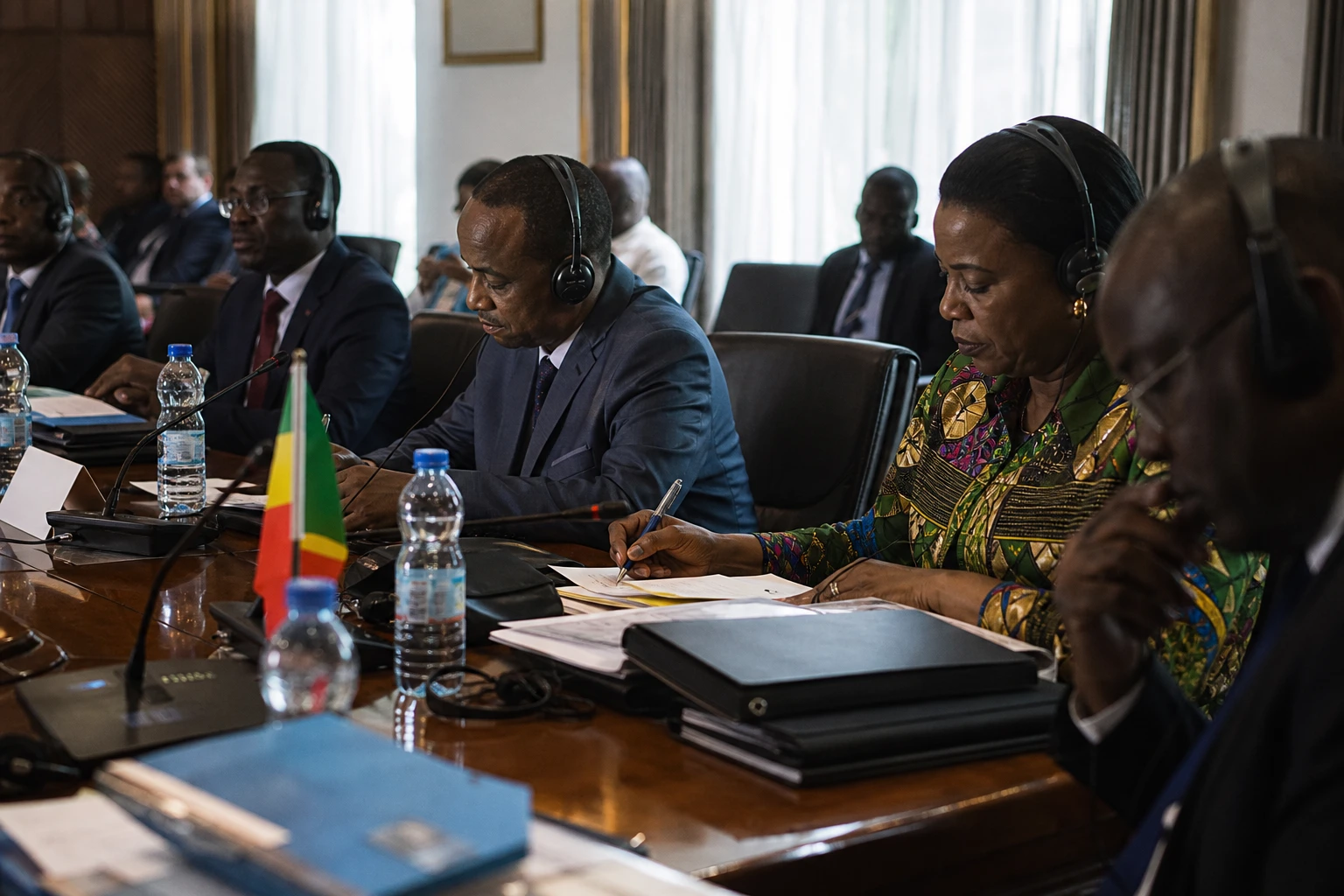
In Brazzaville, agriculture is still seeking its place in the real economy
In the Congo, the question is not just how to produce more. It is also how to turn an agricultural showcase into a lasting market, stable jobs and reduced dependence on imports. In a country where the food bill remains high and the economy is still heavily dependent on oil, every agricultural initiative is scrutinised as a test of method as much as a political signal.
The second edition of the Great Agricultural Fair of the Congo is part of this effort. The event is due to take place from 5 to 20 August 2026 at the Bambou-Mingali Exhibition Centre, about 60 kilometres from Brazzaville. Nearly 650 exhibitors from the country’s 15 departments are expected to attend, united by the authorities’ stated ambition: to make agriculture a lever for food sovereignty, economic diversification and jobs.
An agricultural event that builds on an established strategy
The Bambou-Mingali site is no improvised setting. In February 2026, the fair’s first edition had already brought together producers, researchers, institutions and partners around food crops and livestock. On that occasion, the Congolese authorities presented the event as a platform for promoting local expertise, while linking the fair to protected agricultural zones, designated areas developed to structure production.
This continuity matters. The Congo is a member of CEMAC, the Economic and Monetary Community of Central Africa, which brings together six countries in the subregion. Across this area, food security carries particular weight because economies remain highly exposed to food imports, price shocks and logistical pressures. The Congo’s agricultural challenge is therefore not an isolated one: it directly affects food security, urban markets and the trade balance.
The Congolese government, for its part, has sent a series of signals about the Protected Agricultural Zones. In his State of the Nation address, President Denis Sassou N’Guesso referred to 26 operational zones and 268 cooperatives created, presenting the scheme as a tool to revitalise rural areas and move towards food self-sufficiency.
What has been announced for the 2026 edition
For this second edition, the fair is expected to bring together producers, livestock farmers, processors, distributors, investors and institutions. The announced programme includes 16 pavilions and five thematic hubs. The Terroirs Pavilion, showcasing Congolese produce, is expected to host nearly 300 producers on its own. The chosen theme, “Feeding the Nation to Honour the Homeland”, places local production firmly at the centre of the official narrative.
The event also intends to highlight specific sectors: coffee, cocoa, market gardening, livestock and food processing. This choice is significant. The Congo has real agricultural potential, but it remains underexploited. For several years, the authorities themselves have acknowledged that local supply meets only part of national needs and that food imports remain high.
The figure most often cited by the organisers is an annual food import bill of more than 700 billion CFA francs. This figure has already been cited by Congolese sources in debates on the Protected Agricultural Zones, with estimates ranging from 500 billion to 700 billion depending on the products and the period. It reflects a fundamental reality: dependence on imports remains structural, even though available data series vary by year and product category.
What the fair changes, in concrete terms, for producers and the state
For producers, a national fair can open up immediate market opportunities. It makes it easier to meet processors and buyers. It also gives visibility to rural cooperatives, which are often absent from major distribution networks. In a country where family farming remains predominant, these connections matter almost as much as the exhibition itself.
For the state, the stakes are broader. The aim is to show that agricultural policy is no longer limited to speeches about food sovereignty. Protected Agricultural Zones, farm schools, mechanisation and processing schemes are presented as parts of the same package. The Ministry of Agriculture is thus trying to move from a logic of experimentation to one of organising agricultural sectors.
But the central question remains one of continuity. A fair creates momentum. It does not replace rural roads, access to credit, technical support or secure land tenure. Without these foundations, the impact of the showcase can quickly fade. The gap between announcements and actual production capacity therefore remains the key indicator to watch.
A reach that extends beyond Brazzaville
In the Congo Basin, agriculture is not just about yields. It also touches on land management, forest conservation and the balance between food security and protecting natural heritage. The choice of developed zones, presented as compatible with conserving the forest basin, reflects this search for balance between production and conservation.
At the regional level, the message to CEMAC is clear: monetary integration is not enough if countries remain dependent on imports to feed their populations. The Congo wants to show that it can reduce this vulnerability by better organising its agricultural sectors, modernising production areas and giving greater visibility to young people and cooperatives.
The next milestone to watch is therefore straightforward: the fair taking place as planned at Bambou-Mingali and its announcements translating into contracts, equipment and cultivated land. That is where the difference will be measured between an exhibition event and a genuine agricultural turning point for the Congolese.