Algeria
 Egypt
 Libya
 Morocco
 Sudan
 Tunisia
 Benin
 Burkina Faso
 Cabo Verde
 Côte d'Ivoire
 Ghana
 Guinea
 Guinea-Bissau
 Liberia
 Mali
 Mauritania
 Niger
 Nigeria
 Senegal
 Sierra Leone
 The Gambia
 Togo
 Central African Republic
 Chad
 DR Congo
 Equatorial Guinea
 Gabon
 Republic of the Congo
 São Tomé and Príncipe
 Burundi
 Comoros
 Djibouti
 Eritrea
 Ethiopia
 Kenya
 Madagascar
 Malawi
 Mauritius
 Mozambique
 Rwanda
 Seychelles
 Somalia
 South Sudan
 Tanzania
 Uganda
 Angola
 Botswana
 Eswatini
 Lesotho
 Namibia
 South Africa
 Zambia
 Zimbabwe
An alert returns where roads, water and rain converge
In Cameroon’s Far North, cholera never strikes at random. It returns where access to safe drinking water remains unequal, sanitation improvements are slow and the rainy season disrupts public health. In this part of the country, between the Lake Chad basin and border corridors, an outbreak can quickly become a crisis for families, health centres and local markets.
The context is familiar to health authorities. The Far North is among Cameroon’s regions most exposed to overlapping emergencies: insecurity, displacement, demographic pressure, erratic rainfall and inadequate WASH infrastructure — water, sanitation and hygiene. The WHO notes that Cameroon faces recurrent health emergencies in several regions, including the Far North.
From localised outbreaks to wider spread
At the beginning of July 2026, Cameroonian health services were already reporting an epidemic in the districts of Makary, Fotokol and Mada, with 74 cases and 5 deaths as of 1 July. A few days later, the Ministry of Public Health reported 166 cases, 10 deaths and 109 active cases in the Far North region. The increase shows that the disease continued to spread despite the initial response.
The provisional toll cited by field teams subsequently rose further, to around 1,000 cases and 28 deaths, across several districts including Fotokol, Mada, Makary and Kolofata. In this type of situation, figures change rapidly because laboratory confirmations take time and cases are sometimes reported late from remote villages. The total should therefore be read as a provisional snapshot, not the end of the curve.
In Mora, the district hospital remains on the front line. Teams there have been seeing patients every day since the outbreak began. Health workers stress one simple point: cholera affects everyone — children, adults and older people — especially when treatment comes too late.
Why the Far North is bearing such a heavy toll
The outbreak has followed the return of the rains. The mechanism is well known. Runoff carries faecal matter, sometimes contaminating water sources and encouraging the spread of cholera bacteria. Where open defecation remains common and safe water is scarce, transmission accelerates. UNICEF says limited access to drinking water and sanitation facilities remains a major challenge in the North and Far North regions, with open defecation persisting in several rural communities.
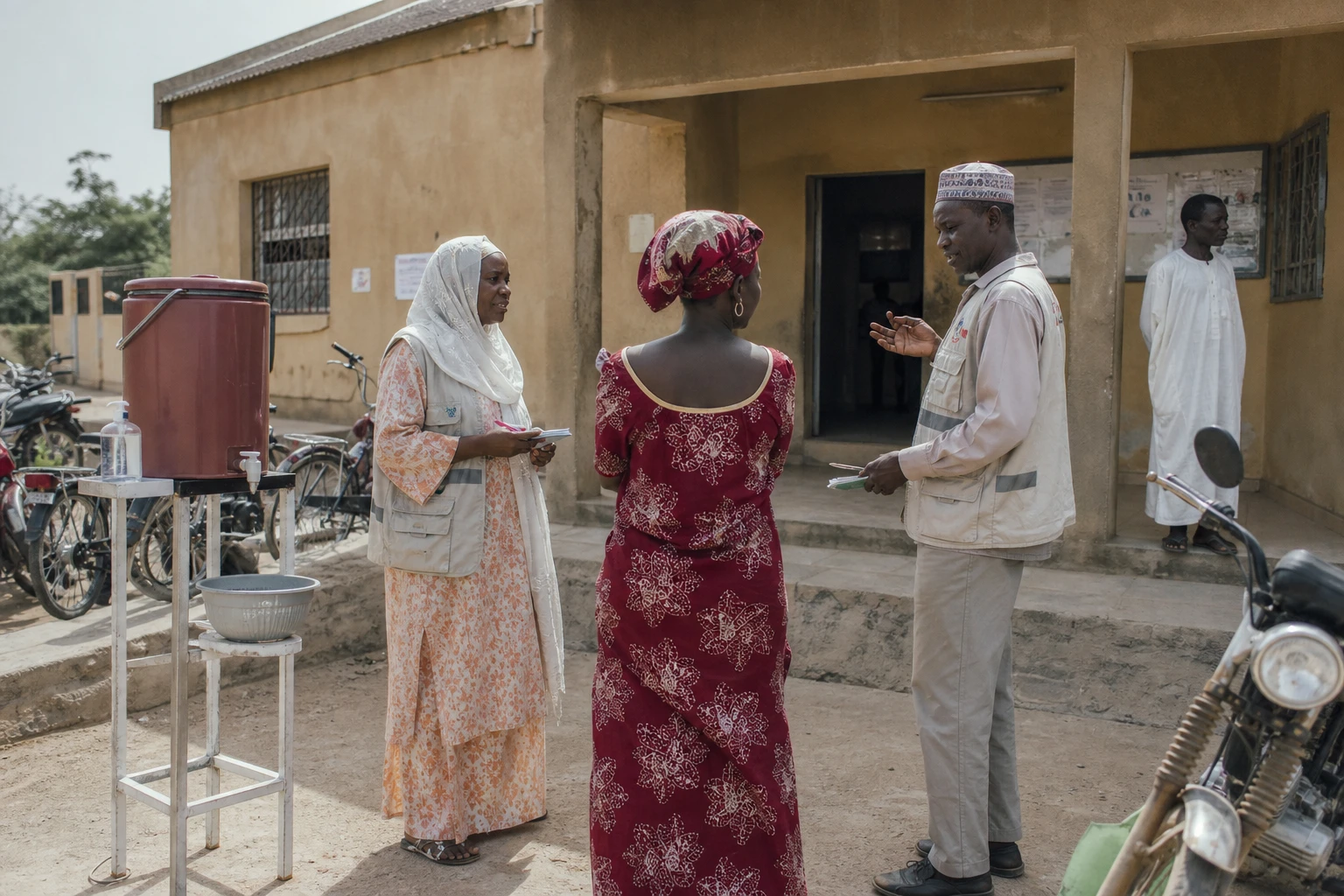
In this area, the health response cannot succeed without community action. Prevention messages, handwashing, protecting drinking water and promptly referring suspected cases remain crucial. That is why community mobilisers work directly with households, at water points and in marketplaces. Their work is discreet, but it determines how quickly the response can be mounted.
Cameroon’s Ministry of Public Health has already announced a three-pronged plan covering treatment, prevention and vaccination. The aim is clear: treat patients, break chains of transmission and protect the most exposed areas before the outbreak spreads further. In a vast territory that is remote in places and crossed by cross-border movements, this strategy requires staff, fuel, medical supplies and close monitoring of at-risk villages.
A Cameroonian issue, but also a Sahelian and regional one
Cholera does not stop at the border near Kousseri or Kolofata. Neighbouring Nigeria reported 5,798 new cases and 54 cholera-related deaths in May 2026, with Borno state at the heart of the crisis. Chad has also reported cases in N’Djamena. In the Lake Chad basin, population mobility, trade and displacement linked to insecurity sustain a permanent risk of transmission.
This cross-border dimension explains why health partners in the region are closely monitoring Cameroon’s Far North. The WHO says the African region recorded 14,230 new cholera cases in ten countries in May 2026, a sign that health pressures remain high across the continent. Cameroon is therefore not an isolated case: it is part of a regional sequence in which outbreaks in one country echo across borders.
For Yaoundé, the challenge extends beyond managing a local emergency. It concerns the state’s ability to maintain continuous epidemiological surveillance in peripheral regions, coordinate health districts and support the most exposed municipalities. For households, the impact is immediate: transport costs to health facilities, lost working days and anxiety over water and shared meals, particularly in the informal economy, where every day counts.
The continental implications are clear. As cholera outbreaks rise in Central Africa, the Sahel and West Africa, the priority is no longer just emergency response. It also means sustainably improving drinking water and sanitation, community surveillance and hospital capacity. That is what will determine, in Cameroon and its neighbours, whether an alert is contained or becomes a protracted crisis.