Algeria
 Egypt
 Libya
 Morocco
 Sudan
 Tunisia
 Benin
 Burkina Faso
 Cabo Verde
 Côte d'Ivoire
 Ghana
 Guinea
 Guinea-Bissau
 Liberia
 Mali
 Mauritania
 Niger
 Nigeria
 Senegal
 Sierra Leone
 The Gambia
 Togo
 Cameroon
 Central African Republic
 DR Congo
 Equatorial Guinea
 Gabon
 Republic of the Congo
 São Tomé and Príncipe
 Burundi
 Comoros
 Djibouti
 Eritrea
 Ethiopia
 Kenya
 Madagascar
 Malawi
 Mauritius
 Mozambique
 Rwanda
 Seychelles
 Somalia
 South Sudan
 Tanzania
 Uganda
 Angola
 Botswana
 Eswatini
 Lesotho
 Namibia
 South Africa
 Zambia
 Zimbabwe
A vast country, long roads and poorly measured needs
In a country where villages, nomadic encampments and urban neighbourhoods do not all move at the same pace, counting accurately is never a simple administrative exercise. In Chad, the issue is even more sensitive: without reliable figures, water, electricity, schools and health centres are often distributed blindly.
The launch of the third general population and housing census on 20 June 2026 directly addresses this shortfall. The operation comes seventeen years after the previous census in 2009. It is also intended to serve a broader ambition: to understand the country better in order to plan it better, at a time when needs are surging in cities and remain widely dispersed in rural areas.
The undertaking is not just about statistics. It affects governance, public budgets and the place of different areas in national decision-making. In a state such as Chad, where population mobility, long distances and isolation complicate data collection, the census is as much a test of administrative capacity as a public policy tool.
RGPH-3: a statistical catch-up and an exercise in sovereignty
Chad is a member of CEMAC, the Economic and Monetary Community of Central Africa, which brings together six states in the subregion. In this bloc, budget choices, development policies and basic infrastructure also depend on the quality of national data. A census delayed by several years weakens regional comparisons and makes it harder to assess actual needs.
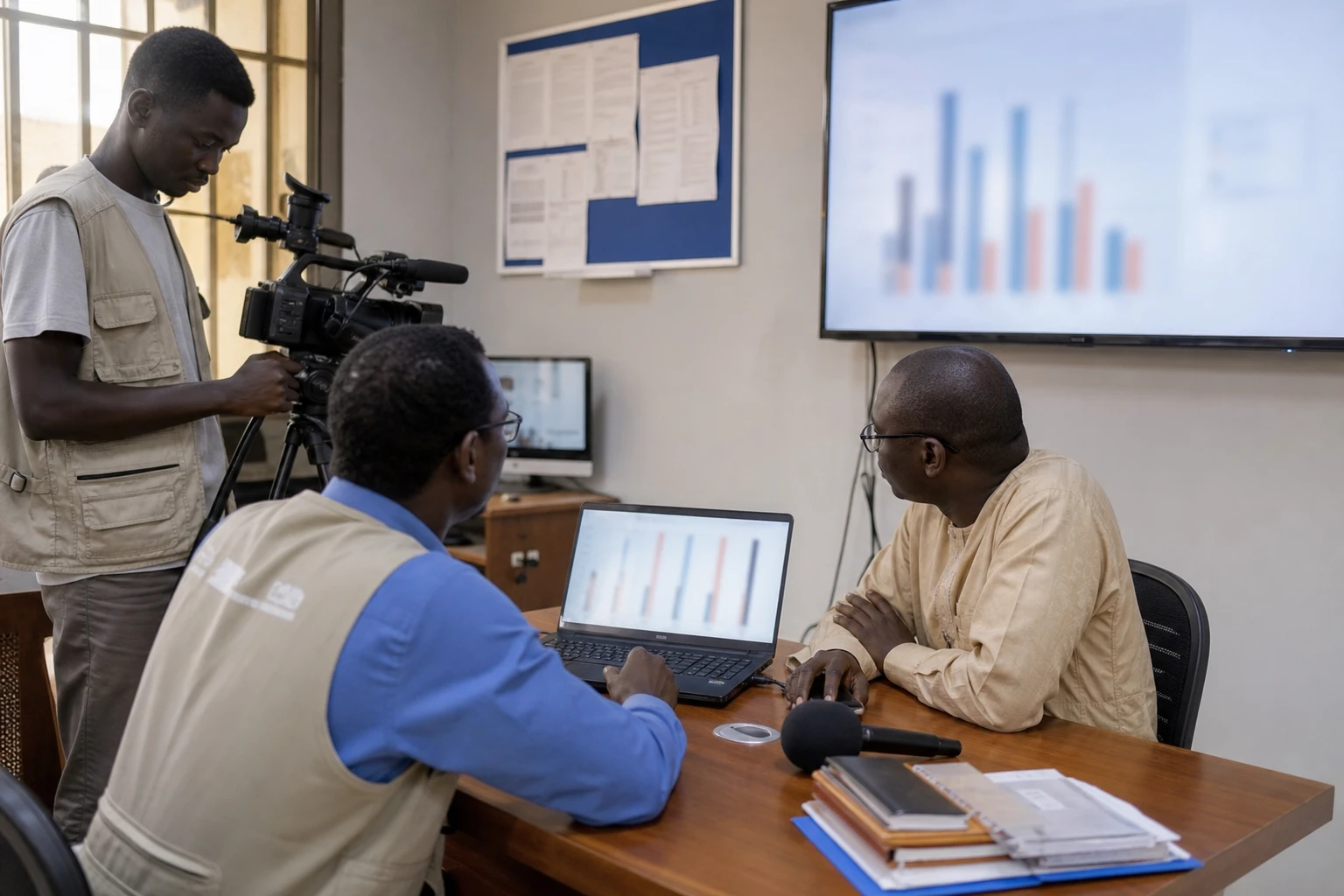
RGPH-3 began with a mapping phase in April 2025, before the actual enumeration started on 20 June 2026. INSEED, the national statistics institute, described this stage as a move towards more modern data collection, supported by digital tools and geolocated maps. The idea is simple: to identify households, homes and localities precisely, thereby reducing statistical blind spots.
This census has an important distinctive feature: it is being conducted alongside the general agricultural census. This is no trivial connection. In a country where a large share of the population depends on agriculture and livestock farming, it is necessary to know about people, homes and productive resources at the same time. This helps prevent sectoral policies from becoming disconnected from one another.
There is international support, but the process remains under Chadian direction. UNFPA Chad says the enumeration phase began on 20 June 2026, following preparations that started in April 2025. The UN agency also says the operation aims to better guide public policies and make development planning more reliable.
What the census means for N’Djamena and the provinces
In N’Djamena, a more precise census will help better size urban networks, outlying neighbourhoods, schools and social services. In the provinces, the stakes are even more direct. Where distances are great and infrastructure is scarce, an inaccurate population estimate can leave entire communities out of budget priorities.
Water and electricity needs are central to the issue. These services cannot be planned on the basis of a general impression alone. They require detailed data on households, population density, internal migration and the distribution of settlements. Without this, investment risks being concentrated in areas that are already visible, at the expense of the most remote.
The census also addresses an often underestimated issue: nomadic and mobile populations. In a Sahelian country where pastoral routes cross several provinces, conventional statistics can easily miss entire groups. The administration must therefore adapt its methods so that counting does not stop at urban centres or the most accessible roads.
This question is central to equality between regions. Cities consume more visible public services, but rural areas often have more diffuse needs that are less well documented. The census must therefore correct a longstanding bias: giving greater weight to what can be seen than to what actually shapes life in the country.
A technical operation, but a decisive one for political choices
The previous census dates back to 2009, leaving a gap of seventeen years. In the meantime, the country has changed: urban growth, regional mobility, the effects of climate crises, internal displacement and pressure on social services. Population projections are therefore based on figures that have grown outdated. The new census is intended to bring them up to date.
This catch-up has an immediate budgetary impact. Public allocations, territorial boundaries, school and health infrastructure, and some electoral decisions are based on the size and distribution of the population. A sound statistical basis also strengthens Chad’s credibility with technical and financial partners, without replacing national responsibility.
The government extended the operations until 6 August 2026, according to the African Press Agency. The extension shows that conditions on the ground remain complex. Above all, it says one thing: in a vast country, the quality of the census depends as much on the method as on the time given to enumerators to reach the most remote households.
The subregion will also be watching this process. Across CEMAC, statistical quality remains an issue of convergence and credibility. Population data are used for planning, but also to measure urbanisation, social needs and economic trends. For Chad, RGPH-3 is therefore more than a simple tally. It is becoming a tool for national projection and a marker of public-sector capacity.
What happens next will depend on the publication of provisional and then final results. That is when the operation will take on its full meaning. Chad will then know whether this third census has merely counted its inhabitants, or has made the country more legible to its own decision-makers.