Algeria
 Egypt
 Libya
 Morocco
 Sudan
 Tunisia
 Benin
 Burkina Faso
 Cabo Verde
 Côte d'Ivoire
 Ghana
 Guinea
 Guinea-Bissau
 Liberia
 Mali
 Mauritania
 Niger
 Nigeria
 Senegal
 Sierra Leone
 The Gambia
 Togo
 Cameroon
 Central African Republic
 DR Congo
 Equatorial Guinea
 Gabon
 Republic of the Congo
 São Tomé and Príncipe
 Burundi
 Comoros
 Djibouti
 Eritrea
 Ethiopia
 Kenya
 Madagascar
 Malawi
 Mauritius
 Mozambique
 Rwanda
 Seychelles
 Somalia
 South Sudan
 Tanzania
 Uganda
 Angola
 Botswana
 Eswatini
 Lesotho
 Namibia
 South Africa
 Zambia
 Zimbabwe
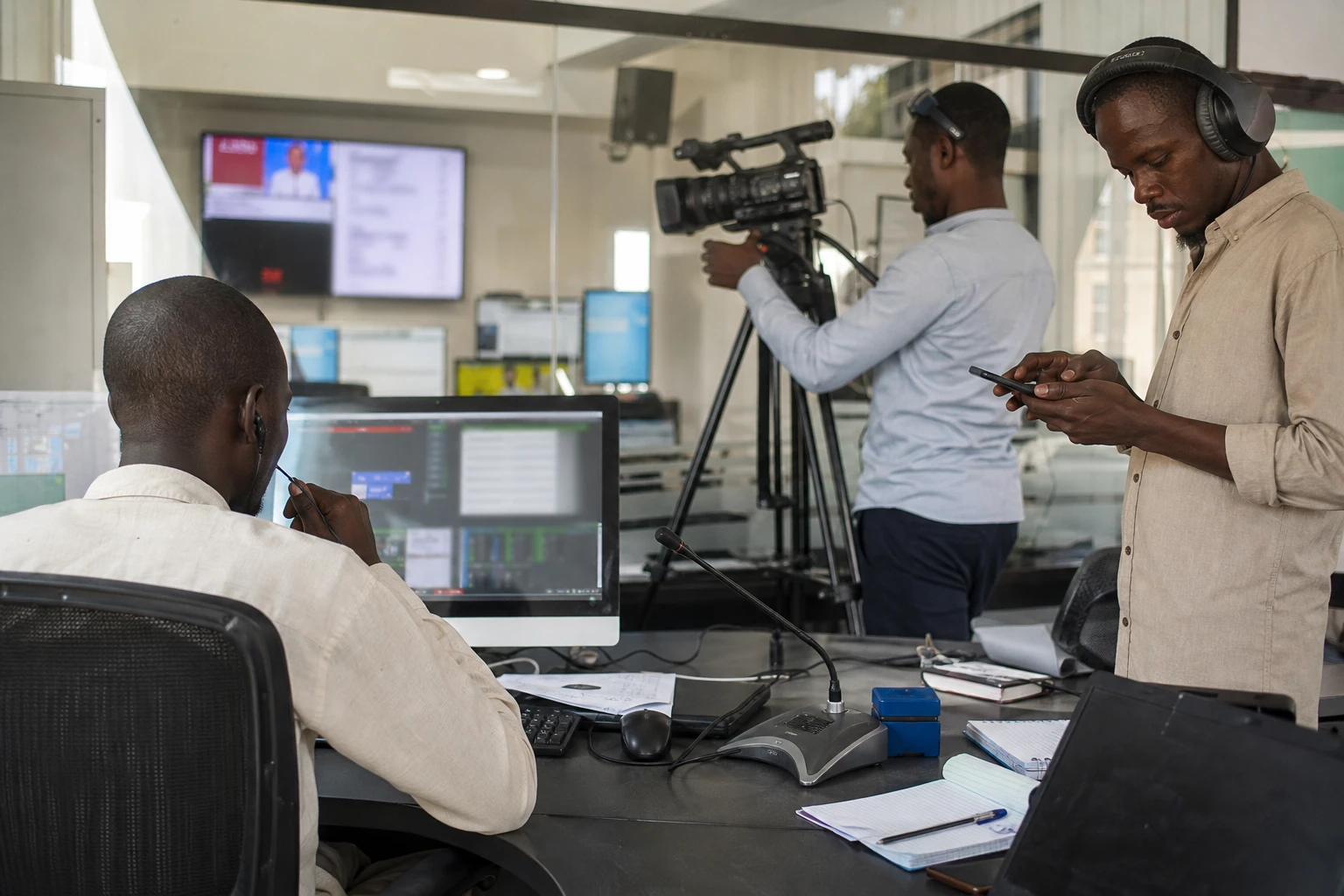
Graduates, but still stuck waiting
In Chad, a degree often remains an unfulfilled promise. For many young Chadians, leaving university leads neither to a contract nor to stable employment, but to a long period of drifting between job searches, odd jobs and discouragement. In a country where most of the population is young, the question is no longer simply one of unemployment. It also concerns the real place afforded to the skills developed at school and university.
This tension is all the more visible because the productive sector struggles to absorb new entrants to the labour market. Available estimates show an economy dominated by informal work, with poorly protected and often badly paid activities. In this context, many graduates end up as motorcycle taxi drivers, street traders or casual workers, for want of anything better. This is not a comfortable choice. It is often the only way to get by while waiting for a job suited to their training.
In N’Djamena, the state closes off the streets ahead of protest
On 1 September 2026, the authorities banned the march announced for 9 September by organisations representing unemployed graduates across the country. The order cites a risk to public order and non-compliance with the provisions of the ordinance of 1 August 2023 governing demonstrations on public roads. Several security forces, including the national police, the gendarmerie and Chad’s National and Nomadic Guard, were tasked with enforcing the measure.
The collective concerned denounced the decision and called off the sit-in planned for the same day, while asking its provincial branches to remain mobilised. The standoff is a familiar one, but it says something broader: in Chad, social protest often meets a security-focused response as soon as it threatens to spread to several cities. The capital, N’Djamena, concentrates the symbols of power. But the frustrations have long extended well beyond the capital alone.
Figures shed light on long-standing social anger
Available data give this protest greater weight. The World Bank says that in 2018, 37% of young Chadians aged 15 to 24 were not in employment, education or training, a level already above the averages for the region and for countries with comparable incomes. The same document also highlights a sharp gender divide. Young women remain more exposed to inactivity.
National estimates cited in documents monitoring the Sustainable Development Goals are equally telling. They point to low official unemployment, at around 2%, but a much higher broader unemployment rate of 18.5%, as well as widespread underemployment and insecurity. In other words, unemployment figures alone are not enough to describe reality. A person can be working and still be poor, insecure or without lasting prospects. That is precisely what informality entails, and it dominates the Chadian economy.
This situation is not unique to Chad, but the country stands out for the scale of its vulnerabilities. The World Bank Human Capital Index places Chad at a very low level, with the future productivity of a child born today estimated to be severely diminished. Basic education is making difficult progress. Technical training remains insufficiently aligned with labour-market needs. And the transition from school to work is slow, sometimes seemingly endless.
What widespread reliance on the informal sector reveals
The informal sector acts as a safety valve. It absorbs young people, but does not provide them with secure career paths. It allows them to survive, but not always to build a future. For young urban graduates, this means accepting jobs without contracts, social protection or a clear future. For young people in rural areas, the problem is often compounded by limited access to infrastructure, transport, electricity and professional networks.
International institutions stress this dimension. In the CEMAC zone, which includes Chad, Cameroon, Congo, Gabon, Equatorial Guinea and the Central African Republic, recent growth remains insufficient to create enough quality jobs. The World Bank notes that regional growth slowed to 1.7% in 2023, while one in four young people in the zone is neither in employment nor in training. The problem is therefore not only Chadian. It is also structural across the sub-region.
Chad illustrates this gap between ambition and the capacity to absorb workers. Promising sectors exist, notably agriculture, services and some activities linked to hydrocarbons. But they are not yet creating enough formal jobs to meet the influx of graduates. The consequence is political as well as economic: each new graduating class left waiting becomes a more visible, more organised social group, increasingly inclined to demand public responses.
A social issue that goes beyond 9 September
The significance of the ban extends beyond a single day of protest. It raises questions about how the Chadian state responds to warning signs from educated young people. Banning the march may ease pressure on public spaces in the short term. But it does not resolve the mismatch between training and employment, the narrowness of the formal labour market or dependence on the informal sector.
Politically, the government doubtless wants to prevent a highly symbolic social movement from becoming a focal point for other urban grievances. Socially, however, frustration remains. Unemployed graduates are not simply asking for a job. They are also demanding recognition of their efforts and a place in the country’s economy. An important part of the relationship between the state and its young people is at stake here.
Across Africa, the Chadian case is a reminder of a reality now shared by many countries on the continent: growth alone is not enough if it does not create decent jobs. The challenge is even sharper in economies with large young populations, where social expectations rise quickly and budgetary room for manoeuvre is limited. For Chad and CEMAC alike, the real test will be the ability to turn promises of training, employability and private investment into concrete opportunities, before frustration becomes entrenched in public life.