Algeria
 Egypt
 Libya
 Morocco
 Sudan
 Tunisia
 Benin
 Burkina Faso
 Cabo Verde
 Côte d'Ivoire
 Ghana
 Guinea
 Guinea-Bissau
 Liberia
 Mali
 Mauritania
 Niger
 Nigeria
 Senegal
 Sierra Leone
 The Gambia
 Togo
 Central African Republic
 Chad
 DR Congo
 Equatorial Guinea
 Gabon
 Republic of the Congo
 São Tomé and Príncipe
 Burundi
 Comoros
 Djibouti
 Eritrea
 Ethiopia
 Kenya
 Madagascar
 Malawi
 Mauritius
 Mozambique
 Rwanda
 Seychelles
 Somalia
 South Sudan
 Tanzania
 Uganda
 Angola
 Botswana
 Eswatini
 Lesotho
 Namibia
 South Africa
 Zambia
 Zimbabwe
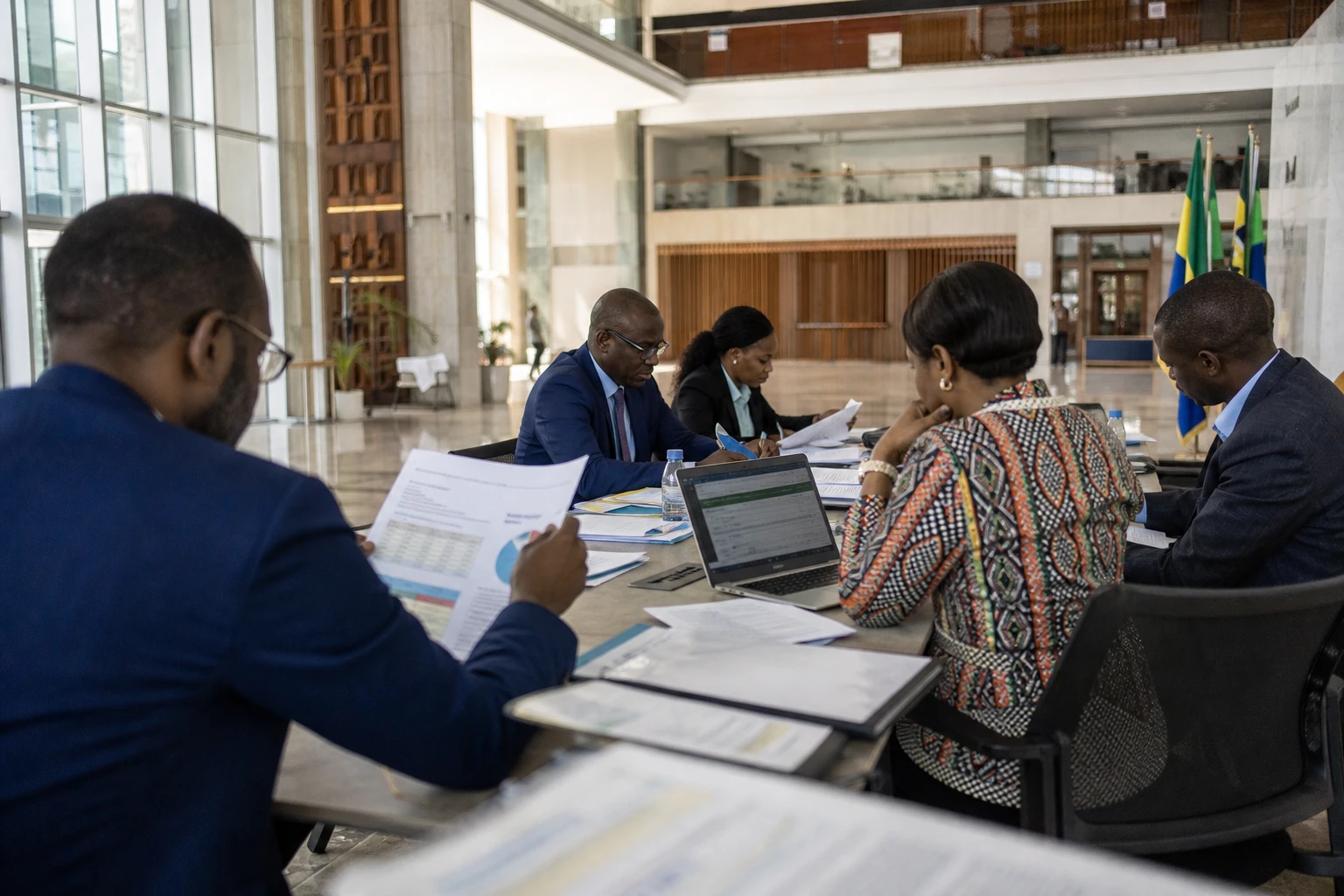
In Central Africa, energy decisions are still based on incomplete data that are difficult to compare. This weakness complicates network planning, the assessment of household needs and the preparation of investment. In Libreville, the states of the Central African Economic and Monetary Community (CEMAC) now want to establish a common statistical language.
Six countries, one shared need for visibility
CEMAC comprises Cameroon, the Central African Republic, the Republic of the Congo, Gabon, Equatorial Guinea and Chad. The six states have very different resources and electricity systems. Yet they must answer similar questions: how much electricity is produced, where are the shortfalls, and what role do oil, gas, hydropower, wood and charcoal play?
From 21 to 23 September 2026, experts meeting in Libreville examined national assessments and the draft regulation establishing a Community Energy Information System. A ministerial meeting was then due to take place in the Gabonese capital on 25 September to consider the recommendations and funding arrangements.
The system is intended to harmonise the collection, processing, dissemination and archiving of data. It will also enable national statistical systems to exchange information with the CEMAC Commission and the African Energy Commission (AFREC), the African Union’s specialised agency responsible for coordinating the continent’s energy policies and statistics.
The work forms part of a broader drive to modernise statistics. A few days earlier, CEMAC, the African Development Bank and the United Nations Population Fund had worked in Libreville on the SDMX standard, a format that allows different administrations to share data according to common rules, and on the regional Open Data Platform.
Shortcomings that go beyond statistics
The problem is not limited to the absence of a regional dataset. In several countries, data-collection methods are not standardised. Field surveys remain limited, particularly on biomass — wood and charcoal used by households for cooking. Yet this consumption accounts for a substantial share of the population’s actual energy balance.
There are also discrepancies in information on prices, taxes, energy efficiency and installed generation capacity. A power plant may be recorded as available even though its actual output remains low. Similarly, a power line may appear on a map without providing a regular service to neighbourhoods and rural areas.
These uncertainties make it harder to set priorities. They complicate decisions on whether to build a power plant, rehabilitate a network, extend a line or develop decentralised solar solutions. They can also weaken applications submitted to donors and investors, who require verifiable data before financing infrastructure.
Gabon illustrates the issue in practical terms. In Greater Libreville, power cuts have shown that the availability of equipment is not enough to guarantee a stable supply. Gabonese authorities believe a stronger information system would help measure national generation capacity, actual demand and the causes of imbalances.
Ultimately, the aim is to distinguish more clearly between the needs of the capital, secondary cities and rural areas. The data should also make visible the differences between households, public administrations, businesses, agriculture and industry. This detailed picture is essential in a region where energy use varies considerably according to income, access to the grid and economic activity.
Funding will be the real test
Creating a regional framework will not be enough. Experts are calling on states to fund national energy statistics units through specific, regular and sustainable budgets. They also recommend permanent, qualified staff able to produce data according to a shared timetable.
This requirement is crucial. In many administrations, sectoral statistics still depend on temporary projects or staff brought in on an ad hoc basis. When external funding ends, surveys slow down and data series become incomplete. A regional system can work only if each country has a stable team and a dedicated budget.
Nicolas Beyeme Nguema, the CEMAC commissioner responsible for economic, monetary and financial policies, stressed this point. The regulations, he explained, would have “no real impact unless the national units are actually operational”. This condition is directly linked to the states’ ability to include energy statistics in their regular budgets.
This raises the question of how costs will be shared. The CEMAC Commission will have to fund coordination, training and shared tools. The states, for their part, will have to conduct national surveys and maintain their systems. AFREC can support continent-wide harmonisation, but the system’s continuity will depend first and foremost on national administrations.
Financial support is already available in the field of statistics. The World Bank has approved funding for Cameroon, the Central African Republic, Chad and the CEMAC Commission, followed by the Republic of the Congo and Gabon. However, the precise share earmarked for energy statistics is not specified in the available information. The future mechanism will therefore have to clarify needs, amounts and responsibilities.
A tool to accelerate energy integration
Reliable data are also essential for cross-border projects. In February 2025, a medium-voltage power line was commissioned between Equatorial Guinea and Gabon, at Ebebeyin. This interconnection shows that energy integration is already advancing through concrete steps. However, it requires comparable information on capacity, flows and needs on both sides of the border.
Across CEMAC, a shared system could help prepare new interconnections between Cameroon, the Republic of the Congo, Gabon, Equatorial Guinea, the Central African Republic and Chad. It could also help measure the contribution of renewable energy, track network losses and identify areas where off-grid solutions would be more suitable.
The next step will therefore be less technical than political and budgetary. Ministers will have to turn the draft regulation into enforceable obligations and then approve a funded roadmap. The key point to watch will be whether national units are actually established, because that is where the promise of better energy planning will — or will not — take concrete form.