Algeria
 Egypt
 Libya
 Morocco
 Sudan
 Tunisia
 Benin
 Burkina Faso
 Cabo Verde
 Côte d'Ivoire
 Ghana
 Guinea
 Guinea-Bissau
 Liberia
 Mali
 Mauritania
 Niger
 Nigeria
 Senegal
 Sierra Leone
 The Gambia
 Togo
 Central African Republic
 Chad
 DR Congo
 Equatorial Guinea
 Gabon
 Republic of the Congo
 São Tomé and Príncipe
 Burundi
 Comoros
 Djibouti
 Eritrea
 Ethiopia
 Kenya
 Madagascar
 Malawi
 Mauritius
 Mozambique
 Rwanda
 Seychelles
 Somalia
 South Sudan
 Tanzania
 Uganda
 Angola
 Botswana
 Eswatini
 Lesotho
 Namibia
 South Africa
 Zambia
 Zimbabwe
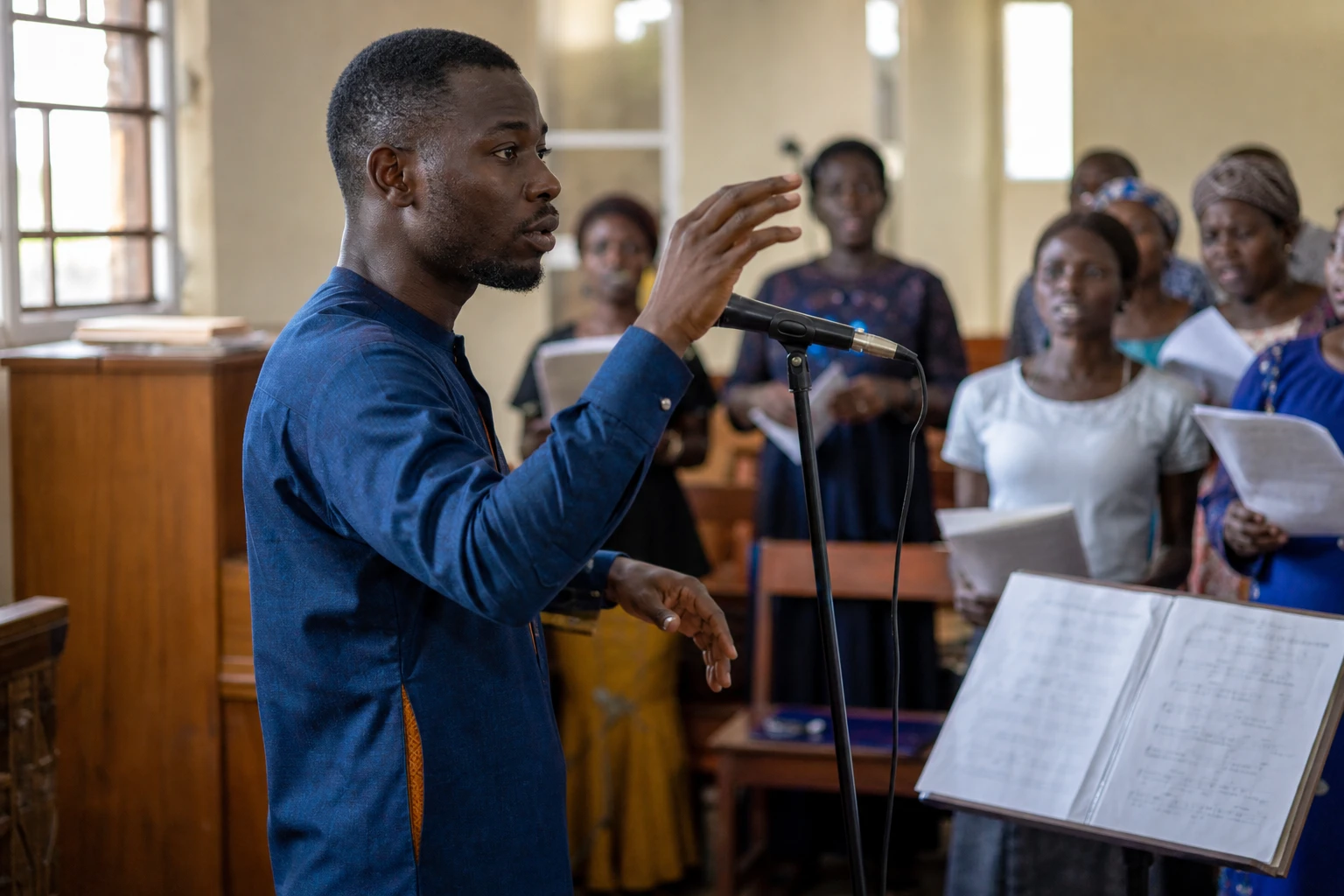
A refrain born in Cameroon brought tens of thousands of young people together in a French stadium. On 25 and 26 September 2026, “Comment ne pas te louer” accompanied Pope Leo XIV’s visit to France, becoming one of the defining sounds of the religious gathering. Behind the repetitive melody is Father Aurélien Bollevis Saniko Teponnou, a Spiritan priest of Cameroonian origin.
From Yaoundé to major Christian gatherings
The song is now part of the repertoire of many parishes. It circulates among Catholic communities, youth choirs and prayer gatherings. Its reach, however, extends beyond churches. Covers have also spread on social media and in secular settings.
Available information places the song’s composition in Cameroon. Several liturgical documents credit Father Aurélien Bollevis Saniko with both the lyrics and music. The Emmanuel publisher’s song catalogue also lists the work under his name.
The year it was written is sometimes given as 2003 or 2009, depending on accounts of the priest’s life. The discrepancy appears to refer to different stages: the initial composition, followed by the recording or wider release of the song. In the absence of a complete chronology established by a single official source, both dates should be treated with caution.
In an interview published in Cameroon, Father Saniko explains that the inspiration came after he suffered a serious illness as a teenager. He says he wanted to express his gratitude to God. A fellow Spiritan priest reportedly advised him to sit at the piano and compose. The refrain was born of that act of thanksgiving.
Simple lyrics designed to be sung again
The song’s strength lies in its simplicity. The verses revolve around a short phrase: looking around, seeing the glory of God or the presence of one’s brothers and sisters, and then giving thanks. The refrain repeats the same question, set to an easy-to-remember melody.
This structure makes it easy for people to join in straight away. There is no need to know the sheet music or have any particular vocal technique. A congregation can start a cappella, then add a guitar, piano or fuller ensemble.
This accessibility partly explains the song’s longevity. In Yaoundé parishes, it can be sung by children, students and older worshippers alike. The song is therefore not tied to a single generation or musical arrangement.
The song also belongs to a Cameroonian culture in which religious songs are widely passed on through communal practice. A melody learnt at Mass may later be sung at a vigil, a family gathering or a youth meeting. Its passage from one setting to another makes it more familiar.
The social media boost
In 2022 and 2023, “Comment ne pas te louer” found a new audience on TikTok. Cameroonian media and other French-language publications reported more than 90,000 videos related to the song in a matter of weeks. That figure reflects a count of posts at a particular point in time. It is not a lasting measure of the song’s audience.
Its online virality changed the song’s geographical reach. A cover recorded at a school, parish or among a group of friends could be seen far beyond Cameroon. Internet users adopted the refrain without necessarily belonging to a Catholic community.
The mechanism matters. Social media does not simply distribute a finished work. It encourages people to cover, adapt and reinterpret it. Anyone can change the tempo, accompaniment or staging while preserving the heart of the refrain.
This circulation also brought the song’s Cameroonian origins into sharper focus. Many worshippers knew the melody before they knew its author’s name. Its online success gradually brought Father Saniko and his story back to the centre of the narrative.
A Cameroonian presence at a global event
On 25 September 2026, the refrain was sung at a vigil attended by about 80,000 young people at the Stade de France in Saint-Denis, as part of Leo XIV’s visit to France. The following day, volunteers involved in the event sang it again in Paris, after the pope had left for Lourdes.
These scenes give the song particular significance. A work composed by a Cameroonian priest has become a familiar feature of an international Christian gathering held in Europe. It is no longer confined to a parish or a community of origin. It now accompanies celebrations in several countries.
This visibility should not, however, obscure the song’s African starting point. Its success is often told through its arrival in France or its take-up on TikTok. Yet its story begins in Cameroon, in a specific religious, musical and social setting.
This origin is a reminder of the role African creators play in the global circulation of Christian culture. The continent’s communities are not merely audiences or places where cultural works are received. They also produce works that are taken up elsewhere, sometimes without their original journeys being adequately documented.
A hit that crosses religious boundaries
The song remains explicitly Christian. Its lyrics address Jesus and express praise. Yet its reach extends beyond liturgical use. Videos show it being performed in a variety of settings by choirs, youth groups and amateur singers.
This openness stems from the simplicity of the lyrics and the melody’s energy. It also reflects how easily people can sing it together without much equipment. In a country such as Cameroon, where communal music-making plays an important role in social life, this quality helps the song spread.
For Father Saniko, the song retains its spiritual meaning. For Cameroonian worshippers, it is also a national creation that has gone international. For audiences who sing it elsewhere, it works as an instantly recognisable song that brings people together.
The next step will be preserving its place in collective memory. Online popularity can be rapid and fleeting. By contrast, a song’s inclusion in parish repertoires, sheet music and celebrations gives it a firmer footing. From Yaoundé to diaspora gatherings, “Comment ne pas te louer” appears to have secured a lasting place in the French-speaking Christian soundscape.