
 Algeria
 Egypt
 Libya
 Morocco
 Sudan
 Tunisia
 Benin
 Burkina Faso
 Cabo Verde
 Côte d'Ivoire
 Ghana
 Guinea
 Guinea-Bissau
 Liberia
 Mali
 Mauritania
 Niger
 Nigeria
 Senegal
 Sierra Leone
 The Gambia
 Togo
 Central African Republic
 Chad
 DR Congo
 Equatorial Guinea
 Gabon
 Republic of the Congo
 São Tomé and Príncipe
 Burundi
 Comoros
 Djibouti
 Eritrea
 Ethiopia
 Kenya
 Madagascar
 Malawi
 Mauritius
 Mozambique
 Rwanda
 Seychelles
 Somalia
 South Sudan
 Tanzania
 Uganda
 Angola
 Botswana
 Eswatini
 Lesotho
 Namibia
 South Africa
 Zambia
 Zimbabwe
Tense nominations as a busy electoral calendar approaches
In Cameroon, it is rarely an insignificant moment when the ruling party brings its senior figures together around the same table. In Yaoundé, this gathering signals less a show of strength than a need to put its house in order ahead of the next electoral contests. In a context where the terms of MPs and municipal councillors have already been extended by law and decree until spring 2026, the question of candidates has become a political issue in its own right.
Cameroon is, in fact, entering a year of local and national realignment. The country has already begun revising electoral rolls in 2026, with a stated emphasis on registering women and young people, while the electoral law was amended in April 2026. In the capital, these developments point to a more fluid landscape than it might appear. Within the Cameroon People’s Democratic Movement (RDPC), the priority is clear: prevent internal rivalries from weakening the electoral machine when it needs to remain disciplined.
The RDPC warns against its own fault lines
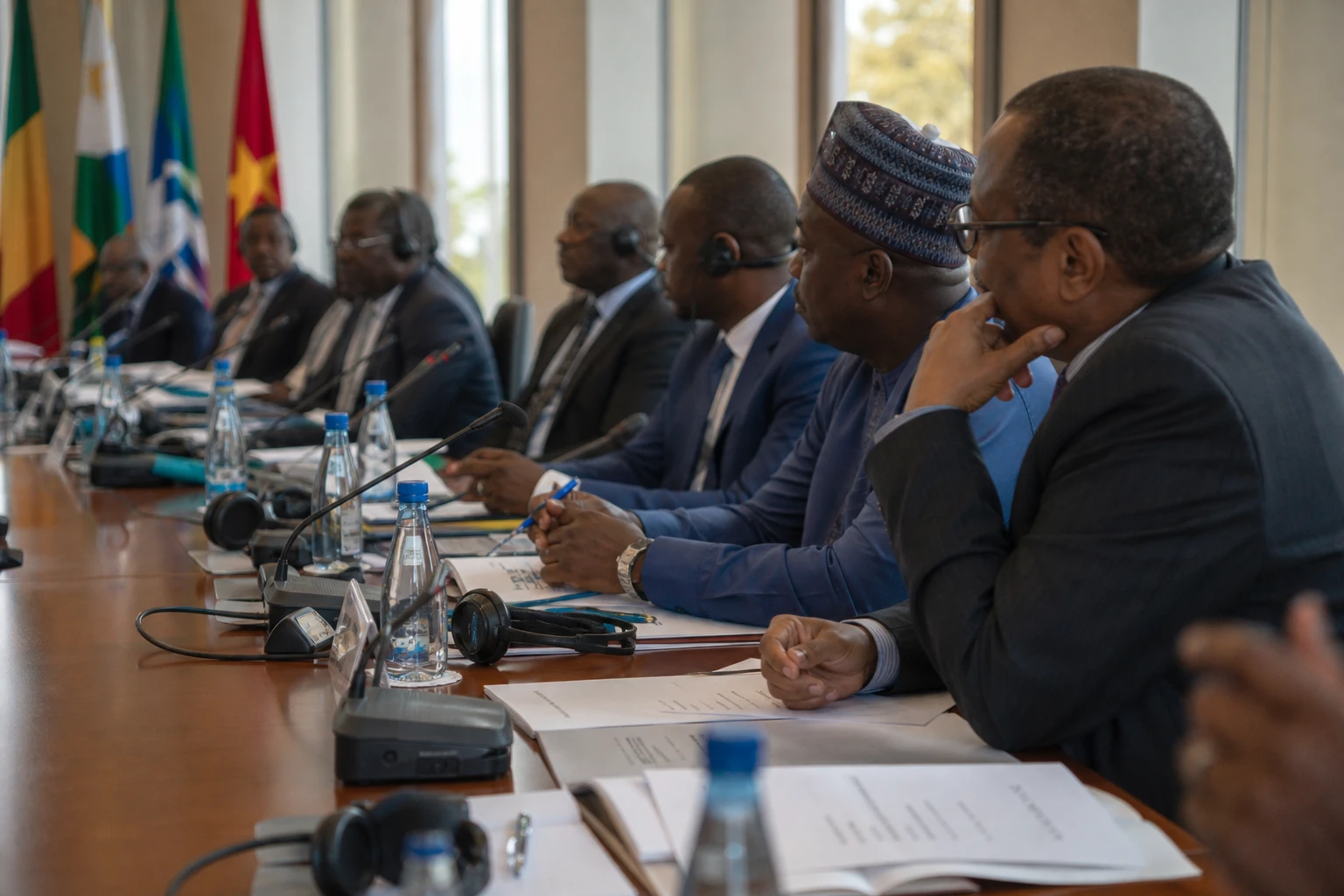
A strategic seminar convened in Yaoundé on 22 July 2026 served as a reminder of the party’s approach. Jean Nkuete, secretary-general of the RDPC central committee, said that questions of candidacies and profiles must be “clearly addressed” to avoid “clashes between candidates”. He also stressed the need to involve more young people and women, improve management of the electoral register and strengthen engagement with the population. This warning is more than a matter of wording. It reveals a very real fear: that internal competition in the regions, departments and sections could undermine the party’s organisational advantage.
Jacques Fame Ndongo echoed the message, calling on delegation chiefs and local officials to “persuade and smooth over minor disagreements” before they become obstacles. In short, the RDPC is seeking to retain control over the selection of its nominees while preventing local frustrations from turning into rival candidacies, activist abstention or a half-hearted campaign. The party therefore wants a controlled selection process, without public disputes.
At this stage, there is no indication of a move to open primaries. According to the information available, the usual practice remains nomination by the party’s national president. This centralisation reflects a well-established political culture in Cameroon, where the party apparatus often plays a decisive role in ranking local ambitions. In practice, this benefits the best-organised networks, but can leave behind activists calling for greater renewal.
An issue beyond the party: elections, representation and renewal
The debate over candidacies is not confined to the RDPC. It says something about how political representation is shaped in local authorities and the National Assembly. Legislative and municipal elections are expected within the republican framework, while the current terms have been extended. In other words, the coming period will not be a routine exercise. It will put local positions of power and territorial alliances back in play and test the presidential party’s ability to retain a comfortable majority.
The revision of the electoral code in April 2026 adds an important element. It shows that the legal framework continues to be adjusted as elections approach. ELECAM, the body responsible for organising elections, has for its part launched its campaign to revise the electoral rolls, with a message focused on participation by women and young people. This matters. The contest over candidacies is not fought only among political barons. It also depends on the state of the electoral register, the level of mobilisation in municipalities and voters’ confidence in the rules of the game.
For outgoing elected officials, this period ushers in uncertainty. For local party officials, it means sorting, arbitrating and persuading. For activists, it may offer the hope of a better place for young people and women. For voters, finally, the issue is simpler: whether the lists put forward will reflect the real diversity of the regions, or mainly reproduce existing power balances. Part of the credibility of the election is at stake here, long before polling day.
Yaoundé, CEMAC and the regional mirror effect
Cameroon does not operate in isolation. A member of CEMAC, the Economic and Monetary Community of Central Africa, it carries considerable weight in a bloc of six states in which Yaoundé is also a major institutional centre. This position gives Cameroon’s political balances regional significance. When party stability, clarity over the electoral calendar or the management of internal tensions is put to the test, the way governance is viewed across the sub-region is affected.
In a region with a common currency, where political trajectories are often observed in relation to one another, Cameroon is frequently a point of reference, sometimes a cautionary example. The care taken in preparing candidacies, the place given to young people and women, and the way internal conflicts are arbitrated will therefore matter beyond Cameroon’s municipalities. Regional organisations, electoral partners and political actors across the sub-region will be watching one thing in particular: the system’s ability to produce clear nominations, organised elections and accepted results.
Ultimately, the Yaoundé seminar makes one simple point: in an election year, victory is not prepared only at rallies. It is also built through the selection of candidates, the discipline of networks and the ability to prevent local ambition from turning into a succession war. For the RDPC, the immediate issue is internal. For Cameroon, it is institutional. And for Central Africa, it is another test of the resilience of dominant parties in the face of more demanding political societies.



