
 Algeria
 Egypt
 Libya
 Morocco
 Sudan
 Tunisia
 Benin
 Burkina Faso
 Cabo Verde
 Côte d'Ivoire
 Ghana
 Guinea
 Guinea-Bissau
 Liberia
 Mali
 Mauritania
 Niger
 Nigeria
 Senegal
 Sierra Leone
 The Gambia
 Togo
 Central African Republic
 Chad
 DR Congo
 Equatorial Guinea
 Gabon
 Republic of the Congo
 São Tomé and Príncipe
 Burundi
 Comoros
 Djibouti
 Eritrea
 Ethiopia
 Kenya
 Madagascar
 Malawi
 Mauritius
 Mozambique
 Rwanda
 Seychelles
 Somalia
 South Sudan
 Tanzania
 Uganda
 Angola
 Botswana
 Eswatini
 Lesotho
 Namibia
 South Africa
 Zambia
 Zimbabwe
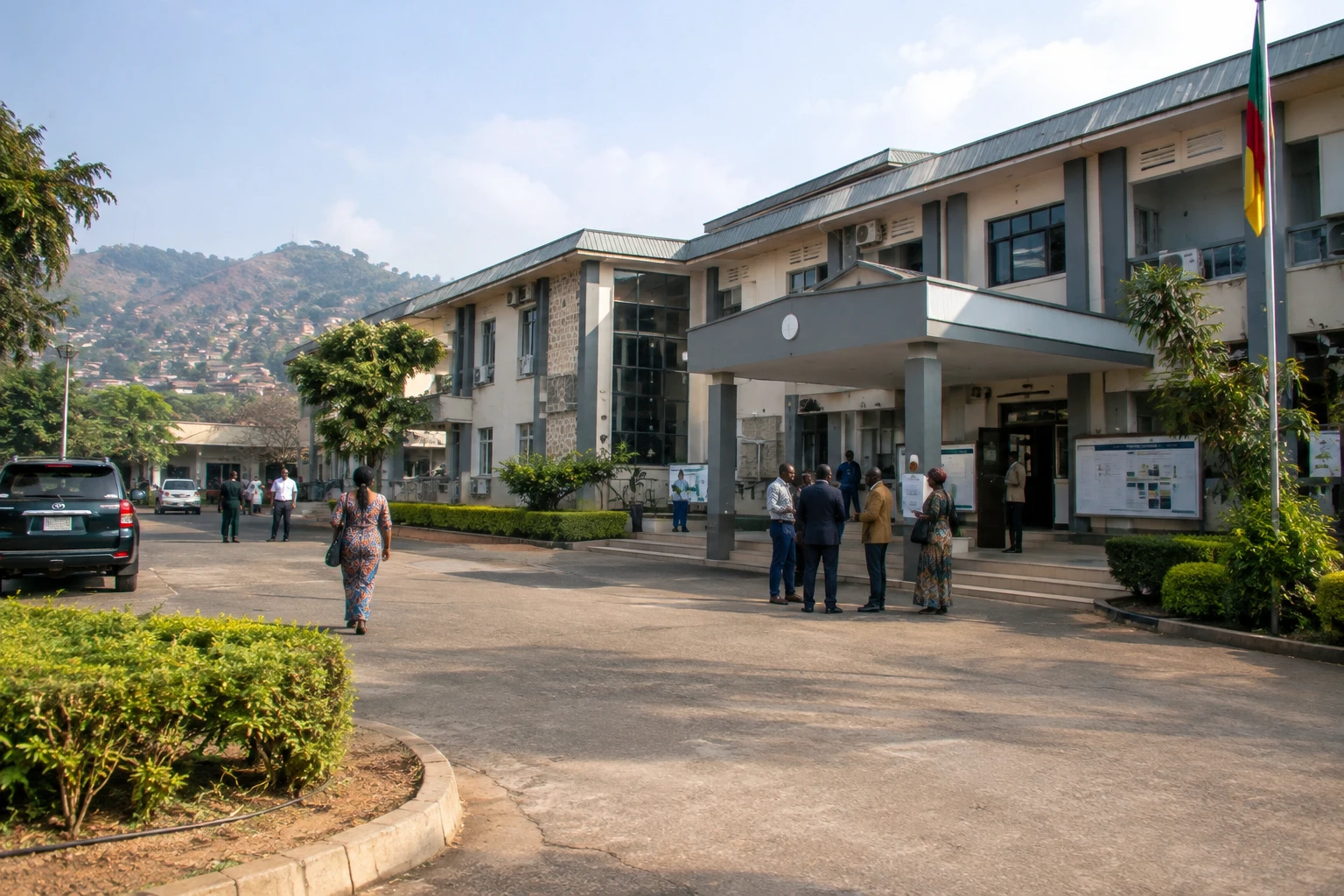
A reopened road, a functioning school, a village where residents can move around without fearing an imposed day of shutdown: in Bamenda, peace will first be measured by concrete changes. It is at this local level that the Cameroonian government now wants to support a new dialogue initiative in the North-West and South-West regions.
From national dialogue to local initiatives
Prime Minister Joseph Dion Ngute travelled to Bamenda, the capital of the North-West, on Thursday 15 October 2026 to launch the initiative. A similar ceremony had taken place in Buea, in the South-West, on 28 September, according to information available about these visits. The project aims to bring discussions closer to communes, subdivisions and villages, involving administrative authorities and local actors.
The government presents this approach as a continuation, rather than a new major national forum. The Major National Dialogue, held in Yaoundé from 30 September to 4 October 2019, recommended, among other things, special status for the two regions, stronger decentralisation and measures to promote bilingualism. These recommendations have since provided an official framework for public policy, but their implementation has not brought the violence to an end.
The authorities want outcomes to be assessed through indicators visible on the ground: the resumption of traffic on a road, a fall in incidents in a locality or the return of everyday activities. This “bottom-up” approach, as described at the launch, is intended to identify challenges specific to each area rather than apply the same solutions everywhere.
An initiative tested by everyday life
In the Anglophone regions, the crisis continues to affect travel, schooling and work. The information provided for this announcement refers to disrupted school reopening in some areas, so-called “ghost town” days, extortion, abductions and clashes. These incidents are reported here without numerical estimates: the information consulted does not make it possible to independently verify their scale or frequency across the two regions.
The consequences are not the same for everyone. An imposed shutdown blocks businesses and transport, while an unsafe road makes it harder to reach services and markets. Families and pupils bear the brunt of school disruptions. Small traders and informal-sector workers, who often rely on daily travel, can lose income as soon as activity stops. Rural areas, sometimes far from administrative centres, also risk being left out if consultations are concentrated in towns.
Local dialogue can produce practical arrangements: reopening a route, resolving a local dispute or facilitating the return of certain activities. It can also give a voice to people who rarely take part in institutional discussions, including community leaders, women, young people and religious representatives. But holding meetings is not enough to guarantee that they are representative or that those taking part are safe.
The government does not present the mechanism as a replacement for existing institutions. The Prime Minister’s Office already describes the Major National Dialogue and its monitoring committee as levers for decentralisation, reconstruction and the reintegration of former combatants. This official account highlights progress claimed by the state; it should be distinguished from independent assessments of the impact of these policies on the communities concerned.
The question of absent actors
Civil society points to an important limitation: local consultations can ease immediate tensions, but they do not necessarily address the political causes of the conflict. Fon Nsoh, identified as the coordinator of the Cominsud organisation in Bamenda, says that people aspire to peace while calling for a framework for discussions with separatist leaders. This assessment, reported in the available material, could not be corroborated by a second independent source and should therefore be understood as an attributed position.
This question involves a broader balance of power. Community leaders can convey needs and facilitate local agreements, but they do not automatically speak on behalf of armed groups or everyone affected. Conversely, armed actors alone do not represent the diversity of aspirations in the North-West and South-West. The challenge is to build discussions that protect civilians and do not confuse local participation with a political settlement to the conflict.
The timetable and resources for the mechanism also remain to be clarified. For the initiative to be assessed, it will be necessary to know who organises the meetings, which communities can take part, how commitments will be monitored and what criteria will be used to assess results. Without regular public data, it will be difficult to distinguish a reopened road or a month without incidents from lasting improvement.
A Central African issue
The issue concerns a member state of the Central African Economic and Monetary Community (CEMAC), a regional organisation comprising six states that cooperate on economic and monetary matters. Prolonged disruption in Cameroon can affect trade and travel in a region where roads connect domestic and cross-border markets. Its regional reach does not, however, make the crisis a uniform challenge: its effects and responses remain rooted in the specific realities of Cameroon’s two regions.
The next step will be less about holding more ceremonies than about sustaining regular dialogue, reporting on its outcomes and linking local solutions to the institutional commitments made in Yaoundé since 2019. For people in Cameroon’s North-West and South-West, the test will be tangible: being able to study, travel and work with fewer obstacles. At this stage, the launch in Bamenda sets out an announced approach; it is not, on its own, proof of lasting calm.



