
 Algeria
 Egypt
 Libya
 Morocco
 Sudan
 Tunisia
 Benin
 Burkina Faso
 Cabo Verde
 Côte d'Ivoire
 Ghana
 Guinea
 Guinea-Bissau
 Liberia
 Mali
 Mauritania
 Niger
 Nigeria
 Senegal
 Sierra Leone
 The Gambia
 Togo
 Central African Republic
 Chad
 DR Congo
 Equatorial Guinea
 Gabon
 Republic of the Congo
 São Tomé and Príncipe
 Burundi
 Comoros
 Djibouti
 Eritrea
 Ethiopia
 Kenya
 Madagascar
 Malawi
 Mauritius
 Mozambique
 Rwanda
 Seychelles
 Somalia
 South Sudan
 Tanzania
 Uganda
 Angola
 Botswana
 Eswatini
 Lesotho
 Namibia
 South Africa
 Zambia
 Zimbabwe
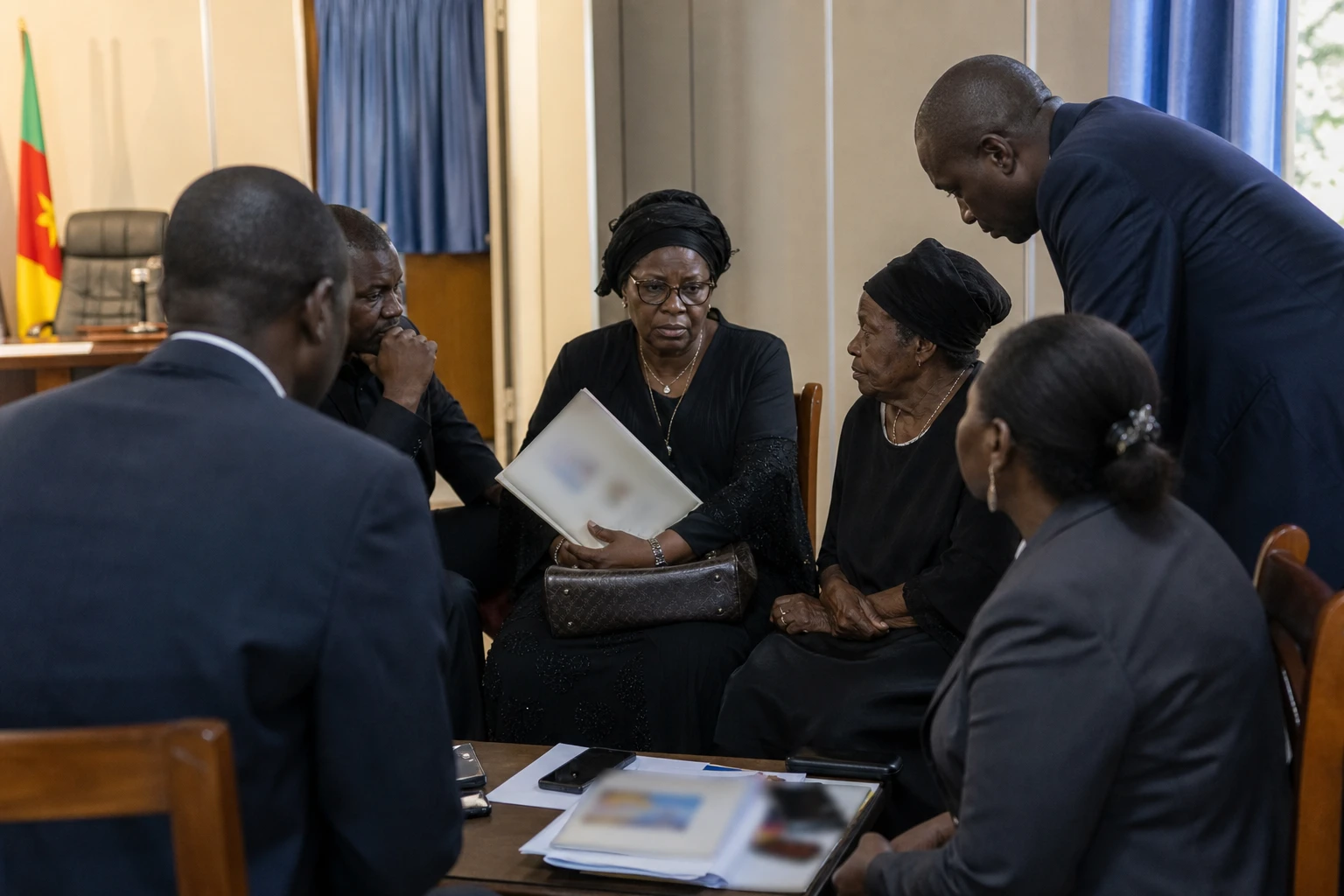
As silence sets in, families first look for a name, then for proof
In Yaoundé, relatives of young Cameroonians who went to Russia say they now want a simple answer: where are they, and in what circumstances were they sent to the Ukrainian front? The issue touches on the protection of citizens, the spread of opaque recruitment networks and Cameroon’s place in networks that extend far beyond its borders.
This concern has not emerged in a political vacuum. Cameroon has an official military cooperation framework with the Russian Federation, ratified by a law in December 2023. At the same time, the war in Ukraine has given rise in several African countries to networks that promise jobs, training or salaries before turning to armed service. The phenomenon has been described by the Africa Center for Strategic Studies as a deceptive recruitment system targeting young people seeking opportunities.
Cameroonian families demand answers over departures that have become disappearances
The collective “Bring Back Our Sons and Brothers”, launched in August 2026, says it has gathered the testimony of about a dozen families facing deaths, loss of contact or uncertainty over the fate of their loved ones. Its demands are clear: identify those recruited, establish what happened to them and obtain details about the bodies or those missing.
The accounts reported by families point to a recurring pattern. Young people are said to have left believing they would find a job, training or pay in Russia, and were then steered towards military roles. This pattern has already been documented elsewhere on the continent. In February 2026, Reuters reported that more than 1,700 Africans were fighting for Russia, according to Ukrainian officials, and that they came from 36 African countries. Other investigations published in 2026 described adverts circulated on social media, often presented as civilian job offers.
Cameroon is not alone in this crisis. In Ghana, South Africa, Kenya and Nigeria, families and authorities have reported comparable cases. In May 2026, the Africa Center for Strategic Studies said Russia had established a deceptive recruitment network based on promises of jobs, training or legal status, followed by pressure to sign military contracts in Russian. In this account, the war in Ukraine has also become a site for exploiting Africa’s economic vulnerabilities.
Yaoundé acknowledges deaths, while Moscow remains at the centre of calls for clarification
The case has already reached the diplomatic level. On 7 April 2026, the Cameroonian government said Russia had confirmed the deaths of 16 Cameroonian nationals involved in operations in Ukraine, a report carried by Associated Press. A few days later, Cameroonian officials summoned Russia’s ambassador to Yaoundé to seek clarification about the fate of these nationals and the circumstances of their departure.
This is a decisive point. It shows that the issue is no longer only a family or community group matter, but one of administrative and diplomatic sovereignty. When citizens disappear in a foreign conflict, the state is expected to act on three fronts: identification, consular protection and tracking recruitment. Yet in this kind of chain, families often hear the news too late, through a phone call, a message or someone who has returned from the front.
The problem goes beyond the bilateral relationship between Yaoundé and Moscow. Cameroon is a member of CEMAC, the Economic and Monetary Community of Central Africa, where the movement of people, labour-market imbalances and informal migration pressures create fertile ground for opportunistic recruiters. In this context, a young person seeking a quick route abroad may be trapped by intermediaries with no clear legal standing. That is where the line between a contract, trafficking and coercion becomes blurred.
The war in Ukraine, for its part, is also drawing on manpower from elsewhere. Ukraine said in 2026 that thousands of Africans were serving or had served in Russian ranks. This figure, reported by several international media outlets, reinforces the view that the effects of the conflict in Ukraine are no longer confined to Europe. It is affecting African families and administrations, as well as the credibility of regional protection mechanisms.
What the Cameroonian case reveals about the continent
For families, the urgency is personal. For the state, it is political. For the region, it is strategic. The case is a reminder that transnational recruitment networks primarily target countries where youth unemployment, the pursuit of social mobility and a lack of reliable information combine. African capitals therefore face a simple but weighty question: how can they track departures presented as civilian when they turn into military service abroad?
At continental level, the Cameroonian case also feeds into a broader debate about Africa’s vulnerability to wars between powers. Russia has strengthened its military ties with several African states while expanding its channels of influence across the continent. But the case of the Cameroonian recruits is a reminder that a defence partnership does not automatically protect citizens from parallel networks. On the contrary, it can make clarification more difficult if official and informal channels become blurred.
The next steps will unfold on two fronts. On one side, families and civic groups will gather evidence. On the other, the Cameroonian authorities will need to secure precise information from Moscow and verify whether local departure networks exist. As long as these points remain unclear, the fate of the young people concerned will continue to embody a wider failing: a continent where routes of migration can be diverted into routes to war.
In this case, Cameroon is neither marginal nor simply a secondary arena. It is one of the countries where the war in Ukraine has left a direct human mark, measurable in families, neighbourhoods and public administrations. That is precisely why the case must be treated as an African issue in its own right, with national responsibilities, regional links and continental consequences.



