Algeria
 Egypt
 Libya
 Morocco
 Sudan
 Tunisia
 Benin
 Burkina Faso
 Cabo Verde
 Côte d'Ivoire
 Ghana
 Guinea
 Guinea-Bissau
 Liberia
 Mali
 Mauritania
 Niger
 Nigeria
 Senegal
 Sierra Leone
 The Gambia
 Togo
 Central African Republic
 Chad
 DR Congo
 Equatorial Guinea
 Gabon
 Republic of the Congo
 São Tomé and Príncipe
 Burundi
 Comoros
 Djibouti
 Eritrea
 Ethiopia
 Kenya
 Madagascar
 Malawi
 Mauritius
 Mozambique
 Rwanda
 Seychelles
 Somalia
 South Sudan
 Tanzania
 Uganda
 Angola
 Botswana
 Eswatini
 Lesotho
 Namibia
 South Africa
 Zambia
 Zimbabwe
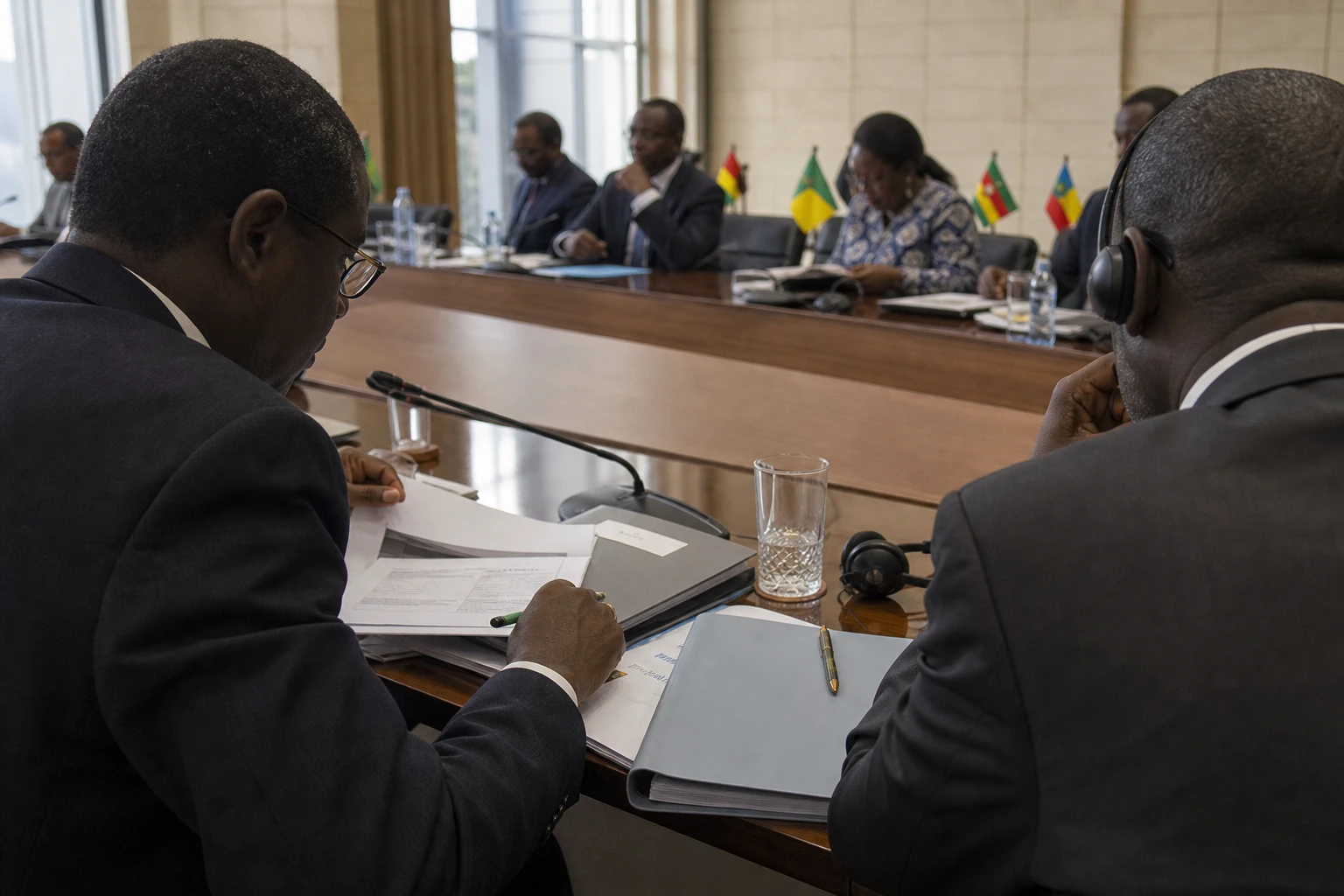
In Cameroon, counting everyone remains a task of state
In a country with high levels of mobility, rapidly growing cities and border areas shaped by constant movement back and forth, a census does more than simply add up the population. It determines the distribution of schools, health centres, roads and markets, and, more broadly, the quality of public decision-making. In Cameroon, the exercise is long overdue: the last general population and housing census dates back to 2005. The fourth census, combined with the general census of agriculture and livestock, was extended several times before its announced close on 15 September 2026.
The extension says much about the country’s difficulty in capturing a mobile and sometimes wary population within a single window. The authorities have acknowledged logistical adjustments and delays in the field, as well as the need to step up public awareness efforts to improve national coverage. As at 3 September 2026, coverage stood at 71.7%, with 21.607 million people counted, according to data released in Yaoundé.
Kyé-Ossi, a border that complicates the count
The final sweep of operations was observed in Kyé-Ossi, in the South Region, on the edge of Gabon and Equatorial Guinea. This Cameroonian town lies at the centre of a busy cross-border area, where residents travel to work, trade or reach the other side of the border. The municipality describes itself as a border town on routes to Gabon and Equatorial Guinea, a considerable distance from Yaoundé.
In this kind of area, the census faces a simple reality: some of the population is not always there when enumerators call. Departures to neighbouring countries, seasonal returns, stays linked to trade and daily movement through border posts make the count unstable. Academic studies of Kyé-Ossi describe the area as a space of varied international mobility, transit and migrant settlement.
Local administrative officials, for their part, have highlighted these migratory flows to explain the difficulties encountered in the field. This assessment is consistent with Kyé-Ossi’s role in the informal economy and regional trade of CEMAC, the Economic and Monetary Community of Central Africa, where borders are both lines of control and points of passage.
What enumerators found in the field
In the area, teams had to carry out a “sweep”, returning to households already visited or not reached, to identify people who were absent or had not yet been counted. This method, common in difficult censuses, takes time. It also means returning to households that have remained reluctant, sometimes after several visits. The government has also maintained targeted operations in so-called red zones, meaning areas deemed too exposed to insecurity for a normal deployment of enumerators.
The challenge is not limited to the borders. Major cities such as Yaoundé and Douala have also seen some households refuse to take part, according to information made public by the census coordination team. The authorities have therefore relied on three measures: extending the count, redeploying human and financial resources, and preparing a post-census survey to measure omissions and consolidate the final statistics. A post-census survey is specifically intended to correct coverage gaps and produce a more accurate estimate of the population actually counted.
This sequence explains why the Cameroonian state had to issue an official reminder that the census is not intended for tax or policing purposes. Trust remains central to the operation. Without it, enumerators face closed doors, incomplete answers or repeated absences. With it, the data collected become the basis for more precise management of public policy.
Figures that are first and foremost used to govern
The Cameroonian government presents this combined census as a planning tool. The Ministry of the Economy, Planning and Regional Development has asked its staff to support the exercise, explaining that the results will affect infrastructure, education, health, housing, employment and food security. This is no mere administrative formality. In a country that must balance the needs of metropolitan areas, rural communities, crisis-hit northern regions and more isolated forest zones, every percentage point of coverage matters.
The context also offers a continental perspective. Cameroon is not the only country modernising its statistical system, but it is doing so in an environment where late censuses often complicate planning in Central Africa. In the sub-region, population movements between Cameroon, Gabon and Equatorial Guinea are longstanding, intense and sometimes poorly documented. For states, having a solid statistical base makes it easier to plan infrastructure and public services and shape development policies across CEMAC.
This fourth census will therefore reveal more than the size of the population. It will measure Cameroon’s ability to see its territory in all its real complexity: cities that draw people in, borders that bring people together, crisis zones that remain beyond the reach of the count, and rural areas where agriculture and livestock remain central. In Yaoundé, the real challenge begins after 15 September 2026: turning the data collection into reliable figures, and those figures into useful decisions.