Algeria
 Egypt
 Libya
 Morocco
 Sudan
 Tunisia
 Benin
 Burkina Faso
 Cabo Verde
 Côte d'Ivoire
 Ghana
 Guinea
 Guinea-Bissau
 Liberia
 Mali
 Mauritania
 Niger
 Nigeria
 Senegal
 Sierra Leone
 The Gambia
 Togo
 Cameroon
 Central African Republic
 Chad
 DR Congo
 Equatorial Guinea
 Gabon
 Republic of the Congo
 São Tomé and Príncipe
 Burundi
 Comoros
 Djibouti
 Eritrea
 Ethiopia
 Madagascar
 Malawi
 Mauritius
 Mozambique
 Rwanda
 Seychelles
 Somalia
 South Sudan
 Tanzania
 Uganda
 Angola
 Botswana
 Eswatini
 Lesotho
 Namibia
 South Africa
 Zambia
 Zimbabwe
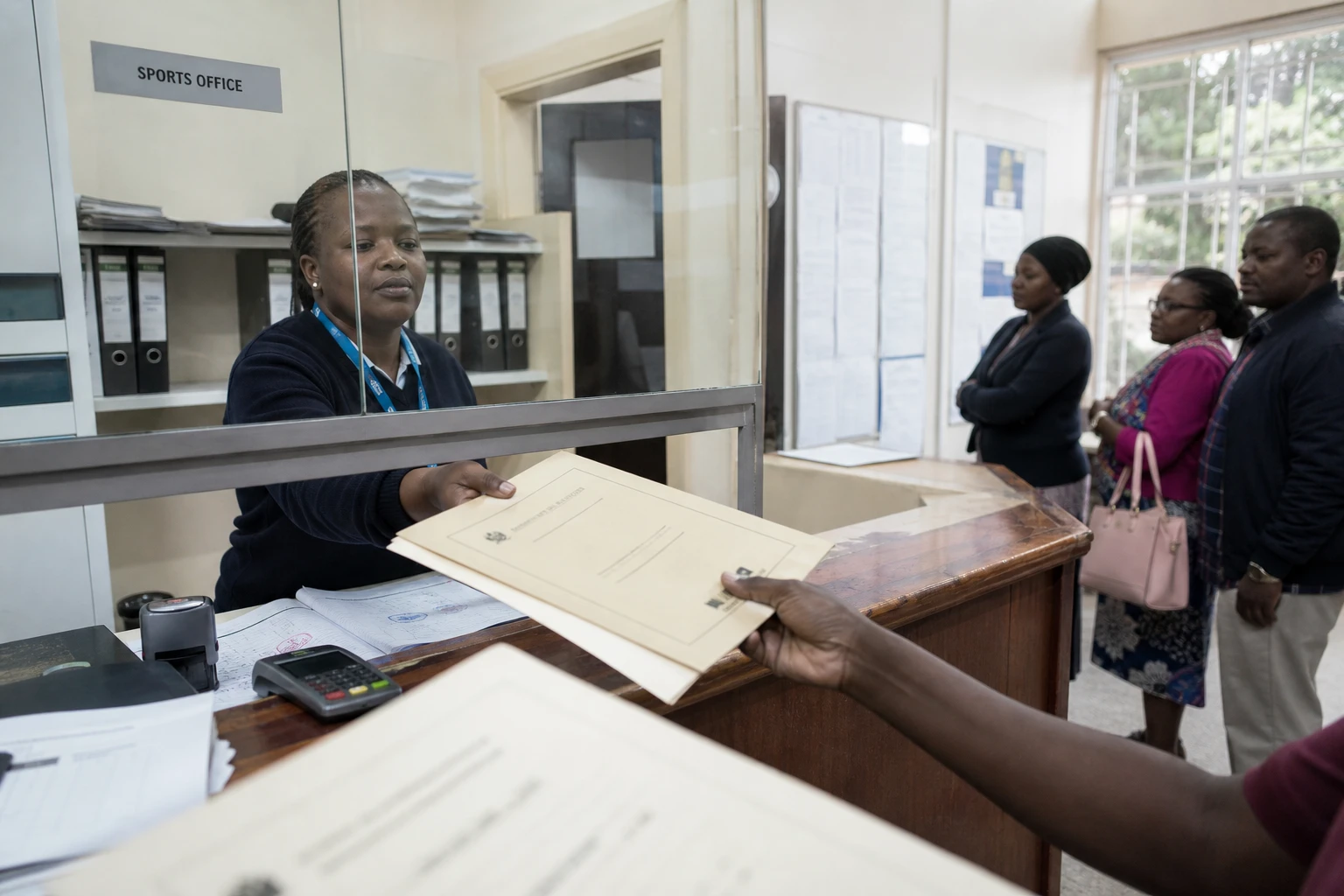
In Nairobi, AFCON 2027 is no longer a distant prospect
In Nairobi, the 2027 Africa Cup of Nations is no longer just a sporting promise. It has become a test of planning, timing and credibility for Kenya, Tanzania and Uganda, which are due to co-host the competition from 19 June to 17 July 2027. For the CAF, the stakes go beyond football: it is also about showing that a continental tournament can be prepared by three East African countries at the same time, with coordinated projects and infrastructure meeting the expected standards.
The issue directly concerns Nairobi, Kenya’s capital and the centre of decisions on the stadiums, roads, hotels and transport needed to support the event. It also speaks to the role of the East African Community, which has for years sought to make regional mobility a practical driver of integration. In this context, AFCON 2027 is not simply a football tournament. It is a regional project with continental visibility.
Work under scrutiny, but a firm message
On Thursday 17 September 2026, Patrice Motsepe, president of the Confederation of African Football, made an inspection visit to Tanzania and then Kenya as part of preparations for AFCON 2027. In Nairobi, the CAF delegation inspected several sites linked to the competition, including Talanta Stadium, described as a central part of Kenya’s plans. The CAF had also earlier confirmed that a PAMOJA supervisory committee had been set up with the governments and federations of the three host countries to oversee the organisation.
In response to criticism of the pace of work, Patrice Motsepe sought to put an end to fallback scenarios. He said there was «no plan B» and «no plan C» for the competition. The statement comes after the CAF confirmed the tournament dates in June 2026 and said qualifying was due to begin in September 2026. The timetable is therefore under way, and the window for adjustments is closing quickly for the three capitals involved.
The political signal matters as much as the sporting one. In East Africa, major competitions often serve as a showcase for wider infrastructure investment. Kenya has made the modernisation of sports facilities and the construction of Talanta Sports City priorities, while the Ministry of Sports has reiterated in its planning documents the aim of preparing for AFCON 2027 with Uganda and Tanzania.
Kenya is playing for more than a tournament
In Kenya, AFCON 2027 is putting pressure on three levels at once: the central government, sports organisers and local authorities, which will have to handle the flow of supporters. For the government, the stakes are political. Delivering a tournament on time would strengthen the image of a country capable of meeting a demanding international schedule. A visible delay, by contrast, would fuel criticism of the management of major public projects.
For the cities, the challenge is more concrete. Nairobi will have to manage access to stadiums, traffic, accommodation and security services. Talanta Stadium, still under construction, embodies some of the expectations. Other venues often cited in public debate, such as Kasarani and Nyayo, also carry a heavy responsibility, as they must meet the standards expected for a continental competition. The CAF has said its delegation inspected the venues and associated facilities, proof that compliance is not judged on the pitch alone.
For the public, the hoped-for benefits are measured less in speeches than in practical results. Improved roads, full hotels, temporary jobs and commercial activity around matches: these are the gains highlighted by the authorities. But the reality will depend on the pace of delivery and the ability to spread the benefits beyond the urban showcase. Outlying areas, small businesses and the informal economy are looking above all for a lasting impact, not just a few weeks of activity.
Caution is nevertheless warranted. In March and May 2026, budget and administrative documents showed that financial obligations linked to AFCON 2027 remained under review, while the government said it had met its commitments. This gap between official messaging and parliamentary warnings explains some of the doubts that have circulated in recent months. Motsepe responded to the tension with a simple message: he wants results, not fallback scenarios.
A test for East Africa and the CAF
The significance of this episode extends beyond Kenya. AFCON 2027 will be the first to be co-hosted by three African countries, a model that could be used for other regional competitions if it succeeds. The CAF is backing this format to boost the tournament’s sporting and commercial value, and to show that shared organisation can work without compromising quality.
At the same time, the competition is taking place as East Africa seeks to play a greater role in the continent’s major events. A successful AFCON would be one of the few issues capable of bringing Nairobi, Dar es Salaam and Kampala together around a tangible, visible and measurable result. It would also feature in the CAF’s continental narrative, as it seeks to make its major events more coherent, better planned and more attractive to broadcasters, sponsors and supporters.
The next major milestone will therefore come in the months ahead, as inspections continue and construction projects are expected to make visible progress. For Kenya, the question is no longer whether AFCON 2027 is happening. It is whether Nairobi, with its East African partners, can deliver a tournament worthy of continental expectations. That is now where the main challenge lies.