Algeria
 Egypt
 Libya
 Morocco
 Sudan
 Tunisia
 Benin
 Burkina Faso
 Cabo Verde
 Côte d'Ivoire
 Ghana
 Guinea
 Guinea-Bissau
 Liberia
 Mali
 Mauritania
 Niger
 Nigeria
 Senegal
 Sierra Leone
 The Gambia
 Togo
 Cameroon
 Central African Republic
 Chad
 DR Congo
 Equatorial Guinea
 Gabon
 Republic of the Congo
 São Tomé and Príncipe
 Comoros
 Djibouti
 Eritrea
 Ethiopia
 Kenya
 Madagascar
 Malawi
 Mauritius
 Mozambique
 Rwanda
 Seychelles
 Somalia
 South Sudan
 Tanzania
 Uganda
 Angola
 Botswana
 Eswatini
 Lesotho
 Namibia
 South Africa
 Zambia
 Zimbabwe
A disappearance that still resonates in Burundi
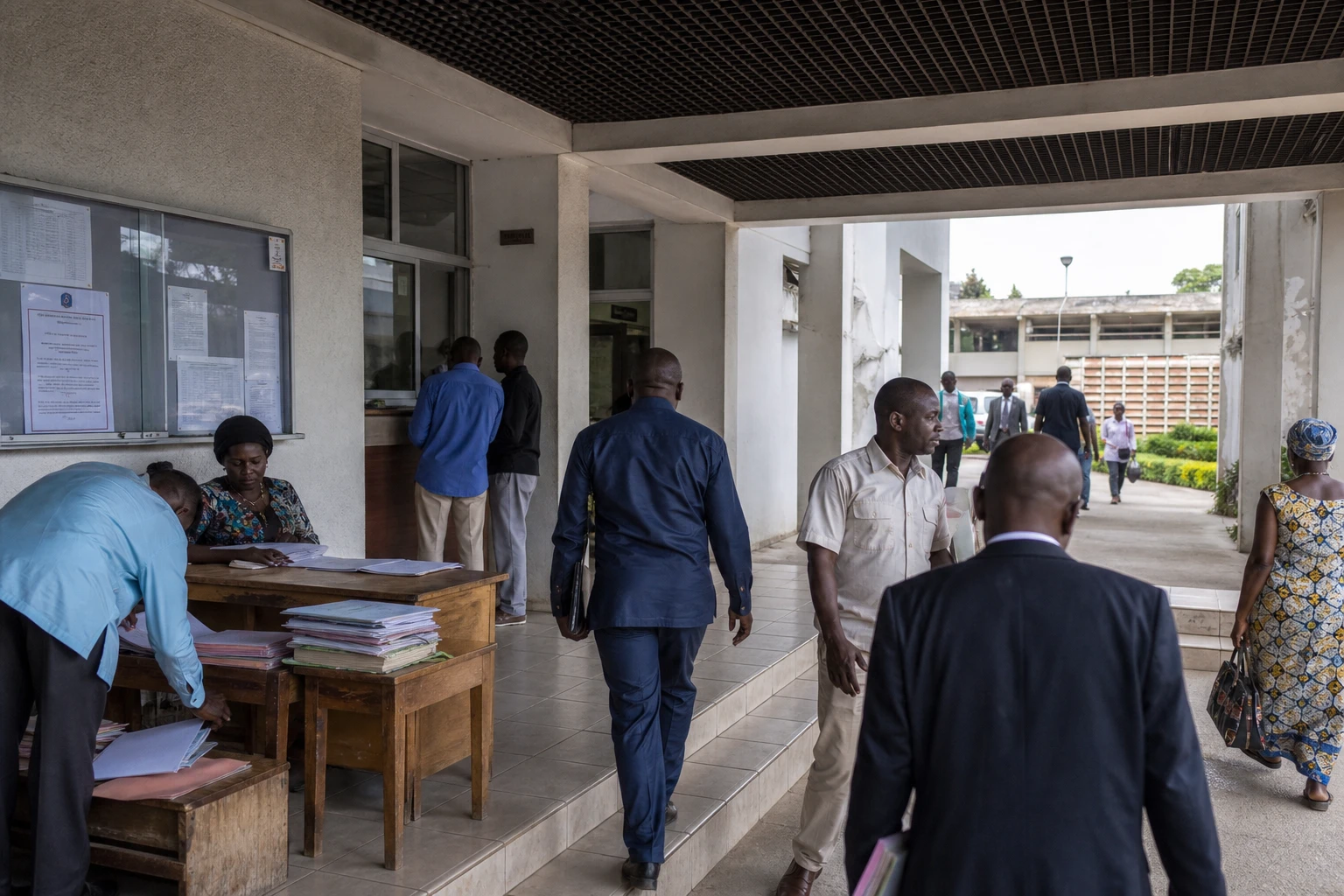
In Gitega, the question is not only what happened to a journalist. It is broader: can a country strengthen its institutions when an unresolved disappearance continues to undermine public trust? Ten years after the events, the case of Jean Bigirimana remains one of the most persistent symbols of the shadows that still surround the safety of Burundian journalists.
Burundi is a member of the East African Community, which it joined in 2007, and of several regional frameworks, including COMESA and CEPGL. In this region, the free flow of information, press freedom and judicial cooperation matter as much as roads and markets. When a disappearance case is left unresolved, the credibility of the entire institutional system erodes.
22 July 2016, and then silence
On 22 July 2016, Jean Bigirimana, 37, a journalist with Iwacu, travelled to the Bugarama area in Muramvya Province for an appointment linked to a source. Accounts subsequently shared by several organisations indicate that he was then allegedly taken by force in a vehicle, after meeting someone linked to the intelligence services. He was never seen again.
His colleagues alerted the police. His family grew concerned. Iwacu launched its own investigation. The outlet and several press freedom organisations say that, over the following days, clues pointed to the possible involvement of security actors, but no full judicial truth emerged. RSF also recalls that in 2021 the spokesperson for the prosecutor general, Arlette Munezero, said the case remained open.
A few days after the disappearance, two bodies in a poor state were recovered from the Mubarazi River. The journalist’s wife was summoned to identify one of them, but could not confirm that it was him. According to RSF, the bodies were later buried without DNA testing or an in-depth forensic examination. The episode deepened the lasting sense that the case had been handled without the minimum expected transparency.
Impunity that weakens more than one profession
The heart of the problem is not only the absence of a body or an indisputable official account. It is the lack of a credible process and verifiable results. In its 2026 report, Human Rights Watch describes an environment in which freedom of expression remains tightly restricted and media professionals face threats, harassment and arrest. Freedom House, for its part, continues to rank the country among those where civil liberties are severely constrained.
This situation has a tangible cost. For newsrooms, it fuels self-censorship. For families, it prolongs the wait and prevents them from grieving. For citizens, it limits access to independent information about sensitive cases. In a country whose capital is now Gitega, the question is not symbolic: it concerns the state’s ability to guarantee security, justice and public expression across the entire territory.
Jean Bigirimana’s disappearance has also had a lasting impact on the profession. In the years that followed, several Iwacu journalists were prosecuted or faced pressure in connection with their work, and media freedom organisations have regularly pointed to the Bigirimana case as a benchmark for assessing the reality of Burundi’s civic space. In 2026, RSF still ranks Burundi 119th out of 180 in its World Press Freedom Index, according to a report cited by SOS Médias Burundi.
The regional context matters as much as the case itself
Burundi is in a region where political transitions, security tensions and debates over information sovereignty are prominent. The EAC, which brings together eight partner states, has made regional integration a major priority. But integration cannot be limited to customs or infrastructure. It also requires guarantees for journalists’ freedom of movement, access to sources and cooperation in response to serious violations.
Across Africa, the signal sent by a case such as Jean Bigirimana’s therefore extends beyond Burundi. It concerns the protection of reporters covering public life, the intelligence services and judicial authorities, and, more broadly, trust between the state and society. In Gitega, UNESCO said in June 2026 that training had been launched with the Burundian police and the National Independent Human Rights Commission on human rights and the safety of journalists. This kind of initiative shows that a technical framework exists. The question is whether it leads to investigations that achieve results.
The continental significance is clear. Burundi is also involved in wider African forums, including the African Union. At a time when African capitals often make reform pledges, unresolved cases serve as a test. They show whether the promise of the rule of law also applies to critical voices, the families of the missing and newsrooms working without adequate protection.
In 2026, the Jean Bigirimana case is therefore not a frozen memory. It remains a touchstone. It measures the distance between promises of normalisation and the reality of a justice system still awaited. And it is a reminder that in Burundi, as elsewhere in East Africa, media independence is secure only if impunity ceases to be a silent response.