Algeria
 Egypt
 Libya
 Morocco
 Sudan
 Tunisia
 Benin
 Burkina Faso
 Cabo Verde
 Côte d'Ivoire
 Ghana
 Guinea
 Guinea-Bissau
 Liberia
 Mali
 Mauritania
 Niger
 Nigeria
 Senegal
 Sierra Leone
 The Gambia
 Togo
 Cameroon
 Central African Republic
 Chad
 DR Congo
 Equatorial Guinea
 Gabon
 Republic of the Congo
 São Tomé and Príncipe
 Comoros
 Djibouti
 Eritrea
 Ethiopia
 Kenya
 Madagascar
 Malawi
 Mauritius
 Mozambique
 Rwanda
 Seychelles
 Somalia
 South Sudan
 Tanzania
 Uganda
 Angola
 Botswana
 Eswatini
 Lesotho
 Namibia
 South Africa
 Zambia
 Zimbabwe
A security mission is taking shape in Gaza, with African countries watching closely
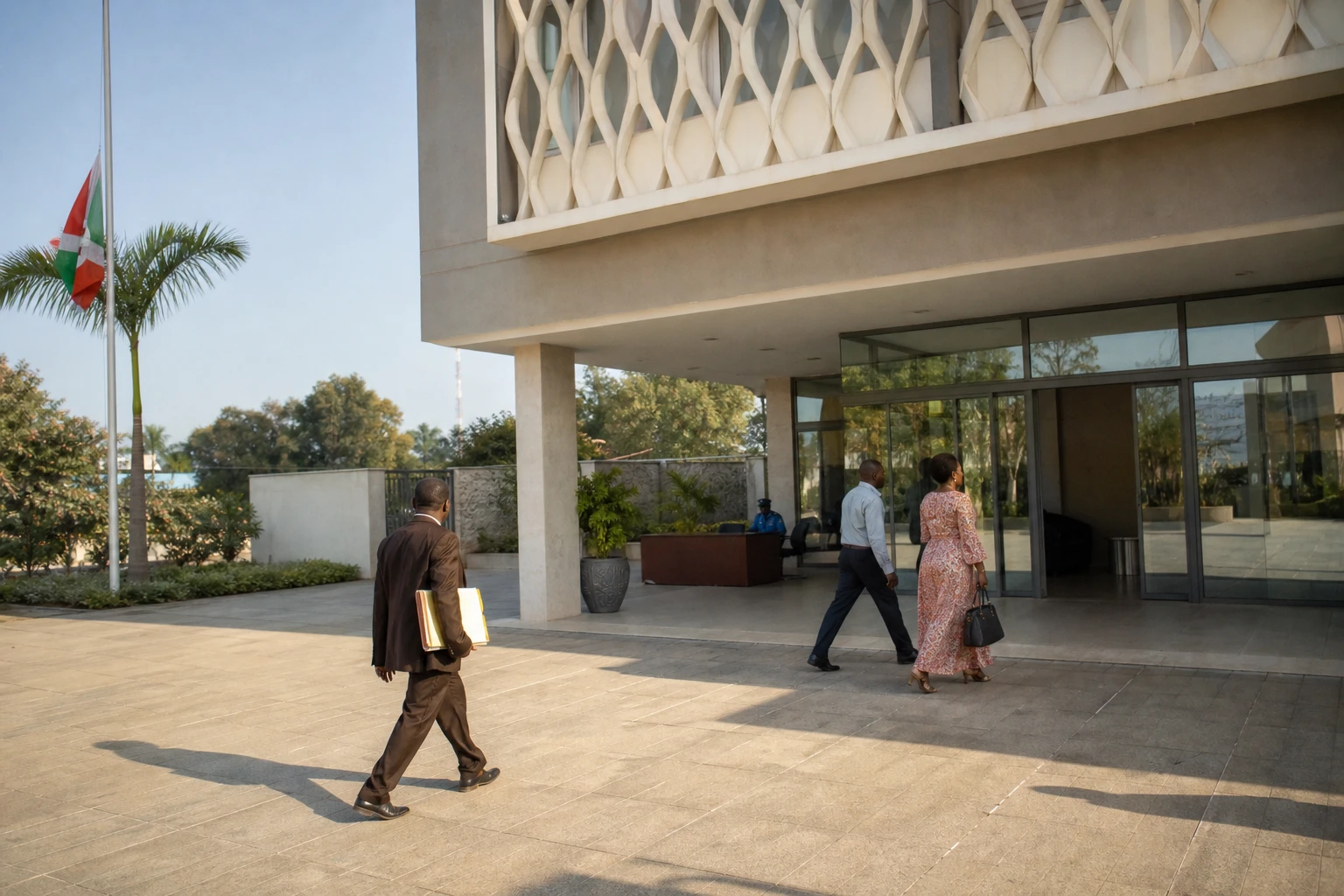
The war in Gaza is no longer being fought only on the military front. It is also entering the most delicate phase of a conflict: what comes after a ceasefire, when security, administration and reconstruction must be ensured without reopening the front lines. Against this backdrop, Burundi is considering joining the International Stabilisation Force envisaged for the Palestinian enclave. Burundian military officers recently discussed the option in Israel, according to officials cited by the Associated Press and reported by other international media.
The issue has a direct bearing on East Africa. Burundi, whose capital is Gitega, is a member of the East African Community, or EAC, a regional organisation bringing together eight partner states and seeking to deepen economic and political integration in the region. Neighbouring Uganda has already made a public move, while Morocco has also announced a prospective contribution.
What the international plan for Gaza entails
The International Stabilisation Force is part of the plan presented by Washington for post-war Gaza. The framework was endorsed by UN Security Council Resolution 2803, which authorises the establishment of a temporary force with a stabilisation mandate. UN documents specify that the force is to accompany a gradual transfer of responsibilities to a transitional Palestinian administration.
Its role is not that of an occupying army. The mandate outlined by the UN and in implementation documents instead provides for separating Israeli forces from areas under the control of the transitional Palestinian committee, monitoring the ceasefire, training a Palestinian police force and facilitating the delivery of humanitarian aid. A report by the Institute for International Peace also warns that a poorly sequenced deployment could create a security vacuum and undermine the entire process.
The force’s precise composition remains in flux. Uganda has already secured parliamentary approval to send troops, according to the AP. Morocco has confirmed its intention to participate. Kosovo, Kazakhstan and Albania are also among the countries announced. Burundi, for its part, has yet to make a definitive commitment.
Bujumbura weighs a diplomatic and military option
For Bujumbura, the interest is both political and diplomatic. Burundi is seeking to establish a presence in high-level multilateral affairs. Taking part in an international force under a UN or quasi-UN framework would put it in a visible coalition beyond the African theatre alone. In recent years, the country has also maintained a diplomatic channel with Israel, including through the presentation of its ambassador’s credentials in Tel Aviv in 2024 and official exchanges between the two capitals.
This development should not, however, be seen as a simple prestige gesture. For a state such as Burundi, sending troops abroad requires careful consideration of the cost, available resources, chain of command and legal framework. Domestic acceptance must also be taken into account. A deployment far from East Africa does not have the same implications as a regional peacekeeping operation. This mission would be exposed to a politically combustible war, in which every move is closely watched.
Burundi is not acting in isolation. As an EAC member, it operates in a region where Uganda plays a major military role and where capitals are closely monitoring international security issues. The potential participation of Burundian troops in Gaza would also say something about a continent that no longer wants to be a spectator to arrangements designed without it.
What this could mean for the region and Africa
If Burundi confirms its participation, the symbolic impact would be significant. An African presence in the future stabilisation force would give a more pluralistic character to a mechanism largely shaped around US diplomacy and Israeli security. It would also be a reminder that several African states are seeking to influence peace decisions, even on issues far from their immediate neighbourhood.
But the stakes are fragile. In Gaza, the central issue remains sequencing: ceasefire, Israeli military withdrawal, transitional governance, Palestinian police and reconstruction. The UN stresses that coherence between these steps will determine the force’s credibility. Without a clear mandate, funding and solid political coordination, the mission could become yet another unfulfilled promise in a conflict already awash with incomplete announcements.
For Africa, the issue extends beyond Gaza. It concerns the role of African states in international security: troop contributors, negotiating partners or mere bystanders. Morocco and Uganda have already led the way; Burundi is now considering the option. The issue will show whether African capitals also intend to exert influence in stabilisation frameworks beyond the continent, provided the mandate is clear and the mission does not further muddy an already explosive situation.
At this stage, nothing has been decided. But the discussions held by Burundian officers show that Gitega wants to be counted among the capitals closely following the issue, in an East African region where security choices are now viewed on a global scale.