Algeria
 Egypt
 Libya
 Morocco
 Sudan
 Tunisia
 Benin
 Burkina Faso
 Cabo Verde
 Côte d'Ivoire
 Ghana
 Guinea
 Guinea-Bissau
 Liberia
 Mali
 Mauritania
 Niger
 Nigeria
 Senegal
 Sierra Leone
 The Gambia
 Togo
 Cameroon
 Central African Republic
 Chad
 DR Congo
 Equatorial Guinea
 Gabon
 Republic of the Congo
 São Tomé and Príncipe
 Comoros
 Djibouti
 Eritrea
 Ethiopia
 Kenya
 Madagascar
 Malawi
 Mauritius
 Mozambique
 Rwanda
 Seychelles
 Somalia
 South Sudan
 Tanzania
 Uganda
 Angola
 Botswana
 Eswatini
 Lesotho
 Namibia
 South Africa
 Zambia
 Zimbabwe
When the budget stays at the centre of the action
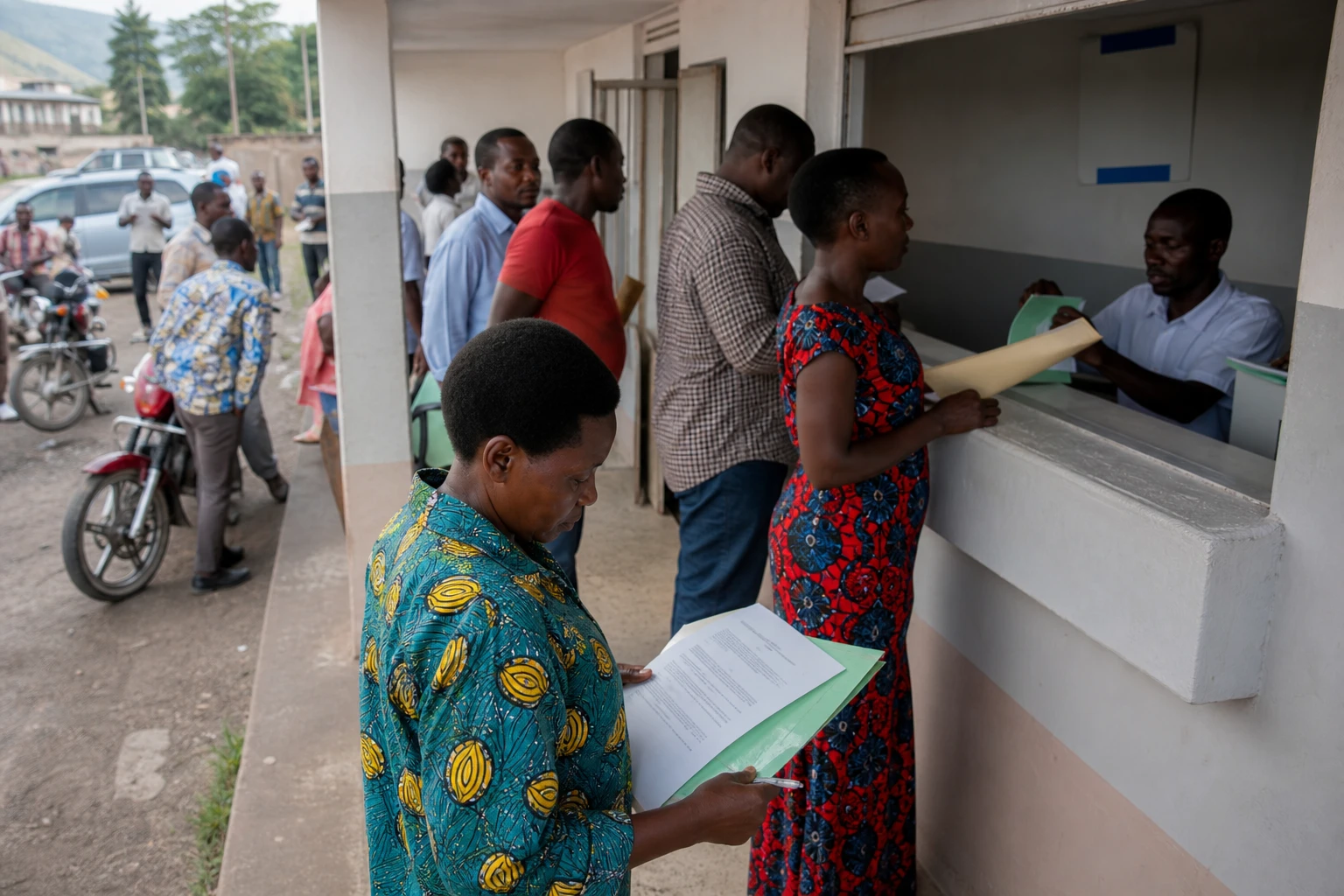
In Cankuzo, in eastern Burundi, budget discussions are about more than technicalities. They touch on a very practical question: who decides, who executes and who oversees public money, right down to the communes? In a country where expectations around basic services are high, the move from the national budget to the local level is becoming a test of the administration’s credibility.
This phase also comes at a broader political moment. Burundi, whose capital is Gitega, is continuing to implement its Vision 2040-2060 and a programme-based budget presented as more results-oriented. In this context, financial decentralisation is no longer a slogan: it has become central to public management, with provinces and communes taking centre stage.
A reform shifting the centre of gravity
On 4 August 2026, the Burundian government launched provincial workshops in Cankuzo on the execution and reporting of the 2026/2027 general state budget. The aim is clear: to improve the flow of budget information from the provinces, harmonise practices and strengthen monitoring of public spending at local level.
The most structural change concerns the National Communal Investment Fund, or FONIC, the public body that finances investment by communes. The fund is now expected to act as the principal authorising officer for investment appropriations allocated to communes. In other words, it is no longer simply a funding window, but a means of steering and promoting transparency in the local spending chain.
Buhumuza province is expected, according to the information provided, to receive more than 127 billion Burundian francs, or about $42.46 million, allocated between the provincial and communal levels. This is a significant sum at local level. It shows that Burundi’s budget debate is now taking place in the provinces too, and not only in Bujumbura or central government offices.
What the 2026/2027 budget figures show
The national framework gives a sense of what is at stake. For the 2026/2027 financial year, the general state budget was set at 7,020.6 billion Burundian francs. The authorities presented it as a budget geared towards structural investment, modernising the administration and accelerating economic reforms.
The budget document is also being assessed in terms of sustainability. The proposal refers to a controlled deficit and a focus on more efficient spending. The International Monetary Fund, for its part, estimates in its 2026 review that Burundi’s draft 2026/27 budget projects an overall deficit of about 2% of GDP, below its own projection of 3.4% of GDP. This confirms that the issue is not simply spending more, but spending better and collecting revenue more rigorously.
In this context, training provincial officials in budget execution and reporting takes on particular importance. Financial decentralisation only has value if budget lines are monitored, justified and linked to visible results: local roads, administrative buildings, public facilities and service maintenance. Without that, the budget remains a central document, disconnected from real needs.
Stronger communes, but also more exposed
Strengthening FONIC and giving provinces greater responsibility could change daily life for Burundians, especially outside the main urban centres. For communes, the challenge is twofold: to secure more resources for investment, while also mastering management rules that are often more demanding than the old centralised practices. This calls for stronger public accountants, commitment controllers and reporting mechanisms.
For communities, the potential benefits are immediate. Better-decentralised budget management can speed up local projects and shorten the time between a decision and its implementation. But it can also highlight disparities between provinces, depending on the ability of local administrations to prepare projects, oversee procurement and account for spending. The reform is therefore not just redistributing money: it is redistributing responsibilities.
The choice of Cankuzo, in Buhumuza province, is no accident. In recent months, the authorities have already held numerous meetings there with local officials on planning, monitoring and evaluation, and the national vision. This through-line shows that the government wants provinces to be places where policies are implemented, not merely administrative relays.
Implications beyond Burundi
In the Great Lakes region and the East African Community, Burundi is moving forward like many states in the area: facing intense pressure on public finances, high expectations for infrastructure and the need to bring the state closer to its citizens. The budget reform under way therefore also speaks to the region: it illustrates the search for a state that is more transparent, more localised and more accountable.
What happens next will depend on implementation, quarter by quarter. That is where the system’s credibility will be tested: in the provinces’ ability to produce reliable reports, the finance ministry’s ability to make decisions quickly, and FONIC’s ability to fund visible projects without adding to red tape. The coming months will show whether Burundi’s budget decentralisation becomes a tool for transformation or merely an administrative reshuffle.