Algeria
 Egypt
 Libya
 Morocco
 Sudan
 Tunisia
 Benin
 Cabo Verde
 Côte d'Ivoire
 Ghana
 Guinea
 Guinea-Bissau
 Liberia
 Mali
 Mauritania
 Niger
 Nigeria
 Senegal
 Sierra Leone
 The Gambia
 Togo
 Cameroon
 Central African Republic
 Chad
 DR Congo
 Equatorial Guinea
 Gabon
 Republic of the Congo
 São Tomé and Príncipe
 Burundi
 Comoros
 Djibouti
 Eritrea
 Ethiopia
 Kenya
 Madagascar
 Malawi
 Mauritius
 Mozambique
 Rwanda
 Seychelles
 Somalia
 South Sudan
 Tanzania
 Uganda
 Angola
 Botswana
 Eswatini
 Lesotho
 Namibia
 South Africa
 Zambia
 Zimbabwe
In Ouagadougou, mining is no longer just about extraction and exports. It is also about Burkina Faso’s ability to maintain its equipment, train its technicians and ensure that value circulates within the national economy.
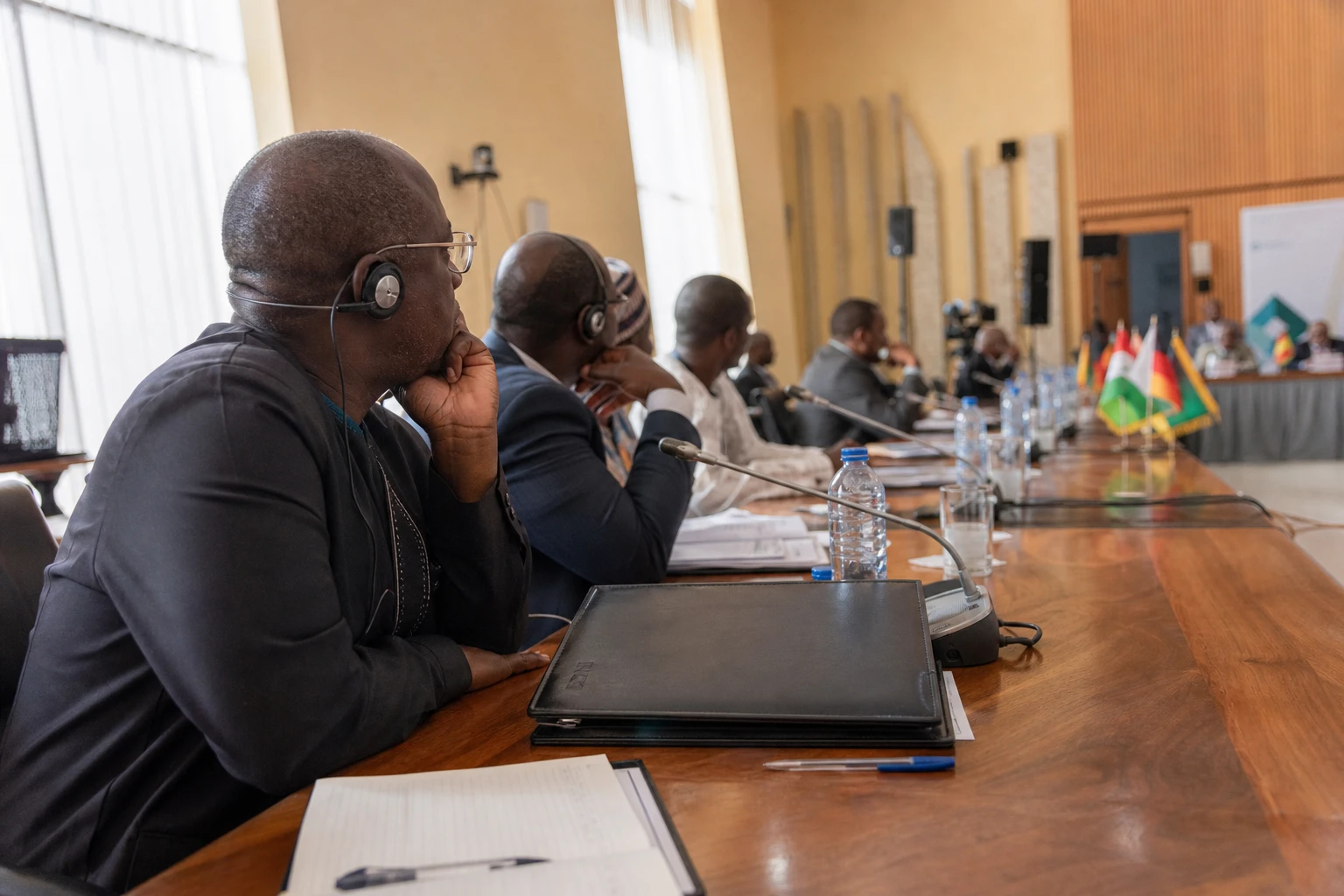
This shift was at the heart of discussions at the 8th West African Mining Activities Week (SAMAO), held from 14 to 19 September 2026 at the Ouagadougou International Handicrafts Fair site. The event was held alongside the first Energy, Mines and Hydrocarbons Week of the Alliance of Sahel States (SEMH-AES), bringing together Burkina Faso, Mali and Niger around several industrial issues.
A mining sector that has become central to Burkina Faso’s economy
The chosen theme, focused on the governance of extractive resources and opportunities for African states, comes amid heavy economic dependence on gold. According to data in the 2024 report by the Extractive Industries Transparency Initiative (EITI), the extractive sector accounted for 15.1% of Burkina Faso’s gross domestic product and 69.6% of exports in 2024.
Payments declared by extractive companies exceeded CFA francs 635 billion. The direct contribution to the state budget amounted to about CFA francs 612 billion, according to data published by EITI-Burkina Faso and reported by several national media outlets. EITI data on Burkina Faso’s extractive sector confirm the weight of this activity in public finances and foreign trade.
These figures give concrete significance to the debate on local content. Value creation depends not only on output volumes, but also on jobs, technical services, procurement from domestic companies and the ability to reduce delays caused by imports.
From equipment sales to industrial services
A partner of SAMAO 2026, Neemba Burkina presented an offering that goes beyond machinery distribution. The group is highlighting maintenance, spare parts supply, component refurbishment, training and financing solutions for mining operators.
“In Burkina Faso, as in the other AES countries, equipment is at the heart of mining production. The challenge is to keep it operational and ensure business continuity,” said Emir Sanoh, country director of Neemba Burkina, in a presentation on the company’s activities.
This approach addresses a constraint well known to operators. A breakdown in heavy equipment can bring part of a site to a standstill, disrupt production and increase logistics costs. When components have to be shipped from abroad, delays grow even longer.
Located in Gampéla, near Ouagadougou, Neemba Burkina’s component refurbishment centre is one of the main tools in this strategy. The company says the facility covers 2,100 square metres and can handle up to 400 major components a year, with partial recovery capabilities. Neemba’s technical presentation of the refurbishment centre sets out these capabilities.
According to Neemba, two dump trucks for mining operations were rebuilt in Burkina Faso in 2026. The company says this type of work helps limit international shipments, reduce downtime and extend equipment life.
Refurbishment does not always replace the purchase of new equipment. It does, however, offer an intermediate solution for companies facing high investment costs, cash-flow constraints or uncertain supply times.
Local skills as a lever for industrial sovereignty
Localising services also depends on human resources. Neemba Burkina says it employs 502 people, 497 of them Burkinabè. The company also says it devotes more than 10,000 hours a year to training its staff.
Since 2023, nearly 70 young people are said to have been recruited. About 50 scholarships are also said to have been awarded since 2022 to young women pursuing technical courses. These figures come from the company’s communications and should be viewed as such, in the absence of an independent public audit.
The challenge, however, extends beyond the workforce of a single group. Mines need mechanics, electricians, hydraulic technicians, operators, logisticians and industrial maintenance specialists. These professions can support a network of Burkinabè subcontractors, provided training meets site requirements and local companies can access contracts.
Neemba’s stated presence in Ouagadougou and Bobo-Dioulasso, as well as its planned establishment in Banfora, illustrates this proximity-based approach. Demand is not concentrated solely in the capital. It also concerns mining areas, logistics corridors and industrial hubs linking production sites to service centres.
A regional network spanning Burkina Faso, Mali and Niger
The regional dimension took on particular importance during SAMAO 2026. Holding it alongside SEMH-AES reflects Burkina Faso, Mali and Niger’s desire to bring their policies closer together on mining, energy and hydrocarbons.
This co-operation is taking place amid regional realignment. The three countries have established the Alliance of Sahel States, while continuing to face shared challenges: limited infrastructure, transport costs, access to finance, training needs and securing supply chains.
Neemba says it operates in all three countries and can draw on the skills available in each. Gampéla’s centre would therefore also handle needs from Mali. If this arrangement operates at sufficient scale, it could reduce duplication and encourage specialisation among technical centres.
The success of such a model will nevertheless depend on clear rules. Standards, warranty responsibilities, the movement of parts and payment arrangements between companies operating under different national frameworks will all need to be defined.
Financing remains another hurdle
Services are not enough if operators cannot finance equipment. In mining and quarrying, purchasing heavy machinery requires substantial capital. Companies must also absorb the costs of maintenance, fuel, parts and skilled staff.
Neemba says it offers several options: new equipment, used machinery, rental and financing solutions with partners established in Burkina Faso. This range can address the different circumstances of large mining groups, subcontractors and medium-sized operators.
The central issue remains access. Large companies generally have stronger guarantees and borrowing capacity. Local companies, by contrast, may find it harder to obtain credit, even when they have the necessary technical expertise.
Progress to be measured beyond announcements
The debate in Ouagadougou points to a broader ambition: to turn Burkina Faso’s mining weight into lasting industrial capacity. This will require verifiable data on jobs, local procurement, training and the share of contracts awarded to Burkinabè companies.
SAMAO 2026 placed this issue at the centre of a regional agenda bringing together mining, energy and hydrocarbons. The next step will be to see what concrete decisions follow the meetings: investment in workshops, partnerships with technical schools, access to finance for subcontractors and the effective sharing of capacity between Burkina Faso, Mali and Niger.
For Burkina Faso, the challenge is clear. The value created by extractive resources is measured not only when ore leaves the ground. It is also measured in the workshops of Gampéla, the skills acquired in Ouagadougou, the jobs created in Bobo-Dioulasso and the services able to reach across the region.