Algeria
 Egypt
 Libya
 Morocco
 Sudan
 Tunisia
 Benin
 Cabo Verde
 Côte d'Ivoire
 Ghana
 Guinea
 Guinea-Bissau
 Liberia
 Mali
 Mauritania
 Niger
 Nigeria
 Senegal
 Sierra Leone
 The Gambia
 Togo
 Cameroon
 Central African Republic
 Chad
 DR Congo
 Equatorial Guinea
 Gabon
 Republic of the Congo
 São Tomé and Príncipe
 Burundi
 Comoros
 Djibouti
 Eritrea
 Ethiopia
 Kenya
 Madagascar
 Malawi
 Mauritius
 Mozambique
 Rwanda
 Seychelles
 Somalia
 South Sudan
 Tanzania
 Uganda
 Angola
 Botswana
 Eswatini
 Lesotho
 Namibia
 South Africa
 Zambia
 Zimbabwe
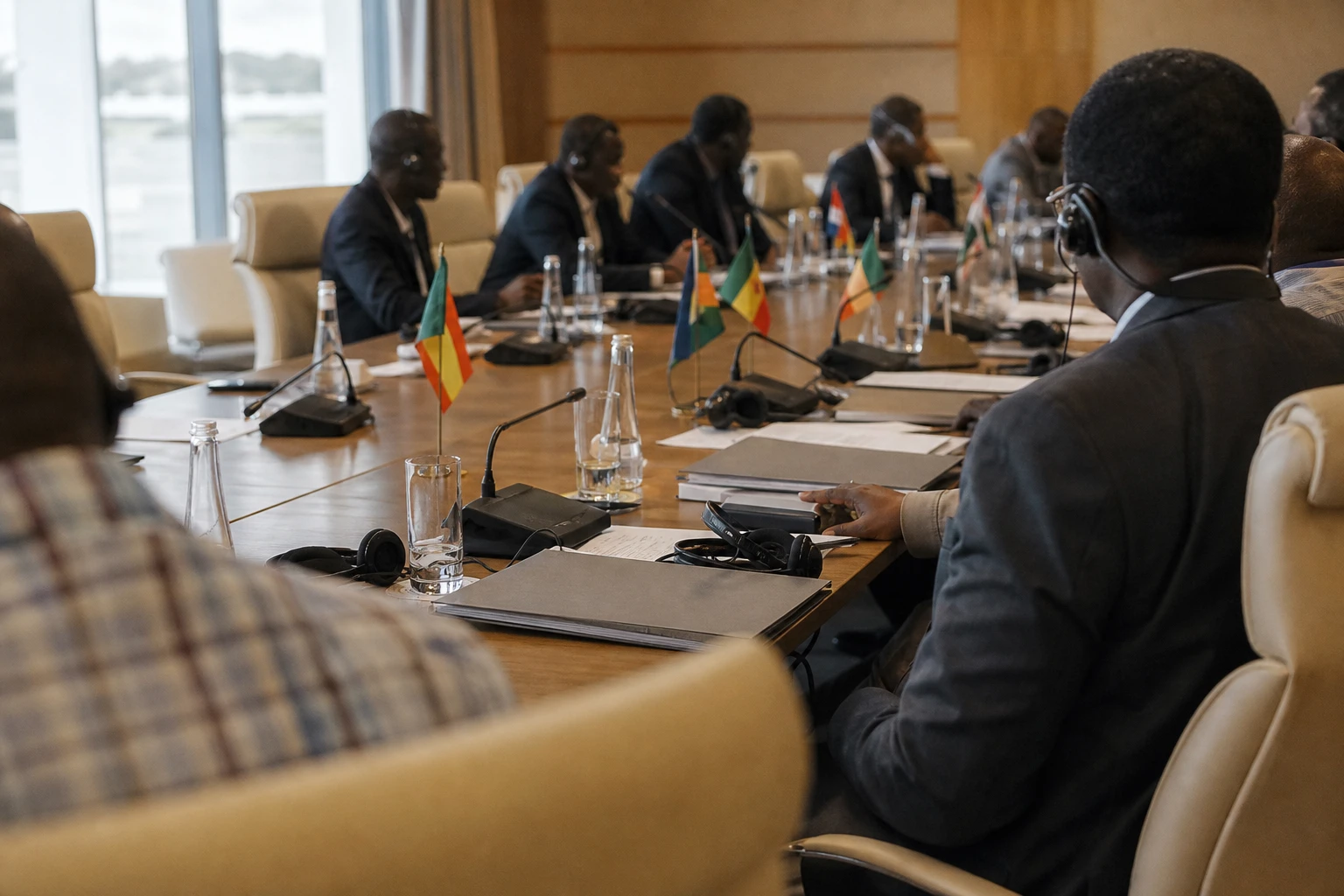
In Burkina Faso, schools are increasingly being asked to answer a simple question: should they train graduates, or builders? In Ouagadougou, the debate is no longer just about grades, but about the education system’s ability to supply workshops, laboratories, construction sites and factories. It was in this context that the 2026 School Excellence Day provided a platform for a clear call in favour of science, technology and technical courses.
The shift comes as the country seeks to link education, employment and local production more directly. In recent months, Burkina Faso has launched several initiatives in vocational training, the retraining of university graduates and the creation of new technical learning frameworks. The government has also set a more ambitious course for technical and vocational education, with plans to expand the sector’s role across the education system.
An awards ceremony becomes a platform for reform
On Friday 4 September 2026, the School Excellence Day in Ouagadougou honoured 188 award-winners. The breakdown announced by the People’s Legislative Assembly gives a sense of the event’s scale: 20 primary school pupils, 138 secondary school pupils, 13 primary school teachers, 13 secondary school teachers, four primary school educational supervisors and one pre-school supervisor. Two “super-teachers” were also recognised, each receiving an F3 villa and a cheque for 5 million CFA francs.
But the ceremony’s most political moment came elsewhere. The head of state called for a more decisive shift towards scientific and technical disciplines. He highlighted an imbalance that he considers incompatible with national ambitions: around 65,000 pupils passing the baccalaureate, more than half of them from arts streams, compared with 571 passing the science-based C stream and 38 the E stream. These figures were reported by several Burkinabè media outlets and in the country’s official communications.
The most concrete announcement concerned classrooms. A-stream second-year classes are to be converted into C-stream classes where conditions allow. The Burkinabè authorities also plan to recruit more teachers in mathematics, physical sciences, technology and related subjects. These measures will be accompanied by awareness-raising from primary and middle school, as well as short technical courses for holders of arts degrees.
What the debate reveals about education in Burkina Faso
The message goes beyond the school curriculum. It says something about the development model sought in Ouagadougou. In official speeches, education is no longer just a route to social mobility. It is becoming a tool of economic sovereignty. The reasoning is clear: without technicians, engineers, researchers and teachers able to open up these paths, the country remains dependent on imported expertise and processed goods.
The government therefore appears to want to address a longstanding imbalance between academic prestige and productive needs. Burkina Faso does not just lack graduates; it also lacks people with the skills needed for industrial transformation, maintenance, digital production and agricultural value chains. The announced reform responds to this tension. It aims to bring schools closer to the realities of the labour market, without waiting until the end of university studies to change students’ academic paths.
The challenge is well known. A change in course streams will have an impact only if it is backed by resources. Enough teachers must be trained, schools equipped with laboratories and workshops, textbooks adapted, and continuity ensured from primary to higher education. The Burkinabè authorities have already introduced other measures in the same direction, including the retraining of university graduates for jobs more directly useful to the national economy and the creation of new vocational high schools.
The timetable, budget and exact number of classes affected have not yet been detailed. This matters because the planned shift could quickly run up against the reality of pupil numbers, particularly in rural areas or already struggling schools. In these places, the reform will depend less on political will than on the availability of teachers and equipment, as well as administrative oversight.
A regional perspective beyond Burkina Faso
The debate in Burkina Faso resonates across West Africa. The country has historically been part of the ECOWAS bloc, although it officially left the organisation with Mali and Niger on 29 January 2025. This departure has reshaped the country’s relationship with its regional environment, without erasing its economic, human and educational interdependence with its neighbours.
In this context, educational choices take on broader significance. The economies of the Sahel and West Africa need skilled workers, technicians, trainers and engineers capable of supporting agriculture, energy, digital technology, public works and local processing. The choice made in Ouagadougou is therefore part of a broader regional trend: making vocational training a tool for resilience, rather than simply a stepping stone to a qualification.
The continental significance is the same. In several African countries, the debate is no longer just about access to education, but about the economic value of different pathways. With its emphasis on science and technical education, Burkina Faso is part of a movement seeking to bring schools closer to industrialisation, food sovereignty and local processing. The next stage will show whether this ambition remains a political signal or becomes a lasting reform. Teacher recruitment, the opening of new courses and the installation of equipment will be the first practical tests.