Algeria
 Egypt
 Libya
 Morocco
 Sudan
 Tunisia
 Benin
 Cabo Verde
 Côte d'Ivoire
 Ghana
 Guinea
 Guinea-Bissau
 Liberia
 Mali
 Mauritania
 Niger
 Nigeria
 Senegal
 Sierra Leone
 The Gambia
 Togo
 Cameroon
 Central African Republic
 Chad
 DR Congo
 Equatorial Guinea
 Gabon
 Republic of the Congo
 São Tomé and Príncipe
 Burundi
 Comoros
 Djibouti
 Eritrea
 Ethiopia
 Kenya
 Madagascar
 Malawi
 Mauritius
 Mozambique
 Rwanda
 Seychelles
 Somalia
 South Sudan
 Tanzania
 Uganda
 Angola
 Botswana
 Eswatini
 Lesotho
 Namibia
 South Africa
 Zambia
 Zimbabwe
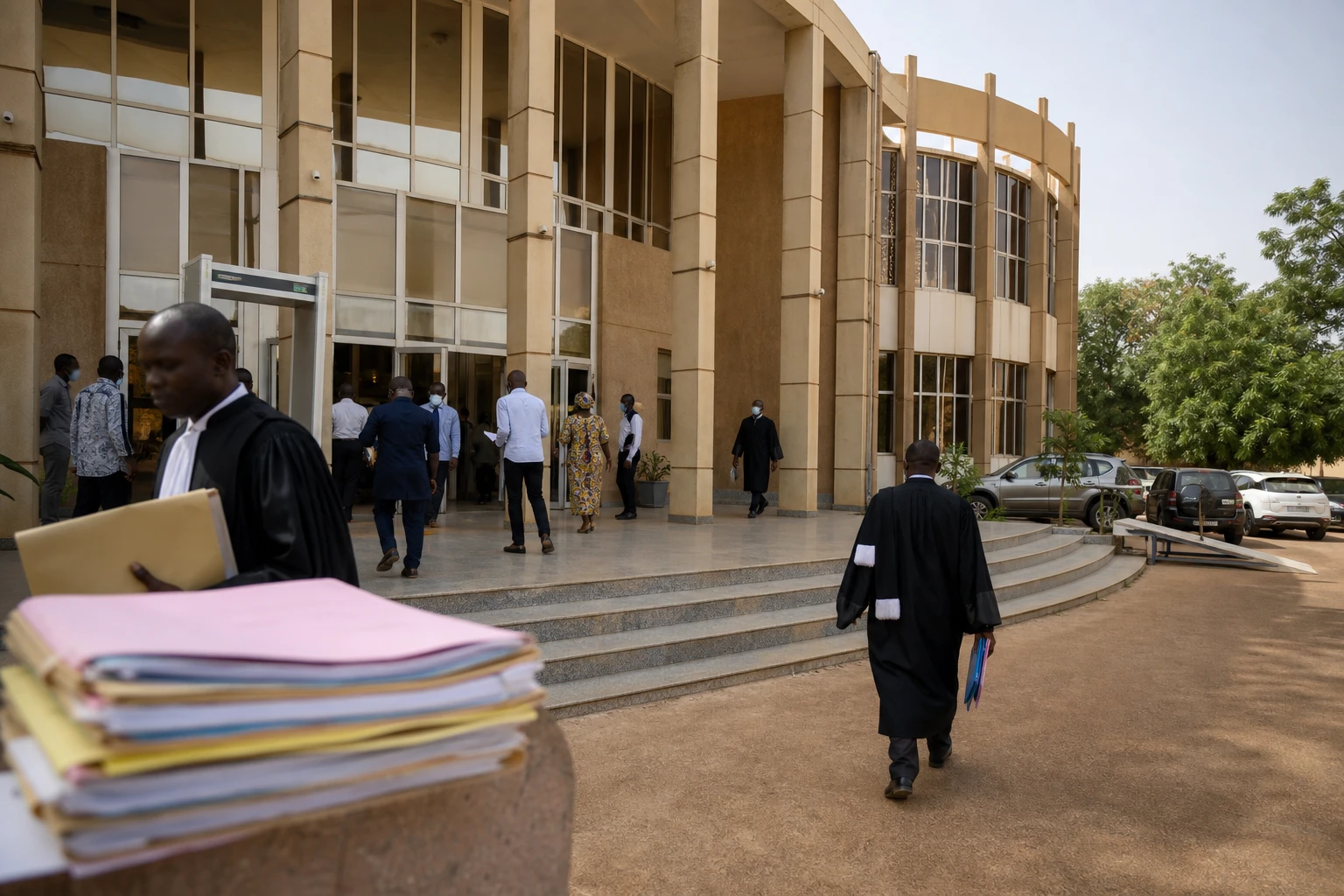
A case that goes beyond a single legal file
In Ouagadougou, an old case is a reminder of a simple truth: some cases do not grow old; they take root in the public memory. The murder of Norbert Zongo, a Burkinabè investigative journalist, remains one of the most potent symbols of the demand for justice in Burkina Faso.
This is not just a case about a crime committed on 13 December 1998 in Sapouy, south of Ouagadougou. It also touches on the place of journalism, the credibility of the judicial system and how a state deals with alleged political crimes when those implicated belong to the former power elite.
The latest procedural development comes as the country is still seeking to close several historic cases. Burkina Faso’s judiciary reopened this case after the dismissal of the charges in July 2006, notably following a ruling by the African Court on Human and Peoples’ Rights which identified shortcomings in the investigation. That African ruling remains a reference point in the case, as it helped maintain pressure for the investigation to resume.
What Burkina Faso’s judiciary is now saying
According to information released by the public prosecutor’s office at the Ouagadougou Court of Appeal, three people are due to appear before the court, including François Compaoré, younger brother of former president Blaise Compaoré. They are charged with murder, aggravated wilful destruction of property and complicity in murder. The legal objective is clear: to bring a case that has long been at a standstill into the trial phase.
François Compaoré’s name remains central. He has lived in Abidjan, Côte d’Ivoire, since 2024, and the question of whether he will be physically present in Burkina Faso continues to weigh on the outcome of the case. The defence of one of the accused lodged an appeal to the Supreme Court on 31 July against the ruling issued by the investigating chamber. This move prolongs a longstanding procedural battle, in which every stage of the legal process is contested, mechanically delaying a hearing on the merits.
The core of the case bears recalling. Norbert Zongo was investigating the death of David Ouédraogo, a driver for François Compaoré. On 13 December 1998, the journalist and three companions were found burnt to death in their vehicle. Since then, the case has gone through dismissal of charges, reopened investigations, warrants, extradition disputes and successive appeals. In other words, it has followed the rhythm of a judicial system that has itself become a battleground.
The extradition case has seen several twists outside Burkina Faso. On 30 July 2021, France’s Council of State approved the extradition of François Compaoré to Ouagadougou. But the process was subsequently weakened by a ruling of the European Court of Human Rights, issued on 7 September 2023, which found that there would be a violation of Article 3 of the Convention in the absence of a fresh examination of the diplomatic assurances given by Burkina Faso. These developments have reinforced the impression of a case trapped in legal back-and-forth between Ouagadougou and Europe.
Why this development matters for Burkina Faso
For the people of Burkina Faso, the issue goes beyond the criminal liability of one man. It concerns trust in the judiciary, the state’s ability to deal with a crime committed against a journalist and, more broadly, the fight against impunity. In a country where recent political transitions have significantly reshaped the executive, every major sensitive case also becomes a test of institutional continuity.
Burkina Faso is also at the heart of West Africa, where ECOWAS remains the main regional organisation, even though relations between Ouagadougou and the institution are now strained. In this context, a case such as that of Norbert Zongo serves as a regional marker. It is a reminder that press freedom, the protection of sensitive investigations and the independence of judges are not abstract issues. They concern the strength of the rule of law across the Sahel and West Africa.
The case also carries national symbolic weight. Since Norbert Zongo’s murder, generations of journalists, lawyers, human rights defenders and academics have kept its memory alive. Norbert-Zongo University in Koudougou, and commemorative initiatives around the journalist, have helped establish his name in Burkina Faso’s public life. This is no small matter. In a country where political reference points have shifted considerably since the fall of Blaise Compaoré in 2014, Zongo’s name has become a civic touchstone.
The judiciary, for its part, advances in fits and starts. The prosecutor’s office says it wants to reach a swift resolution, but proceedings remain suspended pending appeals and the ability of the parties to pursue their arguments to the end. That is where the difference between an announcement and a trial lies. An announcement offers reassurance. A trial, however, still has to open, take place and produce a ruling.
A lasting continental significance
Beyond Burkina Faso, the case continues to draw interest across the continent because it highlights three major African issues: the protection of investigative journalists, the judicial handling of alleged political crimes and cross-border extradition proceedings. In several countries, sensitive cases face the same obstacles: delays, suspects on the run, jurisdictional disputes and difficulties in securing recognition of fair-trial guarantees.
The Norbert Zongo case also underscores the importance of African courts. The ruling of the African Court on Human and Peoples’ Rights had a concrete effect on the case’s progress. It showed that a national legal case can be revived by a continental body when an investigation stalls. This is an important signal for African litigants, but also for states, which can no longer treat certain major cases as purely domestic matters with no regional significance.
What happens next will depend on whether the hearing actually takes place, the effect of the appeal to the Supreme Court and the ability of the judicial authorities to further reduce delays. After more than twenty-five years of waiting, every hearing date matters. Every procedural step matters. And in this case, the question is no longer simply whether a trial will take place, but at what institutional cost Burkina Faso will succeed in bringing to trial a case that has become, in itself, a test of memory, justice and judicial sovereignty.