Algeria
 Egypt
 Libya
 Morocco
 Sudan
 Tunisia
 Benin
 Cabo Verde
 Côte d'Ivoire
 Ghana
 Guinea
 Guinea-Bissau
 Liberia
 Mali
 Mauritania
 Niger
 Nigeria
 Senegal
 Sierra Leone
 The Gambia
 Togo
 Cameroon
 Central African Republic
 Chad
 DR Congo
 Equatorial Guinea
 Gabon
 Republic of the Congo
 São Tomé and Príncipe
 Burundi
 Comoros
 Djibouti
 Eritrea
 Ethiopia
 Kenya
 Madagascar
 Malawi
 Mauritius
 Mozambique
 Rwanda
 Seychelles
 Somalia
 South Sudan
 Tanzania
 Uganda
 Angola
 Botswana
 Eswatini
 Lesotho
 Namibia
 South Africa
 Zambia
 Zimbabwe
When artificial intelligence moves from the lab into the law
In Ouagadougou, artificial intelligence is no longer confined to start-up promises or technical demonstrations. It is beginning to reach another level of power: where rules, budgets and public policy decisions are made. A part of Burkina Faso’s digital sovereignty is now at stake there.
The country is moving forward amid a broader transformation of its administration and economy. The RELANCE 2026-2030 Plan has already put public sector reform and strategic investment at the heart of the government’s roadmap. At the same time, the West African Economic and Monetary Union (UEMOA) is urging its member states to strengthen digital infrastructure, cybersecurity and local control of emerging technologies.
In Ouagadougou, MPs prepare to legislate on a fast-moving technology
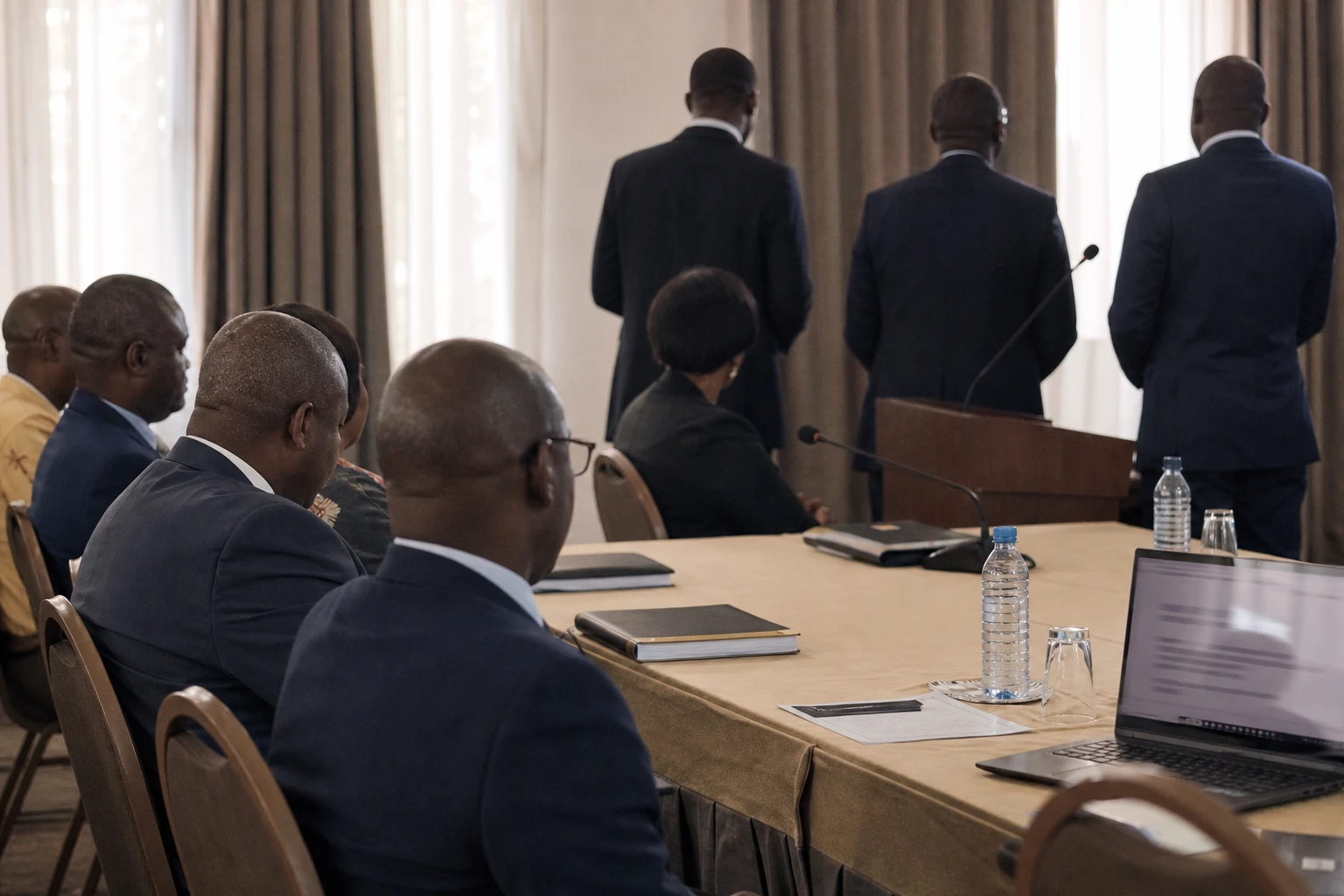
On Wednesday 15 July 2026, the Permanent Secretariat for Innovation and Monitoring of Emerging Digital Technologies, attached to the Ministry of Digital Transition, brought together around 30 MPs from the People’s Legislative Assembly in Ouagadougou for a session on artificial intelligence. The aim is straightforward: to give elected representatives enough guidance to understand the uses, risks and legal implications of the technology.
The training covered the basics of AI, its fields of application, digital sovereignty, data control and the protection of cyberspace. In other words, it addressed practical issues that go beyond the circle of specialists. When a state seeks to regulate tools capable of analysing data, producing content or influencing decisions, it must first understand what it allows, what it protects and what it prohibits.
This effort to build parliamentary expertise is not an isolated gesture. It is part of a process that began several months earlier. On 17 June 2026, Burkina Faso approved its national AI roadmap for 2026-2030. The document aims to set out a national vision, guide public and private action, and build an ecosystem considered responsible, inclusive and competitive.
The process, described as inclusive, brought together government bodies, the private sector, universities, research centres, civil society, the diaspora, and technical and financial partners. The rationale is clear: AI cannot be treated as a purely technological subject. It must also become a matter of governance, standards and collective choices.
A national strategy seeking a foothold in public services
Since the roadmap was approved, initiatives have followed in quick succession. In April 2026, the SPIVTEN had already trained chiefs of staff in the public administration. In May, the Prime Minister’s Office held a session on the opportunities and risks of AI for the administration. In July, another training session focused on the ethical and responsible use of these tools. The message is consistent: before deploying AI, those steering the state must be trained.
Burkina Faso’s roadmap sets out several practical priorities. It aims to strengthen the institutional foundations of AI governance, develop digital infrastructure and services, secure and make better use of data, and build national expertise in data science and emerging technologies. It also emphasises ethics, security and inclusion.
In more detail, the authorities cite potential applications in health, education, agriculture, water and energy. Tools could support remote medical diagnosis, guide producers using weather forecasts, or help detect water leaks and facilitate exchanges with SONABEL and ONEA, the national electricity and water companies. This choice is significant. It shows that AI is seen as a lever for public services, not merely as a market.
For Burkina Faso’s institutions, the stakes are also fiscal and sovereign. If data remain scattered, infrastructure is lacking or local expertise falls short, the most useful solutions risk being imported, poorly adapted or too costly. Conversely, a strategy built around national needs could reduce some administrative workloads, improve forward planning and lessen technological dependence. This interpretation follows from the priorities set out in the roadmap, which emphasises a gradual approach and control.
What this shift says about Burkina Faso and its regional environment
Burkina Faso is not working alone. In Ouagadougou, the fourth edition of SIPEN-UEMOA, held on 15 July 2026, put AI, FinTech and inclusive finance at the centre of regional discussions. Participants called for digital sovereignty, internet governance, data centres and cybersecurity to be strengthened. Burkina Faso’s minister responsible for digital affairs also stressed the role of the private sector and investment in infrastructure.
This context gives the training of Burkina Faso’s MPs a regional dimension. Across the UEMOA area, states are seeking to avoid fragmented rules and infrastructure. At the same time, each wants to retain control over its data and technological choices. Burkina Faso is therefore trying to strike a delicate balance: opening up to innovation without surrendering its capacity to make decisions.
The issue extends beyond central government. In large cities, AI could speed up some services and support the digital ecosystem. In rural areas, it will have an impact only if infrastructure keeps pace: connectivity, data quality, access to electricity, staff training and relevant applications. That is where the difference between a strategy on paper and a useful one will emerge. This follows directly from the roadmap’s objectives and target sectors.
At continental level, the signal is also noteworthy. Several African states are now seeking to regulate AI before its use becomes widespread without clear rules. Burkina Faso is part of this organised catch-up, with a strong emphasis on sovereignty, training and adapting to local needs. What happens next will depend on translating the roadmap into legislation, budgets and, ultimately, services that Burkinabè people can actually use.