Algeria
 Egypt
 Libya
 Morocco
 Sudan
 Tunisia
 Benin
 Burkina Faso
 Cabo Verde
 Côte d'Ivoire
 Ghana
 Guinea
 Guinea-Bissau
 Liberia
 Mali
 Mauritania
 Niger
 Nigeria
 Senegal
 Sierra Leone
 The Gambia
 Togo
 Cameroon
 Central African Republic
 Chad
 DR Congo
 Equatorial Guinea
 Gabon
 Republic of the Congo
 São Tomé and Príncipe
 Burundi
 Comoros
 Djibouti
 Eritrea
 Ethiopia
 Madagascar
 Malawi
 Mauritius
 Mozambique
 Rwanda
 Seychelles
 Somalia
 South Sudan
 Tanzania
 Uganda
 Angola
 Botswana
 Eswatini
 Lesotho
 Namibia
 South Africa
 Zambia
 Zimbabwe
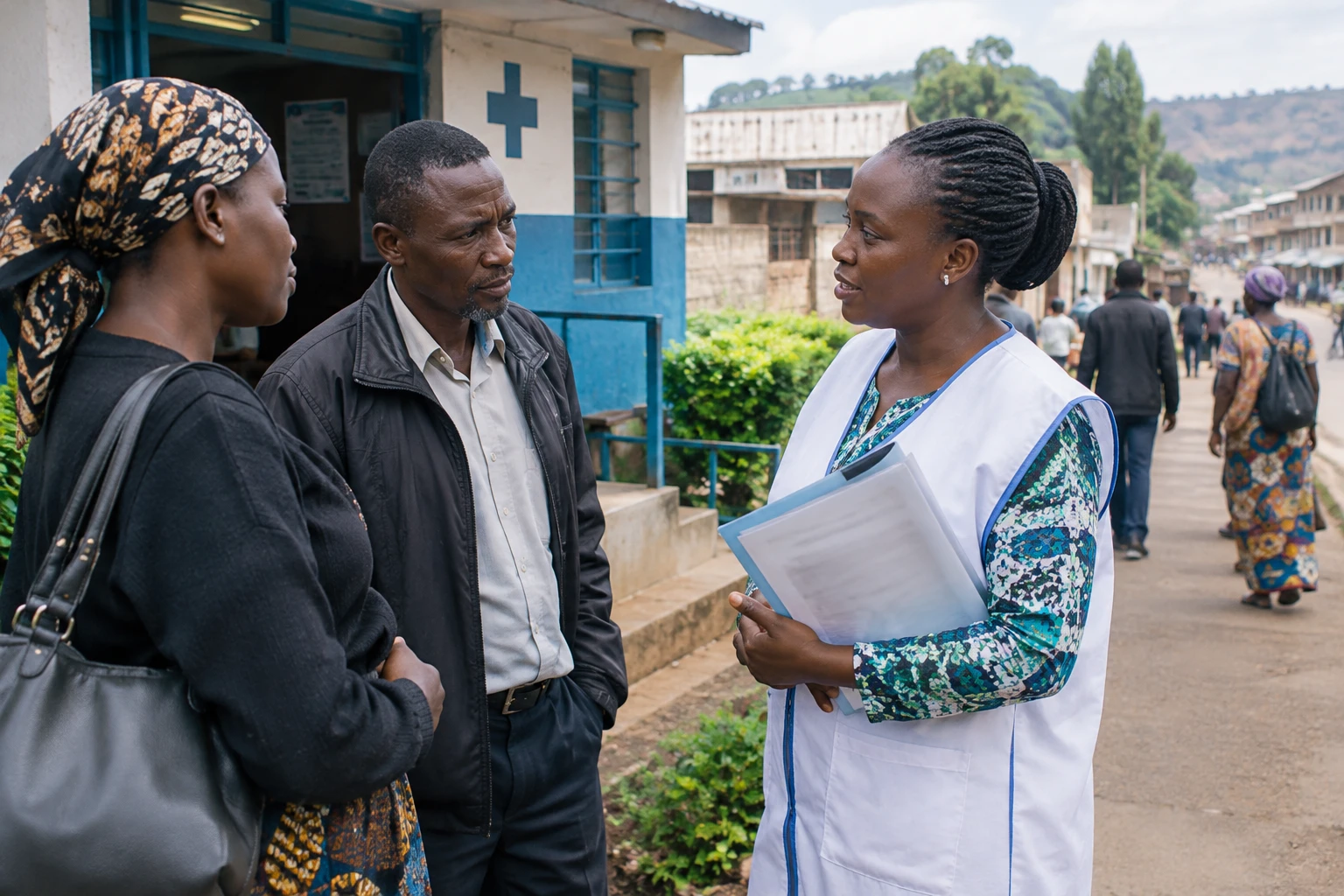
For families in eastern Democratic Republic of the Congo (DR Congo), the Ebola response is taking place as much in health centres as on roads, at border crossings and in villages. Confirmation of an imported case in Kenya is a reminder that regional travel can carry the virus, while rapid detection depends on health networks able to trace contacts without losing the trust of communities.
An outbreak rooted in eastern DR Congo
Declared in May 2026, the outbreak is caused by the Bundibugyo virus, an Ebola strain for which no vaccine or specific treatment has been approved to date. Candidate treatments and vaccines are being studied, but tools developed against other strains do not provide guaranteed protection against this one. The World Health Organization (WHO) describes a difficult context: population displacement, insecurity and limited access to health services.
As of 6 October, Congolese authorities reported 8,728 confirmed cases and 4,205 deaths. These figures, also reported by the Associated Press in its account on 7 October, underline the scale of the outbreak, but do not tell the whole story of people who are ill outside testing networks. The health agency Africa CDC has warned that more than 70% of newly reported cases were in people who had not already been listed as contacts.
Ituri remains the province with the highest cumulative number of cases, according to figures released in the 6 October update. However, North Kivu is playing an increasingly significant role in recent transmission. Africa CDC estimates that the province now accounts for about 40% of newly confirmed cases, up from 24% at the end of August. This shift in hotspots complicates the organisation of teams, especially in areas where insecurity hinders travel and access to care.
Cross-border travel puts response systems to the test
On 6 October, Kenya confirmed its first imported case of Bundibugyo virus disease. The patient, a Kenyan national, lived in DR Congo and received care there before travelling by road to Kampala, Uganda, and then flying to Nairobi. He was isolated on arrival on 3 October and died on the night of 5 October. Kenyan authorities said laboratory tests had confirmed the infection.
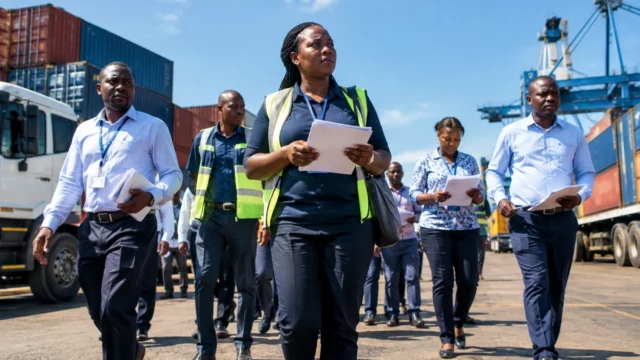
Kenyan health teams have identified 28 direct contacts and are looking for 23 passengers and four crew members on the flight concerned. The country says it has already screened more than 652,000 travellers at high-risk entry points and identified isolation units in 27 counties. These measures show the value of advance preparation; however, they do not by themselves guarantee that every contact will be found and monitored until the end of the surveillance period.
Kenya thus joins DR Congo and Uganda among the African countries to have reported cases in this outbreak. A travel-related case was also reported in France in June. WHO says Uganda brought its outbreak to an end in August, but cross-border movement continues to require coordination between countries. Based on the information available, it advises against general restrictions on travel and trade with DR Congo, Uganda or Kenya.
The response also depends on local trust
In DR Congo, contact tracing faces a practical reality: people move to work, join relatives or flee insecurity. Cases that are missed from contact lists make early isolation more difficult and increase the risk of transmission in households and health facilities. For families, the challenge is also to obtain care quickly, without the search for the virus interrupting access to other medical services.
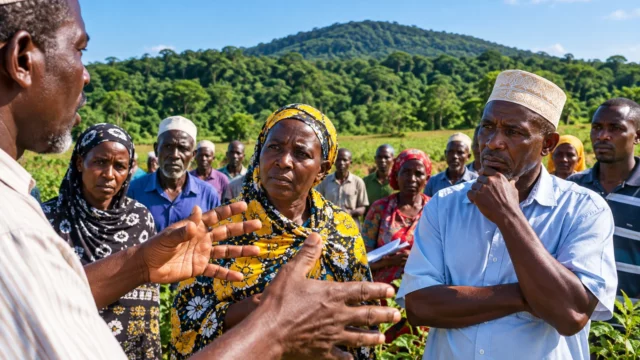
How burials are organised matters too. Health teams are working with local and religious leaders to offer safe burials while taking account of the practices and needs of relatives. This cooperation is not an added communication measure: it can help people report symptoms, support contact tracing and encourage acceptance of care. Conversely, rumours, tensions or attacks on teams reduce their ability to respond.
The obstacles are not the same everywhere. In urban centres, density and the movement of people accelerate contact; in rural or isolated areas, distance, staff shortages and insecurity can delay diagnosis. Conflict-related displacement adds another difficulty: some families move before teams can find them. Screening figures should therefore be read with caution, as identified cases do not necessarily represent all infections.
A regional challenge, but a response to build on the ground
The crisis is a reminder of the role of health cooperation in the Great Lakes region. DR Congo shares borders and transport routes with several countries; Uganda and Kenya are directly affected by the routes taken by the patient. Border surveillance can identify some sick travellers, but it does not replace testing in communities or contact tracing after people reach their destination.
Regional surveillance capacity has also improved: in its third-quarter 2026 report, WHO Africa says 46 of its 47 member states have genomic sequencing capacity. Sequencing helps characterise infectious agents and track their spread. But a well-equipped laboratory cannot, on its own, make up for a lack of field teams, accessible care or trust between residents and authorities.
The next step will be to establish whether the contacts identified in Kenya can be monitored until the end of the surveillance period and whether new hotspots in DR Congo are detected earlier. For Kinshasa and the affected provinces, the urgent priorities remain ensuring continuity of care, protecting staff and maintaining dialogue with communities. At regional level, coordination between health ministries and Africa CDC will need to support these efforts without turning population mobility into a reason for stigma or a general shutdown of movement.